
Tuesday, October 1, 2013


Sunday, September 29, 2013
Review: Small Wonder by Barbara Kingsolver
 In her essay collection Barbara Kingsolver brings to us an extended love song to the world we still have. Whether she is contemplating the Grand Canyon, her vegetable garden, motherhood, genetic engineering, or the future of a nation founded on the best of all human impulses, these essays are grounded in the author's belief that our largest problems have grown from the earth's remotest corners as well as our own backyards, and that answers may lie in both those places.
Sometimes grave, occasionally hilarious, and ultimately persuasive, Small Wonder is an examination of the people we seem to be, and what we might yet make of ourselves.
When I first opened this book I had mixed feelings about reading it. On one hand there was a lot of anticipation: I've heard so much about Barbara Kingsolver, I've heard her excellent interview on the BBC World Book Club, I've been meaning to read something by her for the longest time and now was my perfect opportunity. On the other hand I heard that environmental and humanitarian issues are a dominant theme in this collection of essays and I don't tend to make that kind of reading part of my entertainment lineup. When I got to the book club meeting and admitted that I haven't read the book the ladies were unanimous: "Just pick the ones that sound good," they said, "you're not going to miss some deep meaning if you do". And so I did.
I read "Letter to a Daughter at Thirteen" and "Letter to my Mother" first, and the latter almost made me cry. Then I read "Lily's Chickens" and "The One-Eyed Monster" and a handful of others. I skipped over the ones where issues were prominent and stuck to the ones that dealt mostly with people on a personal, intimate, level, and I loved them. Kingsolver made me feel as if I knew her through her writing, as if I could relate to this woman whose life is nothing like mine, but who somehow could understand me, and who I could in turn understand. I suppose it's a sign of a masterful writer if a few essays can make the reader feel close to a stranger, if they can show that no matter the place and the circumstances people really are the same everywhere.
Kingsolver's reputation is deserved and I'm glad that I have the Small Wonder essays a chance. She strikes the perfect balance between fearless frankness and not revealing too much, and her writing brings the reader so close it's almost like you're having a conversation with the author and she's telling you about her life and her beliefs. If you haven't read anything by Kingsolver yet I would recommend that you pick up this collection, it's an excellent example of what this author can do.
Thursday, September 19, 2013
Review: Ficciones by Jorge Luis Borges
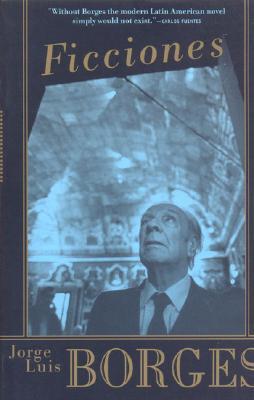 First published in 1945, his Ficciones compressed several centuries' worth of philosophy and poetry into 17 tiny, unclassifiable pieces of prose. He offered up diabolical tigers, imaginary encyclopedias, ontological detective stories, and scholarly commentaries on nonexistent books, and in the process exploded all previous notions of genre. For good or for ill, the blind Argentinian paved the way for a generation's worth of postmodern monkey business - and fiction will never be simply "fiction" again. ~ Mary Park
As I was reading Ficciones I was often stumped because I had trouble reconciling the title of the collection with what I was reading. Oh, I did understand that the pieces were fiction, but they read like philosophical treatises so often that by the time I was halfway through a piece I'd forget how it started or what it was supposed to be about. You understand why it took me longer than usual to finish this book, even by story collection standards.
Fortunately there were a handful of stories that kept me going: The Circular Ruins, The Garden of Forking Paths, The Shape of the Sword, Death and the Compass, and The Secret Miracle had just enough philosophy to elevate them to literary status and just enough genre to make them engaging and easy to follow. These six stories had mystery and intrigue to make the very serious questions or morality, fate and wonder seem more down to earth, and I enjoyed them immensely. Yes, my tastes trend toward the bourgeois when it comes to books, and I'm not ashamed to admit it! Seems G.K. Chesterton thought similarly at least part of the time (see banner quote).
Borges' work is definitely inspiring in that it prompts the reader to think about the various "what if"s of the universe, such as what if we're just a figment of a greater being's imagination, what if there is more than one future, what if our potential is so much greater than we know, what if our understanding of history is fundamentally flawed. And he did have a wonderful way with words. The vividness of his writing reminded me of Ray Bradbury, except that Borges' feels more effortless and graceful. I'm guessing the rest of his books aren't particularly light reading either, but given a choice I'll take Borges' collected works any day.
Sunday, September 15, 2013
Agatha Christie's Birthday Google Doodle
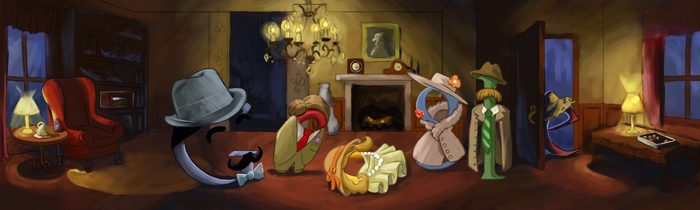
In 2010 Google had a Doodle dedicated to Agatha Christie's 120th Birthday, thought I'd share it with you to commemorate the brilliant lady's day this year. Maybe I should read a Poirot mystery to exercise those little gray cells...
Wednesday, September 11, 2013

Subscribe to:
Posts (Atom)