Showing posts with label Liked it. Show all posts

Wednesday, January 29, 2014

Review: The Shambling Guide to New York City by Mur Lafferty

A travel writer takes a job with a shady publishing company in New York, only to find that she must write a guide to the city - for the undead!

I've been a fan of Mur Lafferty's podcast, I Should Be Writing, for a while now, I've listened to her Marco and the Red Granny and Playing For Keeps (both available on Podiobooks), and was very excited when she sold her first book to a publisher. Mur loves her fans, so one of the things she did was podcast her book for free. We're on an extremely tight budget right now, so although I wanted to buy the book I had to listen to the podcast and console myself that I would buy the sequel.
The best thing about The Shambling Guide is that it's fun and fast-paced, and the main characters are colorful and engaging. I particularly liked Morgen the water sprite and the baker at the cafe, they stole the show at least half the time for me. There was snappy dialogue, descriptions that set the scene just enough without taking away the readers' ability to fill in some details on their own, and enough humor to make me chuckle on a number of occasions. I had a blast listening to it. Of course having the author read the book is an extra bonus because they put the emphasis where they want it to be, and the whole experience feels more intimate than when there's a professional voice actor in the picture.
Lafferty's world-building skills deserve a special mention. There are zombies, vampires, golums, all of which roughly follow the traditional lore of being dangerous creatures, but the author has made them her own and humanized them along the way. Of course this happens when you are looking at them from inside their world and witness their weaknesses and their struggles to make it in a world where nobody's supposed to know about them.
There's a lot to recommend this book, yet there was enough that didn't work for me to spoil the experience. Some characters came to life and some were pretty flat. Take Arthur the love interest, he was just a generic hot guy with a bunch of preconceived notions. The protagonist, Zoë, is too comfortable too soon in her new job and with her co-workers. Yeah, the pay is good and she needed the job, but she is almost blasé when it comes to the world of monsters where she suddenly finds herself. Would you be totally cool if you found out that your boss is a vampire (not vegetarian either) and that every one of your coworkers can kill you without exerting themselves too much? I know I wouldn't.
There was a sex scene, which, although well-executed, didn't have to be there and didn't really do anything to move the story forward or develop any of the characters. (For fairness' sake I do have to admit that this is my usual complaint about sex scenes, and unless the book is a romance I'd rather authors kept them out of the story. After all, what exactly has to happen between the sheets to serve the story or character development? Off the top of my head, not too many options there.) The mystery at the center of the story was interesting and I was surprised to find out who the villain was, but there was so much going on during the final battle that frankly I lost track of it all and just waited for it to be over. If it was a paper book I would've skimmed the pages and gotten to the end. All in all I thought her shorter works were tighter and therefore more effective, the novel format allowed for too much room for digression.
The Shambling Guide is a fun read and if you've had a stressful stretch it's just the thing to get your mind off the problems. Get the audio book to give you a charge for the work day or to help you unwind during your commute in the evening. It's not great, but for all its faults it is good enough to make me want to pick up the sequel, Ghost Train to New Orleans, and to hope that there will be a third book. After all, I believe writers get better with every new novel. Unless their work becomes formulaic, but that's a topic for another time.

Sunday, October 13, 2013

Review: Dream Lake by Lisa Kleypas

Zoë Hoffman is as gentle and romantic as they come. When she meets the startling gorgeous Alex Nolan, all her instincts tell her to run. Even Alex tells her to run. But something in him calls to Zoë, and she forces him to take a look at his life with a clear eye, and to open his mind to the possibility that love isn’t for the foolish.
Alex Nolan is as bitter and cynical as they come, he battles his demons with the help of a whiskey bottle, and he lives in his own private hell. And then a ghost shows up. Only Alex can see him, has Alex finally crossed over the threshold to insanity?
The ghost has been existing in the half-light of this world for decades. He doesn’t know who he is, or why he is stuck in the Nolans’ Victorian house. All he knows is that he loved a girl once and that Alex and Zoë hold the key to unlocking the mystery that keeps him trapped here.

Romance is usually not my preferred genre, but one of the ladies in my critique group is writing a romantic suspense novel, and I realized that if I wanted to critique her work well I needed to see what was going on in the world of steamed up windows and happily ever after. The fact that there's a bit of paranormal in this book only served to pique my interest: there is paranormal and there is romance, but the book isn't a paranormal romance, which is already different, considering how popular paranormal romance has been for the last 10 years or so.
Dream Lake is the second novel in the Friday Harbor trilogy but it works well as a stand-alone novel. You learn everything you need to know about the quaint town of Friday Harbor and the people who live there, and you get a fun and sometimes spooky story to go with the picturesque setting. And what a setting it is! My favorite part about Friday Harbor and this book is the Artist Point Bed and Breakfast, which Zoe runs with her cousin Justine. A while back I've actually thought about opening a bed and breakfast/bakery, maybe that's why the idea appealed to me so much. And having the different rooms in the B&B designed to commemorate different artist was just awesome, so much better than flowery wallpaper and doilies. When I finished the book I started looking for what Artist Point might look like and I think I found the perfect place:


The story is a variation on the theme of beauty and the beast: a young woman meets a guy who wouldn't wish himself on anybody, and they change each other's lives. Beauty & the Beast has always been my favorite Disney cartoon, and of course the folkloric iterations of the story that came before it have a special place in my heart, so it's no wonder that as soon as I realized that this is the core story type I was able to guess what would happen between Zoe & Alex. Had it not been for the ghost and his story I might've gotten bored with the book, but wanting to know what was keeping him from moving on made me continue turning the pages. In fact, the ghost and his story stole the spotlight more than once over the course of the book!
While Kleypas' writing didn't always work for me I'll admit that she did an excellent job with character building. All the key players and even the characters we meet for only a short while were multi-dimensional, with either obvious or implied shortcomings, quirks and admirable qualities. It was very easy to like Zoe and root for Alex, even when he was being a complete ass, and I knew without a shadow of a doubt that there was more to Zoe's dad than met the eye.
One of the reasons the writing didn't always work for me is that there is quite a bit of 'telling' in the book where it would've been very easy to 'show' what the characters were going through or what was in their past. Another is that there is plenty of spelled-out minute actions and descriptions that I wasn't convinced were necessary to move the story along. The most distracting however were the sudden switches between point of view and male characters acting, talking and thinking as a woman would. For example, Alex is a construction contractor who can't boil water, I really doubt he would be able to describe a dish using vocabulary fitting for a culinary aficionado. I doubt even more that people who work with certain tools all the time would use full formal names for those tools in casual conversation, I know my husband will never say "the phillips head screwdriver" if "the phillips head" will suffice. I understand that this is a romance novel and it's probably safe to say that half the target audience doesn't know their way around a tool box, but this kind of extensive detail and uncharacteristic powers of description didn't work for me.
As much as mundane scenes didn't always work for me I have to admit that when it came to romantic scenes Kleypas did an excellent job. They were tasteful yet detailed enough to convince me that had the action been happening in a car the windows would've been steamed up, and while there wasn't a 'fade to black' effect the vocabulary and descriptions were neither crude nor gratuitous. I can see why Kleypas is so popular with fans of romance.
While I myself will most likely not be specifically looking for any other books by this author should I happen upon Crystal Grove (the sequel) I will most likely pick it up: the teaser at the end of Dream Lake got me wondering about Zoe's cousin Justine, her witch legacy, and her quest to be able to fall in love.

Sunday, September 29, 2013

Review: Small Wonder by Barbara Kingsolver

In her essay collection Barbara Kingsolver brings to us an extended love song to the world we still have. Whether she is contemplating the Grand Canyon, her vegetable garden, motherhood, genetic engineering, or the future of a nation founded on the best of all human impulses, these essays are grounded in the author's belief that our largest problems have grown from the earth's remotest corners as well as our own backyards, and that answers may lie in both those places.
Sometimes grave, occasionally hilarious, and ultimately persuasive, Small Wonder is an examination of the people we seem to be, and what we might yet make of ourselves.

When I first opened this book I had mixed feelings about reading it. On one hand there was a lot of anticipation: I've heard so much about Barbara Kingsolver, I've heard her excellent interview on the BBC World Book Club, I've been meaning to read something by her for the longest time and now was my perfect opportunity. On the other hand I heard that environmental and humanitarian issues are a dominant theme in this collection of essays and I don't tend to make that kind of reading part of my entertainment lineup. When I got to the book club meeting and admitted that I haven't read the book the ladies were unanimous: "Just pick the ones that sound good," they said, "you're not going to miss some deep meaning if you do". And so I did.
I read "Letter to a Daughter at Thirteen" and "Letter to my Mother" first, and the latter almost made me cry. Then I read "Lily's Chickens" and "The One-Eyed Monster" and a handful of others. I skipped over the ones where issues were prominent and stuck to the ones that dealt mostly with people on a personal, intimate, level, and I loved them. Kingsolver made me feel as if I knew her through her writing, as if I could relate to this woman whose life is nothing like mine, but who somehow could understand me, and who I could in turn understand. I suppose it's a sign of a masterful writer if a few essays can make the reader feel close to a stranger, if they can show that no matter the place and the circumstances people really are the same everywhere.
Kingsolver's reputation is deserved and I'm glad that I have the Small Wonder essays a chance. She strikes the perfect balance between fearless frankness and not revealing too much, and her writing brings the reader so close it's almost like you're having a conversation with the author and she's telling you about her life and her beliefs. If you haven't read anything by Kingsolver yet I would recommend that you pick up this collection, it's an excellent example of what this author can do.

Thursday, September 19, 2013

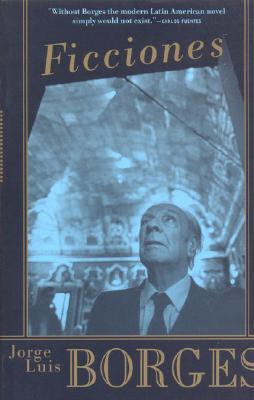
Review: Ficciones by Jorge Luis Borges

First published in 1945, his Ficciones compressed several centuries' worth of philosophy and poetry into 17 tiny, unclassifiable pieces of prose. He offered up diabolical tigers, imaginary encyclopedias, ontological detective stories, and scholarly commentaries on nonexistent books, and in the process exploded all previous notions of genre. For good or for ill, the blind Argentinian paved the way for a generation's worth of postmodern monkey business - and fiction will never be simply "fiction" again. ~ Mary Park

As I was reading Ficciones I was often stumped because I had trouble reconciling the title of the collection with what I was reading. Oh, I did understand that the pieces were fiction, but they read like philosophical treatises so often that by the time I was halfway through a piece I'd forget how it started or what it was supposed to be about. You understand why it took me longer than usual to finish this book, even by story collection standards.
Fortunately there were a handful of stories that kept me going: The Circular Ruins, The Garden of Forking Paths, The Shape of the Sword, Death and the Compass, and The Secret Miracle had just enough philosophy to elevate them to literary status and just enough genre to make them engaging and easy to follow. These six stories had mystery and intrigue to make the very serious questions or morality, fate and wonder seem more down to earth, and I enjoyed them immensely. Yes, my tastes trend toward the bourgeois when it comes to books, and I'm not ashamed to admit it! Seems G.K. Chesterton thought similarly at least part of the time (see banner quote).
Borges' work is definitely inspiring in that it prompts the reader to think about the various "what if"s of the universe, such as what if we're just a figment of a greater being's imagination, what if there is more than one future, what if our potential is so much greater than we know, what if our understanding of history is fundamentally flawed. And he did have a wonderful way with words. The vividness of his writing reminded me of Ray Bradbury, except that Borges' feels more effortless and graceful. I'm guessing the rest of his books aren't particularly light reading either, but given a choice I'll take Borges' collected works any day.

Sunday, May 12, 2013

Review: The Cat's Table - Michael Ondaatje

In the early 1950s, an eleven-year-old boy boards a huge liner bound for England – a ‘castle that was to cross the sea’. At mealtimes, he is placed at the lowly ‘Cat's Table’ with an eccentric group of grown-ups and two other boys, Cassius and Ramadhin. As the ship makes its way across the Indian Ocean, through the Suez Canal, into the Mediterranean, the boys become involved in the worlds and stories of the adults around them, tumbling from one adventure and delicious discovery to another, ‘bursting all over the place like freed mercury’. And at night, the boys spy on a shackled prisoner – his crime and fate a galvanizing mystery that will haunt them forever.

The most powerful feature of this book for me is how poetic the language is. The lyricism of it, the almost dreamy quality of the narrative make this novel an experience of poetry in prose and the character's voyages throughout the book only become richer for it.
The novel's protagonist, Michael, tells the reader about the trip that changed his life both literally and figuratively when he was only 11 years old, although I didn't get a feeling that it was a journey of self-discovery in any sense. The boy simply experiences the adventures of the voyage and the adult reminisces about them and the events that followed, in a way wrapping things up for the characters, telling the reader where they ended up and how. Curiously enough the adult Michael is a writer, and Ondaatje himself arrived in England from Colombo when he was 11 on a ship called the Oronsay, just like the boy in the novel does. There is some speculation about whether the novel is autobiographical in a lot of ways and although the author hasn't confirmed or denied this I am inclined to believe that it is indeed autobiographical, however fictionalized and dramatized, especially in terms of a child experiencing life without direct adult influence and an adult fully understanding the real impact and meaning of those childhood experiences.
Michael's story is intertwined with stories of other passengers, many of whom aren't who they seem to be at first and whose presence makes for a multi-layered narrative. This reminded me of The Shadow of the Wind by Carlos Ruiz Zafon, who employs a similar story-within-a-story structure, and if you've been following the blog you'll remember that I enjoyed that book a lot. My favorite story-in-a-story was that of Miss Lasqueti, I found it even more touching and fascinating than that of the prisoner. Possibly that's because it is more subtle, there is no life or death drama and secrets in it, yet it got to me and made me think about the events of Miss Lasqueti's life and their undeniable effects.
There is quite a bit of jumping back and forth in time so if you usually have trouble with that - be prepared. It wasn't a problem for me at all, I actually enjoyed it because it gave the story a more mature feeling, clarified in a way why the 11-year-old protagonist didn't seem exactly pre-teen. After all it is an adult looking back through time at the child, reliving the experiences through the memories, offering insight that he wouldn't have had all those years ago.
This was one of the books I listened to as opposed to reading, and although having the author do the narration was very special because I knew that the intonations, pauses and pronunciations were done exactly as intended I think this is a book that should be read, be that on paper or eReader, especially if you are a person whose visual perception is better than audio perception. As I've mentioned before the writing is extremely beautiful and if you look up quotes from this book online you'll see exactly what I mean. I myself will be picking up this book again, this time soaking it all in from the page.

Sunday, April 14, 2013

Review: The Martian Chronicles - Ray Bradbury

Bradbury's Mars is a place of hope, dreams and metaphor - of crystal pillars and fossil seas - where a fine dust settles on the great, empty cities of a silently destroyed civilization. It is here the invaders have come to despoil and commercialize, to grow and to learn - first a trickle, then a torrent, rushing from a world with no future toward a promise of tomorrow. The Earthman conquers Mars...and then is conquered by it, lulled by dangerous lies of comfort and familiarity, and enchanted by the lingering glamour of an ancient, mysterious native race.

This collection of short stories is considered to be one of the best examples of science fiction, yet Ray Bradbury himself says that it is not science fiction but fantasy. Pretty curious, isn't it? After some deliberation I decided that it is sci-fi after all - in this bibliophile's universe fantasy has magic and while Bradbury's Martians have some nifty abilities they do not have magic. Sorry, Mr. Bradbury, but that's how you wrote them.
The book is organized as a collection of separate episodes from several decades in the future when humans applied themselves to colonizing Mars, and an attentive reader will see clear parallels with the history of the North-American continent in these stories. In some cases they couldn't be any more obvious. Chicken pox, need I say more? Some characters make multiple appearances which contributes to the cohesiveness of the book, but mostly it's episodes from lives of people who've never met, which makes the account more well-rounded than it would've been with just one or two protagonists and their limited perspectives.
My impression of the book as a whole is not too enthusiastic, although several stories made a strong impression on me. One, There Will Come Soft Rains, doesn't have any characters at all and it reminded me of the 19th century literature where so much is inferred as opposed to being clearly stated. Others, such as Night Meeting and Ylla, are incredibly full of humanity despite the fact that Martians are the key players. And one, The Off Season, left me incredulous: I simply couldn't understand why the Martians would effectively give half the planet to the guy who would destroy their heritage given the right mood. I'm still wondering if they thought his greed would keep him on the planet when everybody else left.
Another reason I liked this book was because of terribly obvious things stated in a beautiful way, making the reader think about the obvious with a fresh mind. In almost every story there was a "couldn't have said it better" moment, all because of passage like this:
We Earth Men have a talent for ruining big, beautiful things. The only reason we didn't set up hot-dog stands in the midst of the Egyptian temple of Karnak is because it was out of the way and served no large commercial purpose.
This particular passage reflects a common theme for the collection and by the end of the book I had a deep sense of regret when it comes to the destructive nature of humanity because after all it is true, we'll ruin anything with no regard for its history and value beyond the obvious as long as it suits our profit-hungry nature. A sad state of affairs, really, especially if you consider that when all's said and done this book is about humanity, Mars is just an unreal enough place to tell the truth without riling up the masses.
I would have liked The Martian Chronicles a lot more if the stories weren't so obviously deliberately polished, which, strange as it is, is my only real complaint about the book. All the clever turns of phrase and the unexpected similes were great individually but when considered together made it impossible for me to lose myself in most of the stories: I was simply too busy noticing all the cleverness. Bradbury's works are highly esteemed in the field of science fiction and I would recommend this book, especially if the said friend is exploring sci-fi literature.

Sunday, February 17, 2013

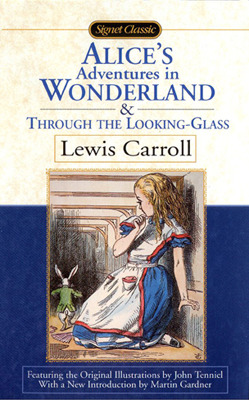
Review: Alice in Wonderland & Through the Looking Glass by Lewis Carroll

When I first read about Alice's adventures in Wonderland I closed the book in complete bewilderment because I just didn't understand what made it so popular and gave it such staying power. There was no plot, the story was utter nonsense, the characters were beyond strange and to top it all off the whole thing was a dream. Needless to say I didn't pick up Through the Looking Glass.
Fast forward to last week when I was supposed to read both books for a course I'm taking on fantasy and science fiction. Upon first reviewing the syllabus I gave an inward groan, but when time came to read I had to bite the bullet. Alice in Wonderland was first up and it was still nonsense, there was still no plot and the characters were still strange, but now approaching it from an academic standpoint and knowing that the whole thing is a dream I was able to enjoy it much more. I noticed things such as clever play on words and tried to guess if the strange animals were symbolic of real-life people who real-life Alice would be able to recognize and would delight in, as children tend to do when they solve a riddle. I also kept noticing things that would appeal to adults and children on different levels and for different reasons, which reminded me of the Shrek cartoons. And so having had a decent experience with Alice in Wonderland I cheerfully moved on to Through the Looking Glass.
What a transformation the storytelling and the characters underwent between these two books! While in Wonderland, which is referred to as Nursery Alice, it was all about adventure and emotion, which younger children can understand and relate to easily, and in Through the Looking Glass there is an actual plot, things make sense so much more, and characters don't appear and disappear in completely random ways. These changes alone would've been a sufficient enough upgrade for me, but then I looked at the larger picture of cards vs. chess, read some of the poems out loud, googled a few things and decided that Surprise! this one I actually did enjoy. I even have a favorite rhyme:
"In spring, when woods are getting green
I'll try and tell you what I mean.
In summer, when the days are long,
Perhaps you'll understand the song.
In autumn, when the leaves are brown
Take pen and ink, and write it down."
Lewis Carroll really was a very clever man.
I think the next step would be to get my hands on the audio books and listen to them since having read them on the page I've become quite convinced that they were meant to be read aloud. They are children's stories after all.

P.S. If you are waiting for me to say something about how Disney has taken far too many liberties with Lewis Carroll's creation you'll be disappointed, for I enjoyed the Tim Burton's Alice quite a bit (although Anne Hathaway's jet-black eyebrows were incredibly distracting when compared with her general whiteness).

Sunday, December 2, 2012

Review: Ignore Everybody by Hugh MacLeod

When Hugh MacLeod was a struggling young copywriter, living in a YMCA, he started to doodle on the backs of business cards while sitting at a bar. Those cartoons eventually led to a popular blog - gapingvoid.com - and a reputation for pithy insight and humor, in both words and pictures. MacLeod has opinions on everything from marketing to the meaning of life, but one of his main subjects is creativity. How do new ideas emerge in a cynical, risk-averse world? Where does inspiration come from? What does it take to make a living as a creative person? Now his first book, Ignore Everyone, expands on his sharpest insights, wittiest cartoons, and most useful advice.

In a way I really enjoyed this book - there is a certain freshness in the unapologetic way the author talks about things that are generally common sense but may not be popular subjects to discuss with the creative crowd, such as that there will be hard times, or that relying on being "discovered" is foolish, or even that you may never make it big at all. He calls out those who waste their lives in meaningless bill-pay jobs while waiting for the big break in whatever their creative outlet is, and those who he dubs Watercoolies: the chronic complainers with stagnant careers.
There are anecdotes from MacLeod's life that illustrate the point of every chapter and there are his business card cartoons that either drive that point home, entertain, or give more food for thought. These make the already short book a fast and easy read that avoids being stuffy or preachy or even overly serious while talking about a subject that's very serious for a lot of people.
With all that said by the time I got to the 40th tip I felt that the book was much too long, that some of the tips were essentially the same and could have been combined without doing the book any harm. I even went through the chapter titles trying to remember which stories went with them and found that a few were interchangeable.
This is a decent read, especially if you want a fresh shot of motivation or to switch gears. It is also a great reminder that not every creative endeavor needs to rival the work of Beethoven, Da Vinci, Rowling or Jobs, it simply has to be yours.

Sunday, October 28, 2012

Review: C'est la Vie by Suzy Gershman

Suzy had always fantasized about moving to Paris with her husband, but when he dies unexpectedly, she decides to fulfill their dream alone. Here she gives a deliciously conversational chronicle of her first year in Paris and of the dizzying delights and maddening frustrations of learning to be a Parisian.

This is one of the books I found through PaperBack Swap recommendations after reading Entre Nous and giddily requested it hoping for a similarly pleasant experience. It was tough going at first. By page 70 I was thoroughly annoyed with Ms. Gershman because at that point the book read more like a shopping instruction manual with endless mentions of Born to Shop and incessant dropping of names of famous people and brands that began bordering in pretentious. "Is this really who you are, Suzy?" I kept thinking. I get it, this is her life and her social circle, but had it not been for brief glimmers of hope in the form of short entries that actually talked about Paris and the French lifestyle and people unrelated to luxury merchandise and who's who of the Parisian "it" list I would have given up and moved on. I did stick with it though and was rewarded with longer chapters that gave me what I came to Ms. Gershman for - a glimpse of her experience living the French life.
As the book progressed and the chapters got longer and less healfhearted Ms. Gershman's personality began to come through and I began to see something in her that was more than a woman spending away her husband's life insurance money. I could see a practical woman having a hard time but determined to not fall apart, a woman rediscovering and reinventing herself, following her dream and doing it in a foreign country and in a foreign language at that. I liked her spunk and that she had standards and an unfailing sense of humor. I enjoyed her stories about holidays, cooking French deserts for the first time, making new friends and dealing with the internal conflict of nurturing herself and worrying about her son's reaction to her choices. These were real stories and I preferred them to the tales about buying overpriced designer sheets.
This isn't your typical book about starting over in France with the author struggling to make connections outside of the expatriate community or being unreservedly enamored with the French. Ms. Gershman arrived in Paris with a well-established network already in place, she had money, and her lack of fascination with Parisian style is obvious and refreshing. She is unabashedly American and is not trying to blend in. She speaks frankly and in detail about the charm of having an affair and her disenchantment with it, as well as medical issues and the difficulties of navigating the French bureaucratic systems. There is not a gossipy feel like in All You Need to be Impossibly French or the reserved distance like in Entre Nous. It is actually more like Almost French in that the authors see the good and the bad clearly and appreciate France for what it is. I wonder whether these two ladies know each other - they are both freelance journalists and they arrived in Paris at the same time (imagine my surprise when I realized this).
This is a fun book and had the first half been more like the second I would have enjoyed it much more. As it is I would recommend it to those who is moving to Paris or is entertaining the notion, those enjoy shopping, or those who want to see what it's like to live in France. I'm with the last group and some day soon will continue the vicarious adventure.

Sunday, September 30, 2012

Review: A Lesson Before Dying by Ernest J. Gaines

A Lesson Before Dying is set in a small Cajun community in the late 1940s. Jefferson, a young black man, is an unwitting party to a liquor store shoot out in which three men are killed; the only survivor, he is convicted of murder and sentenced to death. Grant Wiggins, who left his hometown for the university, has returned to the plantation school to teach. As he struggles with his decision whether to stay or escape to another state, his aunt and Jefferson's godmother persuade him to visit Jefferson in his cell and impart his learning and his pride to Jefferson before his death.

I had a difficult time reading this book, not because of the writing, or the voice, or the characters. All those worked, and worked very well, and that is in part why I won't focus on them this time. What made it difficult is the story itself. At first glance there was nothing I could relate to: a male protagonist coaching a death row inmate, Louisiana plantation in 1940s, persistent, and sometimes surprising, racial divides, poverty, level of education so low you could determine it from speech alone. All this was so far from whe world where I grew up in Eastern Europe and so far from my life now that at times it was challenging to stay conected to the story. Then I would read about Grant's aunt cooking for everybody and loving it when her family and friends enjoyed her food, or about adults making sacrifices to improve their children's lives and give them the opportunity of something better, and I would remember my grandmother and my parents, and that the nature of humanity is the same regardless of time, place, skin color or education, and with this understanding I would be able to regain my grasp on what was happening and keep going.
Another complicating factor was that the main emotions running through the book are anger, bitterness and general dissatisfaction. Grant is unhappy with working as a plantation teacher and being forced into coaching Jefferson. His aunt is unhappy that he doesn't see the bigger picture and even when he does become invested in helping Jefferson he does it in a way with which she disagrees. Vivian, the woman Grant is in love with, is unhappy to not be able to get a divorce from her absentee husband and not have to hide her relationship with Grant. The reverend is upset that he isn't able to get through to Jefferson while a man so much younger, who he belives is a sinner and for all his education still doesn't really understand life, eventually does what he couldn't. And Jefferson himself is bitter and angry about the unfair verdict and the demeaning defense strategy of his attorney, as well as the fact that his young life was going to be cut shortonly because he was at the wrong place at the wrong time and didn't have the werewithal to run. Keeping up with all this negativity was a bit trying for me at times.
We never learn how old Jefferson was, or any of the other characters for that matter, or whether he had a mental handicap, so a lot of his actions and reactions were puzzling to me. I never understood why it took a stranger to make him stop taking out his anger on his godmother, who couldn't be responsible for his predicament by any stretch of the imagination. In fact, there were a few things I didn't understand, such as why Grant essentially punished his students for him being dissatisfied with his life, shortchanging them in the process, or why he professed his love for Vivian and yet asserted himself at her expense, or why Grant's aunt's preferred method of communication was to glare and give silent treatments instead of explaining what her nephew clearly didn't grasp. It may take me a while to understand these thing, maybe I'm simply too young and haven't seen enough of life just yet to do so right now.
This book may have been difficult and not at all uplifting, but it did not leave me indifferent, and it made me think about issues that have never particularly affected me. It made me look at the world around me from a different perspective. It made me wonder about the things the grandparents of people I see around me haven't told them about the past. I may not be able to fully appreciate this novel now, but it certainly has altered the way I look at the world around me and that alone makes it worth reading.

Sunday, September 9, 2012

Review: The Hunger Games by Suzanne Collins

The Hunger Games (The Hunger Games, #1)In the ruins of a place once known as North America lies the nation of Panem, a shining Capitol surrounded by twelve outlying districts. Long ago the districts waged war on the Capitol and were defeated. As part of the surrender terms, each district agreed to send one boy and one girl to appear in an annual televised event called, "The Hunger Games," a fight to the death on live TV. Sixteen-year-old Katniss Everdeen, who lives alone with her mother and younger sister, regards it as a death sentence when she is forced to represent her district in the Games. The terrain, rules, and level of audience participation may change but one thing is constant: kill or be killed.

For a while now people have been telling me that I had to read Suzanne Collins's best-selling trilogy but I resisted. The hype was too much and when the movie came out it only became worse. I told my friends I'd read it "one of these days". Finally one of them just handed me the book and told me to ask for the next one when I was done. It lay on top of the pile for a few weeks until I started feeling bad for keeping it for so long. So I picked it up and... couldn't put it down, breaking only to do the necessary things, such as eat, sleep and go to work.
Collins's ability to keep a breakneck pace even with the unhurried scenes helped with that of course, but her storytelling and masterful world building played a tremendous role as well. The only thing that irked me was the fact that everybody had their "eyes trained" on something or someone all the time, but that wasn't too hard to get past.
I've heard so much talk about Katniss being a strong character because she doesn't need a guy, or anybody else for that matter, to take care of her that I couldn't help but ask myself whether I agreed with that claim throughout the book and again when I finished reading it. The answer was invariably "no". Now, now, hold the booing and the stomping, there is a method to my madness. Katniss is skilled at providing for and defending herself and her family, she's deadly even, but to me that's not strength, that's resilience, adaptability, will to survive, doing what needs to be done, so she is tough, sure, but strong? No so much, because toughness is not the same thing as strength to me. I don't see wanting/needing love, affection, another person's company, support or help as a weakness. To me not wanting that is a handicap. I think she's been so hurt that she has adopted an exoskeleton of sorts that prevents her from feeling some things, protects her from getting hurt, and when Prim was reaped the violent emotions cracked the shell and she's begun to come alive in a way. After all, in all of this book the only person I felt she really loved was Prim. I think Katniss has potential to become truly strong, but she is not there yet.
I'm a big fan of action and adventure, which this book has plenty of, but I'm also a fan of interesting characters and there's no shortage of those here either. I liked that every new person introduced was flawed somehow, had a story full of demons, even the ones who at first seemed like there wasn't much of a story to them, like Peeta. Having Katniss as the first-person narrator helped with the suspense because quite frankly the girl is not much of a great thinker or strategist. It's just as well though - sometimes it took her a while to figure things out and in the process more of the background story could be told.
Considering that we know that there are three books in the series and that there is a love triangle conflict it wasn't much of a mystery that both Katniss and Peeta would survive, but I was looking forward to finding out what would happen to make books 2 and 3 necessary. In observance of the no-spoiler policy for the sake of possibly a handful of people who have not yet read the books or seen the movie I won't go into detail, but let me tell you, it was good. I didn't expect it to happen quite as it did so after a relatively predictable novel a surprise ending was welcome.
By the end of this book it was obvious that the real story was only beginning and although Hunger Games didn't exactly meet my exalted expectations it promised more and I began Catching Fire without even a day's delay. Fortunately my friend had the book ready for me before I asked for it. Come back next week to find out what I thought!

Sunday, July 1, 2012

Review: The Art of Being a Woman by Veronique Vienne

The Art of Being a Woman: A Simple Guide to Everyday Love and LaughterWith its spirited prose and witty illustrations, The Art of Being a Woman informs and celebrates the many ways we all can release our insecurities, count our blessings, and experience what the French call “joie de vivre,” a lively tryst between heart and mind.

I picked up The Art of Being a Woman after abandoning a book that proved incapable of holding my interest, and immediately saw that I would enjoy it because Ms. Vienne seemed to approach life with a healthy dose of respect for being both a woman in her own right and a woman who enjoys roles we've come to see as almost archaically traditional. To top it all off she included this quote by Nelson Mandela in the preface: "Your playing small does not serve the world. There is nothing enlightened about shrinking so that other people won't feel insecure" adding "Take his word for it, and let your own light shine!".
The authhor was born and raised in France and after reading impressions of the French by an American, an Englishwoman and an Australian it was interesting to see what a Frenchwoman had to say. Her French sensibilities are clearly evident throughout the book and I think that if most, if not all, of her countrywomen are of the same opinions it's no wonder that the French have such poise and that certain something that makes them fascinating. They love all the little things that make them individuals, they don't copy details but strive to learn from them and emulate the concept while remaining true to themselves, they aren't afraid to assert themselves and at the same time they aren't afraid to use their feminine wiles, they value intellect over cookie-cutter beauty and they have no doubt that quality trumps quantity every time.
This isn't a self-help how-to guide but rather a collection of essays on the subjects that matter to us women: ourselves and other women, friendships, men, self-improvement, homemaking, fashion and beauty, shopping, entertaining, love, sex, and family. There aren't steps or bullet-point lists or anything of the sort, just some keen observations that had me nodding my head in agreement, a handful of ideas of the "cleaning the house doesn't have to be a detested chore" variety, and a liberal dose of peptalk thrown in with a sprinkling of reminders to maintain a sense of humour about life and above all oneself.
I'm going to keep this little book for now and will revisit it in the future when I need a nudge to press the Reset button and not hurry so much after "bigger-better-more" and instead slow down to enjoy the simple things and appreciate what I have. If you happen upon a copy in your bookstore wanderings pick it up, it'll make for an enjoyable afternoon or two and maybe will renew your appreciation for the quirks that make you undeniably and distinctively unique.

Sunday, June 24, 2012

Review: Trade Winds to Meluhha by Vasant Davé

Trade Winds To MeluhhaIn ancient Mesopotamia Samasin the stable boy is falsely convincted of murder. When a double eclipse saves his life he flees his homeland in search of a man whose name the dying victim whispered to him. With murderers eager to protect their crime network on his heels Samasin faces an adventure of his life.

I grew up on adventure stories that spanned continents, with Jules Vernes' In Search of the Castaways and the Mysterious Island being my favorite, and Trade Winds to Meluhha certainly reminded me of the hours I spent imagining distant lands with danger at every step. Mr. Davé did a great job crafting an elaborate story that was not at all straight-forward and although towards the middle all the culprits were perfectly clear the many obstacles in the way of bringing them to justice kept things interesting. There were several sub-plots and adventurous asides that in the end played a role in the main story and I commend Mr. Davé for crafting a novel with this many levels and still managing to keep the pace up without a sluggish moment to create a satisfying resolution that felt natural and logical.
With this many plot lines to keep track of the abundance of characters was taxing at times. Two I had trouble distinguishing altogether, some I wasn't sure were all that necessary, but the main characters were intersting and developed nicely, so I mostly paid attention to them. I liked how they ofthen had secrets that kept me guessing for a while and I enjoyed seeing their transformations as the novel progressed. I think Velli was probably the most changed character by the end of the book and it was fun to see her gradual evolution from a hauty daughter of a wealthy man to a kind and caring lady.
My main issue with this book was the language. It wasn't awkward or inappropriate at any time, but it felt foreign, like a translation that is done without allowing for stylistic differences between two languages. It wasn't a deal-breaker by any means but it did affect my perception. Another factor was that the novel is set in ancient time, two thousand years BC, but a lot of the speech patterns, terminology and idioms used in the book are modern. Combine that with a drug trade and human trafficking and often the novel felt like present day crime drama somehow transported into the time of camels and reed ships. Also, I felt that the whole human trafficking situation was a bit contrived. Had the author stuck with slavery the key developments could have been easily preserved without compromising anything but the story would have felt more time-apropriate and natural.
In the end this is a solid adventure novel with great characters and it made me want to read more in the genre.

Sunday, May 6, 2012

Review: All That Remains by Patricia Cornwell

All That Remains (Kay Scarpetta, #3)In Richmond, Virginia, young lovers are dying. So far, four couples in the area have disappeared, only to be found months later as skeletal remains. When the daughter of the president's newest "drug czar" vanishes along with her boyfriend, Dr. Kay Scarpetta knows time is short. Following a macabre trail of evidence that ties the present homicides to a grisly crime in the past, Kay must draw upon her own personal resources to track down a murderer who is as skilled at eliminating clues as Kay is at finding them.

Conditioned by my previous experiences with detective novels whenever I begin a Scarpetta book I expect a straightforward mystery, and every time Cornwell crafts a story that's everything but. Oh, there is a mystery alright, but there is also a very strong human element and the more I get to know Kay Scarpetta and her circle the more clearly I see it. It is possible of course that this human element is becoming more prominent, with every consecutive book being more about the people than the crime, the crime being a catalyst for this humanity to manifest itself and provide a macabre backdrop for it. And you know what? I like seeing something more layered than an cold investigation into disappearances and deaths, I like seeing characters stretch themselves, doubt themselves and their friends and colleagues, struggle through life's problems and emerge changed, even just a little bit. I like seeing relationship develop through the mundane things, and Cornwell delivers that every time. In case you're wondering what it is I'm talking about: here Kay doubts her friendship with Abby Turnbull, the reporter she first met in Postmortem, because Abby isn't being particularly straightforward about her involvement in Scarpetta's latest case. It is also in this book that she realizes that the more she works with Marino the more she likes him, despite his unkempt appearance and irritating behavior, and a true friendship begins to emerge. And last but not least there are the frustrations of finding herself in the middle of basically a face-off between the FBI, the DA's office and higher echelons of government. Cornwell uses these situations wonderfully to develop her characters and since they are so significant in the story they become the stage of power plays and the really dramatic scenes.
Politics is big in this book and Cornwell explores the effects of it on people's lives with her usual delicate but firm touch. The potential of a cover-up in her daughter's murder case pushes a prominent politician over the edge and the question of whether she ruined her own career or was helped along the way is a major point of contention in this book. There is also the matter of whether being a public figure at a time like what this politician's family is going through is a blessing or a curse and the reality that there is more than one answer to this question. The fact that Cornwell raises these issues and that everything filters through Kay, the protagonist, makes her a complex individual who navigates a personal and professional maze every day and knows that things are much less straightforward than she would like them to be, a person who regularly thinks about life and people, and not just on a simple day-to-day level.
My only concern with this novel is that if Cornwell continues along the path she is on the politics will grow to dominate the story and while it is a fertile field for character development I would hate to see it happen - politics tend to make things convoluted and much talk about views and positions on issues is not something I enjoy in my fiction. I think she struck a nice balance in this book and hope the next novels don't veer off into a lot of talk and little action.

Sunday, April 29, 2012

Review: Amongst My Enemies by William F. Brown

Amongst My EnemiesAt the end of World War II a German submarine U-582 slipped into the Baltic Sea on a top-secret mission for the second most powerful man in Nazi Germany, never to be heard from again. Only Michael Randall, a battle-scarred American who survived four months in the frozen Hell of northern Germany, knows where it is. When the U-boat's captain turned up a few years later as an up-and-coming NATO official, Randall decided it was time for him to go back to the Baltic to find proof about a high-ranking spy inside NATO itself and take revenge for the atrocities that cost his best friend his life. He and his team are not alone in the Swedish waters though: the U-boat's former owners want their gold and the Russians want the identity of their spy to stay a secret, so Michael Randall better watch his back.

I've never read any spy novels before now so when Mr. Brown contacted me asking to review Amongst My Enemies I was happy to explore this new-to-me genre, especially since his writing credits were encouraging. I'm glad to say the book did not disappoint.
Amongst My Enemies is a tightly-woven thriller with practically non-stop action and characters who are easy to care about or dislike. As I read and saw how different threads of the story were coming together I began to enjoy the book even more and soon I didn't want to put it down - I wanted to see if the bad guys were going to get what they deserved and of course if Randall would have the guts to get the girl. There was a point when I though I knew what was going to happen (the short paragraph before chapter 1 spoiled that secret) and although I was right about the outcome the "how" took me by surprise. I did not expect the story to take the turn it did and that is always a good sign. That was just one of the many twists and turns and although I grew to anticipate them they did not become less satisfying.
There was a lot of action in this book and I'm pleased to say that those scenes were done well and were balanced with more low-key scenes that allowed for character development. It was fun to watch the spunky Leslie boss Michael around, or try to anyway, and seeing the antagonists during relative down time made them more human, if not less evil.
As engaging as the book is the copy I received is in dire need of a thorough proof-reading - the awkward punctuation, missing spaces between words and descriptions that repeated word for word time after time didn't do the novel any favors. Had a careful copy-editor gone through the manuscript and eliminated all the distractions I would have given the book a higher rating. And one more thing that has nothing to do with proof-reading but it ruffles my feathers because everyone, including NPR, does it: why is it always "the Ukraine"? It's one country, not a collection of states or territories, so just like Uganda, Uruguay and Uzbekistan it doesn't get a "the". It's just "Ukraine"! I'm from there, I know.
If you enjoy spy novels with compelling characters and a fast-moving plot I'm sure you'll like this book, especially if it gets a little TLC in the copy-editing department.

Sunday, April 15, 2012

Review: This Side Of The Grave by Jeaniene Frost

This Side of the Grave (Night Huntress, #5)With the mysterious disappearance of vampires, rumors abound that a species war is brewing. A zealot is inciting tensions between the vampires and ghouls, and if these two powerful groups clash, innocent mortals could become collateral damage. Now Cat and Bones are forced to seek help from a dangerous "ally" —the ghoul queen of New Orleans herself. But the price of her assistance may prove more treacherous than even the threat of a supernatural war... to say nothing of the repercussions Cat never imagined.

After tackling a heavyweight such as The Book Thief I felt I needed something light to cleanse my reading pallette and another installment of Cat's adventures seemed perfect. From the very first book in the series I've enjoyed Frost's fast-paced storytelling and witty writing, and this book brought all that to the table.
There are several things I like about this series in general and this book in particular, aside from all the humor and scene-stealing secondary characters (Vlad Tepesh is awesome in this series). One is that while the characters are supernatural Frost puts bigger, society-spanning issues in the center of the story and by doing this makes them even more human than she already has by giving them some very human traits and problems - in the past she talked about slave trafficking and spousal abuse, here we have vamp vs. ghoul vs. ghost conflict akin to our racial and political tensions. It's like she's saying "people are the same everywhere, even the undead ones". And when they're not fighting each other and plotting against each other on the world stage they also have the same family and personal problems as we all do.
My other favorite part is Frost's creativity in pulling all sorts of historical facts and people into the story and making them part of it, and doing it very well. Vlad Tepesh aka Dracula made his entrance in the last book with excellent results, now we got a taste of another historical figure (and no, I'm not telling who), I can't wait to see who else will make an entrance in the next book.
Writing is a big part of any book and here Frost lost some points with me because of occasional strange word choice and repetitions of things she's already said (how many times do we need to hear that Bones used to be a gigolo in his human days? One mention per book is plenty, we got it, thanks). I do enjoy the narrative voice though, it's easy and keeps things moving and down to earth, and here it works with the story, which is always a plus.
What I couldn't shrug off as easily is the constant shagging. In graphic detail. Yes, I know people do that. No, I don't need to be holding the proverbial candle every single time they do it, especially if it's going to be that often. Which raises another question: do Cat and Bones really need to be that amourous to advance the plot? I do look forward to reading the next book, I just hope there are fewer bedroom scenes and more actual story.
All in all this is an entertaining and engaging read packed with adventure, laughs and great characters and if that's what you're looking for I think you won't be disappointed. And if you're a romance fan you'll love it even more.

My rating: 4

Sunday, March 18, 2012

Review: Drawing In The Dust by Zoe Klein

Drawing In the DustBrilliant archaeologist Page Brookstone is convinced bones speak, yet none of the ancient remnants she has unearthed during her twelve years of toiling at Israel's storied battlegrounds of Megiddo has delivered the life-altering message she so craves. Which is why Ibrahim and Aisha Barakat's claim that the ghosts of two lovers haunt their home intrigue her. Ignoring the scorn of her peers, Page investigates the site and when she is faced with hard evidence of a cistern beneath the Baharats' living room she knows she has discovered something unparalleled. What she doesn't know yet is that this find will change her life, as well as the world of archaeology, forever.

For a while now I've been reading books that have been recommended by someone, somewhere, somehow. The Drawing In The Dust is my first foray into unchartered territories in a very, very long time and fortunately it didn't disappoint. As a fan of anything paranormal I was attracted to the book by the blurb that promised ghostly presences and the setting - Zoe Klein takes us to Israel, to the world of rich history, archaeological digs and long-lost treasures, the only place on earth where people read their antique records in their own language. The idea of the main character unearthing something unique was more than I could pass up so the book came home with me.
This novel is a chick lit-flavored coming-of-age adventure tied into Page's discovery of the tomb of the prophet Jeremiah buried in the arms of an unknown woman. There is love and lust, international and scientific conflict, and a particularly heart-warming notion that people can in fact all get along, despite our differences. Page has some personal drama and tragedy to sift through (pun intended) before she can come to terms with who she is and what she wants from her life, and her love interest has a similar journey to make so there is quite a bit of almost teen-like angst and self-doubt.
There are a lot of references to the Scripture, faith, some interpretation of the verses and I was very pleased to see in the end that it wasn't overwhelming. In fact, if felt very natural, the religious elements fit very neatly into the story, and learning after I finished the book that the author is a practicing rabbi helped explain why they didn't feel forced or out of place. This is Ms. Klein's life and she transfered it in a way to her character, Page.
The hook of the story is that Page abandons a well-established dig to come work under the house of a couple who say they have ghosts and know there is something there. This paranormal element worked very well in some instances and in others it left me confused because the nature of it seemed to change half-way through the story. I did enjoy however that it wasn't completely cheesy, as it could have been, although it was quite a bit more new-agey than I would have preferred.
The insight into the daily life of the Jewish and Arabic communities in Jerusalem was what grounded this story for me. It's a glimpse into something we don't see on our news and I'm willing to bet most people know nothing about this aspect of life in Israel. I credit the authenticity and intimacy with which Ms. Klein presented these parts of the book to us readers to the fact that she spent time in Israel and most likely witnessed events similar to what she described. There were elements that seemed far-fetched but on the whole it worked for the purposes of this book.
This is an entertaining read and if you're interested in literature with Hebrew motifs and setting as well as very atmospheric writing you will enjoy this book.

Sunday, March 4, 2012

Review: While I'm Still Myself by Jeremy Mark Lane

While I'm Still MyselfA passionate December love affair.
The meeting of an unexpected traveler.
The consequences of protecting a young new acquaintance.
A journey into an unknown past.
In these stories Jeremy Lane eloquently describes the life changing impact of the brief encounter, showing that life and love are not shaped by an entire lifetime, but by the fleeting moments with unexpected people in unexpected places.

This was another review request that I'm very glad to have received. Mr. Lane is an excellent writer whose stories are consistently strong throughout the volume and I enjoyed every one of them. They're all different, dealing with heavy and complex subjects such as the effects of a parents' divorce on the life of a child when he grows up, trusting a stranger, child abuse, etc., but this seriousness and the characters' desire to do something while they're still themselves unites these stories set in different places at different times in history into one whole.
I liked the writing, the characters developed so fully in such a short span of time, the setting of small town America captured so perfectly that having lived in a tiny rural town in the South I couldn't help but wonder at the author's skill. I liked the intimacy of it all, there was never a sense of looking in from the outside, which is always a good thing.
The titular desire of one character in every story wanting to do something while they were still themselves was very effective in some of the stories and not so much in others. On those occasions I wondered what is it these characters anticipated would happen to them that would prevent them from remaining who they were and that was somewhat distracting. I felt that while the intention was excellent in those several stories it was forced and didn't serve the collection as well as it could have.
All in all this is a very enjoyable book and since it is a collection of short stories you can read them in one sitting or one at a time. And yes, you can read the whole book in one sitting, it is small enough to do that and engaging enough to make you not want to put it down unless you have to. Mr. Lane is definitely an author to watch.

Sunday, February 5, 2012

Review: MWF Seeking BFF by Rachel Bertsche

MWF Seeking BFF: My Yearlong Search For A New Best FriendMoving to Chicago to be with her long-term boyfriend left Rachel happy to finally share a zip code with the love of her life but also feeling lonely because all her old friends are in New York and she has no one to have girl time with. Rachel decides to take matters into her own hands and over the course of the year goes on 52 girl-dates in hopes of making new friends, best friends no less. This is a chronicle of her adventures.

The curse of the introvert is that while I enjoy spending time with people I know, getting there (aka making friends) is a challenge. I frequently wonder how some people go from barely acquaintances to friends in no time with zero awkwardness and lately I've been thinking about the general subject of friendship more than usual. So when a friend gushed about this book I jumped at the chance to read it - here's someone asking the same questions and apparently she has answers!
Rachel's memoir is not just a collection of amusing anecdotes about her 52 new girl-dates in search of friends. She's also done some research on the subject of friendship and the narrative is liberally sprinkled with references to books and articles on the subject as well as summaries of her interviews with experts. This did give the book more of a dry air of an almost scientific article than I would have preferred but at least we know without a doubt that the author has thoroughly done her homework! She is also letting us into her life outside the friend-search, giving us a glimpse of how hew new husband was dealing with the whole thing (from what I can tell Rachel better hang on to her Matt, he’s a keeper), her existing friends' and family's support, and her own analysis of herself and her quest throughout the year. It’s interesting to see the transformation of her wish list for the perfect friend from tentative to defined and grounded in the present and her transformation from a young woman seeking companionship to a young woman who has much to offer not only to a potential friend but also to herself.
I really enjoyed reading Rachel’s insights into what it takes to build a friendship, her take on our culture where admitting that you are looking for friends is tantamount to admitting that you are a weirdo looser, and her thoughts about one’s spouse being one’s best friend (or not). I can relate to her nervousness starting out on this adventure and applaud her for not leaving a stone unturned, and for turning into a yes-woman of friend-making in the name of having a social life, which is obviously very important to her.
While I wouldn’t want to repeat Rachel’s experiment (‘exhausting’ doesn’t even begin to cover my impression of the commitment she made over the course of that year) many of the lessons she learned I would like to apply to my own life. After all, when has it hurt to have more friends?

Sunday, January 29, 2012

Review: The Historian by Elizabeth Kostova

The HistorianThe Historian is the story of a young woman plunged into a labyrinth where the secrets of her family's past connect to an inconceivable evil: the dark fifteenth-century reign of Vlad the Impaler and a time-defying pact that may have kept his awful work alive through the ages. The search for the truth becomes an adventure of monumental proportions, taking us from monasteries and dusty libraries to the capitals of Eastern Europe and back to modern-day America where it all began.

When I first picked up this book I thought it was good old historical fiction (don't judge the book by its title as well as its cover, I guess. And no, I didn't read the blurbs on the jacket, the hype was enough to intrigue me). Imagine my surprise when I realized that vampire lore was such a large part of the story! Not just any vampire lore either, the good old traditional lore, steeped in the superstitious culture of Eastern Europe, with frequent references to Bram Stoker's Dracula. I dived right in and while things seemed to start out a bit slow soon I couldn't put the book down. Let me tell you, this isn't flat-out a vampire book. It's more of a historical adventure novel with a search for a missing scholar in the center of it, and just so happens that Dracula himself is the main suspect.
Elizabeth Kostova has done a tremendous amount of research for this book and while more often than not I really enjoyed all the historical background sometimes it got to be too much. There's just so much scholarly-ness a casual reader can take! Fortunately that is my biggest gripe, the rest of it worked: the fact that majority of the novel is told through letters, the characters, the suspence, the detective work the scholars have to undertake, the gradual reveal of the past and the gradual build-up of danger. Kostova really knows how to set the scene and create a sense of the place. When I read about the events set in Eastern Europe I felt that she got it so right, the blend between modern and archaic, the old beliefs that permeate everything, the rich culture stained and whittled away by the Communist efforts to mold everything into their special brand of uniformity.
The chapters where fantasy took center stage seemed almost too surreal after all that historical detail. It all made sense and the horror of the situation was always understated in that old-fashioned manner of Stoker's Dracula but somehow I just didn't expect it to happen quite the way it did. What redeemed this part of the story is the ending. I really enjoyed the way Kostova wrapped things up, although I can see how some readers might dislike it for this exact reason.
I would recommend this book to fans of historical fiction, adventure and fantasy and if you don't mind a hefty tome that's just as well because this one is huge!