Showing posts with label Novel. Show all posts

Wednesday, January 15, 2014

Review: A Prayer for Owen Meany by John Irving

This is the story of two boys bonded forever in childhood: the stunted Owen Meany, whose life is touched by God, and the orphaned Johnny Wheelwright, whose life is touched by Owen. From the accident that links them to the mystery that follows them – and the martyrdom that parts them – the events of their lives form a tapestry of fate and faith.

One of my resolutions for this year is to not keep reading a book if it's not working for me. I'll give it a 100 pages, 150 tops, and if there are no fireworks it's off with the book's head, figuratively speaking.
A Prayer for Owen Meany was on my book club's reading list, and it seemed everyone loved it, except for me. I gave it 150 pages, but then it had to go. Why, you ask? Because I simply did not care, neither about Johnny, nor about Owen, or about the events that would take place, to which Johnny continuously alluded. I also stopped because if the book is going to go on and on about not much it better not be 600+ pages. Better yet, something should be happening, and it shouldn't take 100+ pages to cover the events described in the jacket copy.
Don't get me wrong, Irving's prose is beautiful, his observations of the human condition are astute and presented in a subtle way. I'm sure he is a great writer, and I still look forward to reading Cider House Rules. Maybe it wasn't the right time for me to read this book, maybe I was in the wrong frame of mind, or maybe it's just that at the end of the day I prefer books where things happen at a reasonably swift pace, and here they simply weren't.

Tuesday, September 10, 2013

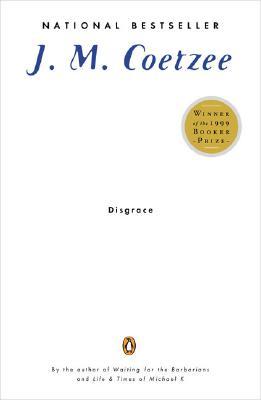
Review: Disgrace by J. M. Coetzee

David Lurie is a twice divorced, 52-year-old professor of communications and Romantic Poetry at Cape Technical University. Lurie believes he has created a comfortable, if somewhat passionless, life for himself. He lives within his financial and emotional means. Though his position at the university has been reduced, he teaches his classes dutifully; and while age has diminished his attractiveness, weekly visits to a prostitute satisfy his sexual needs. He considers himself happy. But when Lurie seduces one of his students, he sets in motion a chain of events that will shatter his complacency and leave him utterly disgraced.

When I think of a book I ask myself "What is this book about?", and I did the same thing with Disgrace. The answer to my own question puzzled me: I'm not exactly sure. It's definitely about a man who undergoes a series of traumatic events and changes as a result, but not too much. It's also about the people of South African rural areas, about family, about attitudes toward the four-legged creatures with whom we share the planet, morality, deceit and about how all these things are thrown into sharp relief when the circumstances are just right. Yet it's not about any of them. Finally I decided that this book is about how all the different parts of life affect a person, mold him, shape him, break him and, well, change him. Make him better? Maybe. Make him different from who he was the day before? Definitely.
The best novels always have strong characters who make you care about them, even if they're not all that likeable. David Lurie is not likeable at all, in fact he is kind of despicable, and yet Coetzee made it easy to sympathize with him. Not approve, mind you, but definitely sympathize. He takes us into Professor Lurie's head and we live through his experiences with him, feeling his indignation and disdain, his self-doubt and finally his affection for his daughter who he cannot help and who continues to reject his advice and his assistance. It's difficult to remain indifferent when one is allowed into a character's life like that.
I hear there is a lot of controversy and strong opinions about this book. I haven't looked into this, but I think that they stem from the situation David Lurie's daughter finds herself in, the part of the story that deals with animals, and the interactions between the white and black South Africans. I don't really understand why there is controversy. Coetzee's position regarding all events of the novel is neutral, it's as if he is simply reporting the facts as he witnesses them. He's not expressing opinions or taking sides, he is just telling a story. It is a fact though that this story makes one think about everything it touches upon. Isn't that what a good novel is supposed to do?
I would highly recommend this novel to any reader who is willing to give the book that isn't at all happy a chance simply because it's a good story very well told.

Wednesday, August 7, 2013

Review: The Ice Palace by Tarjei Vesaas

Siss and Unn are two friends who have only spent one evening in each other's company. But so profound is this evening between them that when Unn inexplicably disappears, Siss's world is shattered. Siss's struggle with her fidelity to the memory of her friend and Unn's fatal exploration of the strange, terrifyingly beautiful frozen waterfall that is the Ice Palace are at the center of this novel.

Had this elegant short novel not been assigned I most likely wouldn't have finished it, but now that I have read it I'm glad that setting it aside wasn't an option. Vesaas writing style is almost painfully spare, which takes some getting used to, yet once I got into it I kept marveling at the beauty of it. It's as if he set out to write a novel as stark as Norwegian winter itself, all sharp lines and few colors, intense in its subdued grace, frozen in place but ready for the spring thaw. It's as if he knew that if he gave the readers just enough they would create in their minds a world that would meld with the bare bones of the story and they would feel a part of it.
The story itself is rather simple: it follows a girl on the cusp of adolescence grieving the disappearance of a new friend, going through disbelief, acceptance and finally release. It's the elegance of execution and the profound insight into the characters that sets this novel apart. Vessas' children seem innocent and straightforward, and yet their problems are complex and far-reaching. The adults are an interesting combination of contradictions: on one hand they give children plenty of freedom to get through problems on their own and on the other hand it's clear just how concerned they are about the youngsters' welfare. One very special character I didn't expect was nature: Vesaas wove it into the plot so much that eventually the ice gripping the small village feels almost alive, it is certainly just as animated as any of the human characters.
I really want to talk about the details but for the sake of not spoiling the novel I will refrain. Just go get it and read it. It's worth every penny.

Sunday, June 2, 2013

Review: Manon Lescaut by Abbé Prévost

"The sweetness of her glance - or rather, my evil star already in its ascendant and drawing me to my ruin - did not allow me to hesitate for a moment..." So begins the story of Manon Lescaut, a tale of passion and betrayal, of delinquency and misalliance, which moves from early eighteenth-century Paris - with its theatres, assemblies, and gaming-houses - via prison and deportation to a tragic denouement in the treeless wastes of Louisiana. It is one of the great love stories, and also one of the most enigmatic: how reliable a witness is Des Grieux, Manon's lover, whose tale he narrates? Is Manon a thief and a whore, the image of love itself, or a thoroughly modern woman?

Remembering how intense my last Coursera experience was, what with needing to read a novel a week and do plenty of other related work I decided to give myself a head start on the Fiction of Relationships curriculum. Manon Lescaut will be the first novel we'll be covering and I'm glad I wasn't restricted in time when I read it. No, it's not long and it doesn't place any serious demands on the reader's faculties, but it does tax one's patience. At least it did that to mine.
It took me a while to get into the story because it is told in a very old-fashioned way, it begins at the end, then jumps to the beginning and works its way to the end again; it is also the perfect example of the author telling much more than showing. I did my best to remember that if this book is on the curriculum of a Brown University course there must be value in it, so I read closely in an effort to not miss this value among all the exceedingly flowery phrases and moralizing debates on the subjects of love and virtue. See, I read so closely that the floweriness has seeped into my brain! But I digress. I kept thinking that if nothing else this book provides an excellent example of how literature has changed since the 1700s and how I needed to pay attention to the relationships described in the novel since that will be the focus of the course. And then something curious happened: as irritated as I was by Manon's flightiness and Grieux's lack if backbone, as well as the archaic language, I soon found that the characters weren't entirely unsympathetic and began reflecting on all the reckless and crazy things people do in the name of love. Somehow this novel broke through the frustration and touched me.
This realization alone surprised me to no end and I continued reading with a certain degree of enjoyment. Imagine my surprise when I finished the book, looked it up online, and found that Manon Lescaut isn't as obscure as I imagined. Authors of novels hailed as classics referenced it in their work, it continues to inspire composers and dramatists, it is the subject of quite a few academic papers and it's still being published with the latest edition released in 2005! (Don't you just love Wikipedia?)
In the end although I wouldn't recommend this novel to a friend in search of an engaging and fun read I'm glad I read it, if purely because it's widened my literary horizons and showed that love has always been blind and young people have always been capable of highly imprudent behavior. It's human nature, after all!

Sunday, May 12, 2013

Review: The Cat's Table - Michael Ondaatje

In the early 1950s, an eleven-year-old boy boards a huge liner bound for England – a ‘castle that was to cross the sea’. At mealtimes, he is placed at the lowly ‘Cat's Table’ with an eccentric group of grown-ups and two other boys, Cassius and Ramadhin. As the ship makes its way across the Indian Ocean, through the Suez Canal, into the Mediterranean, the boys become involved in the worlds and stories of the adults around them, tumbling from one adventure and delicious discovery to another, ‘bursting all over the place like freed mercury’. And at night, the boys spy on a shackled prisoner – his crime and fate a galvanizing mystery that will haunt them forever.

The most powerful feature of this book for me is how poetic the language is. The lyricism of it, the almost dreamy quality of the narrative make this novel an experience of poetry in prose and the character's voyages throughout the book only become richer for it.
The novel's protagonist, Michael, tells the reader about the trip that changed his life both literally and figuratively when he was only 11 years old, although I didn't get a feeling that it was a journey of self-discovery in any sense. The boy simply experiences the adventures of the voyage and the adult reminisces about them and the events that followed, in a way wrapping things up for the characters, telling the reader where they ended up and how. Curiously enough the adult Michael is a writer, and Ondaatje himself arrived in England from Colombo when he was 11 on a ship called the Oronsay, just like the boy in the novel does. There is some speculation about whether the novel is autobiographical in a lot of ways and although the author hasn't confirmed or denied this I am inclined to believe that it is indeed autobiographical, however fictionalized and dramatized, especially in terms of a child experiencing life without direct adult influence and an adult fully understanding the real impact and meaning of those childhood experiences.
Michael's story is intertwined with stories of other passengers, many of whom aren't who they seem to be at first and whose presence makes for a multi-layered narrative. This reminded me of The Shadow of the Wind by Carlos Ruiz Zafon, who employs a similar story-within-a-story structure, and if you've been following the blog you'll remember that I enjoyed that book a lot. My favorite story-in-a-story was that of Miss Lasqueti, I found it even more touching and fascinating than that of the prisoner. Possibly that's because it is more subtle, there is no life or death drama and secrets in it, yet it got to me and made me think about the events of Miss Lasqueti's life and their undeniable effects.
There is quite a bit of jumping back and forth in time so if you usually have trouble with that - be prepared. It wasn't a problem for me at all, I actually enjoyed it because it gave the story a more mature feeling, clarified in a way why the 11-year-old protagonist didn't seem exactly pre-teen. After all it is an adult looking back through time at the child, reliving the experiences through the memories, offering insight that he wouldn't have had all those years ago.
This was one of the books I listened to as opposed to reading, and although having the author do the narration was very special because I knew that the intonations, pauses and pronunciations were done exactly as intended I think this is a book that should be read, be that on paper or eReader, especially if you are a person whose visual perception is better than audio perception. As I've mentioned before the writing is extremely beautiful and if you look up quotes from this book online you'll see exactly what I mean. I myself will be picking up this book again, this time soaking it all in from the page.

Sunday, January 27, 2013

Review: The Fault In Our Stars by John Green

Diagnosed with Stage IV thyroid cancer at 13, Hazel was prepared to die until, at 14, a medical miracle shrunk the tumours in her lungs... for now. Two years post-miracle, sixteen-year-old Hazel is post-everything else, too; post-high school, post-friends and post-normalcy. And even though she could live for a long time (whatever that means), Hazel lives tethered to an oxygen tank, the tumours tenuously kept at bay with a constant chemical assault. Enter Augustus Waters. A match made at cancer kid support group, Augustus is gorgeous, in remission, and shockingly to her, interested in Hazel. Being with Augustus is both an unexpected destination and a long-needed journey, pushing Hazel to re-examine how sickness and health, life and death, will define her and the legacy that everyone leaves behind.

The first thing you need to know about my experience with this book is that shortly after the two-thirds mark I stayed up till 2 AM reading, tears streaming down my cheeks and the box of tissues getting emptier by the minute. The words blurred but I would just wipe my eyes clear and keep reading. And then the other day I stayed up late again re-reading the last third of the book because I just couldn't return it to the library without doing so. It was that good. You have been warned.
My favorite part about Hazel and Gus's story is their voices and personalities. They are unmistakably teenagers with occasional temper tantrums and frequent additions of "like" and "that" to their sentences, but there is a certain mature gravity to them too that I believe stems from all they've had to experience in their short lives. They understand the world in a way that I don't think is typical for teenagers, with their conversations and thoughts going from simple truths to complex concepts and back, but the way Green wrote them felt natural and appropriate. I also enjoyed the fact that parents are very present in this novel. There are so many YA books out there nowadays where the characters might as well be orphans, but not here. It has been said that parents in this book are permissive but I didn't get that sense at all. The kids have rules, they have curfews, and when they push back and get away with it there's not a sense that it's a common-place occurrence. Maybe this heightened presence of family is due to the children being more dependent on their loved ones than your average teenager but the fact remains.
I'm going to break my No Spoilers rule here, so if you don't want to know what happens just skip to the next paragraph. Here goes. I had no trouble suspending disbelief in the first half of the book although Gus being particularly handsome did make me roll my eyes a little (it seems that all love interests with very few exceptions are incredibly attractive), and despite the fact that Hazel and Gus might seem pretentious at times (who in this day and age speaks like that!) I really did like them, but then the trip to Holland happened and the book took on a fantastical dream quality to me. I'm not denying that the Wish Foundation could make it happen, but leading up to Holland everything about this novel is so grounded in reality that Gus getting in touch with Van Houten on the first try and the trip coming together all of a sudden seemed too over the top and even magical, which in this case wasn't exactly a good thing for me. And then they were back home and reality reared its ugly head, and yet I never could get rid of the fairy tale sensation through the rest of the book.
In an interview Green gave to Goodreads he talks about making a particular effort to not write a sentimental novel and I believe he succeeded. Hazel and Gus are very unsentimental characters, they accept their circumstances at face value and make the most of them. They might be angry, they might be bitter, they might be tired, but they don't allow self-pity to rule their lives. Hazel sees reality clearly and speaks her mind, Gus always puts a positive spin on any situation, and they don't treat each other like cancer kids, which gives their relationship a certain levity. This combination of practicality and optimism allows them to have a life that's as close to normal as possible, and because of it their families can keep it together through the hard times. And when those hard times come Green remains unsentimental. He talks about the physical frailty and the hits a person's spirit takes with every defeat of the body, he talks about life continuing even when it ends for some, he shows us what can happen to families when the fight is finally over. Hazel is the perfect narrator for this novel, her no-nonsense voice and straightforward account of events that is not overloaded with adjectives or descriptions put me in the middle of every scene and allowed my imagination to build on the simplicity. There is no need for many words when the imagery is already there.
Oblivion and awareness are a big theme in this novel, with the characters having almost metaphysical discussions about the universe and influencing each other's opinions as the story progresses. Green takes on the common desire to be known and remembered by the world and examines it from the flip side - what if we are loved not widely, but deeply, does that make our lives less valuable than the lives of those with worldwide renown? I don't believe it does, and for all his fame I think Green is of the same opinion.

P.S. Here is that excellent interview I mentioned.

P.P.S. [Jan. 2014] If you enjoyed the book and are ready to shed some more tears for Hazel and Gus you'll get your chance when the movie comes out!

Sunday, January 20, 2013

Review: Gone Girl by Gillian Flynn

On Nick and Amy's 5th wedding anniversary the beautiful and intelligent Amy goes missing. There are signs of struggle and Nick is the prime suspect in his wife's disappearance. Before long one thing is perfectly clear: marriage can be a real killer.

Dystopias has been popular lately and by the time I was about two thirds in I decided that Gillian Flynn gave us one too. So what if it's not set in a post-apocalyptic future of an alternate universe and the people aren't genetically modified or lorded over by a small group of despots. This is a dystopia of a modern-day family set in a dying Midwestern town succumbing to the economical depression, and the characters are just like you and me, shopping at big box stores and plotting their spouses' death. Alright, almost like you and me.
This is a deliciously twisted story about two of the most dysfunctional people I've ever heard of, and it made me think about my marriage on a few occasions. "Do we do that?" Or worse "We do do that!" That's how this book is, it's so well-written, so grounded in the reality we know from the cream-of-something casseroles to the energetic true-crime show host who is the spitting image of Nancy Grace, so full of the little details that make the story come alive, that it's easy to believe that what happens to the Dunnes isn't just the stuff of novels, that it's based on me, you, all of us, really.
As I read the book I marveled at Flynn's skill in bringing together two thoroughly unreliable narrators, a mystery, a character study, a look at our society, secrets piled on top of one another, and an ending that left me sitting there with only one thought in my head: "Bloody hell". She pulled this off with voices that rang true despite all the falseness, a world that I know exists, and a pace that never slowed down enough for me to forget to wonder what would happen next, because even when the original mystery was solved I knew that the story was far from over. (I would've known it even if I didn't see how many pages were left in the book.) All this convinced me that at any given moment in the novel I was exactly where Flynn wanted me to be, and that kind of sensation of intention all the way made for a very reassuring experience when on the whole this book was anything but.
It's easy to sing this novel praises (I really do see what all the hype is about) but what really stayed with me was the look at family that's so unflattering and uncomfortable that most don't think about it that way. How much do we really pretend to be better than our true selves when we court? How "sustainable" is the pretense, to use Amy's word? What happens when the illusion's gone and two people end up staring at each other, horrified? And how often are we horrified as opposed to thrilled? So many questions to think about, and I applaud Gillian Flynn for asking them and for packaging them in a novel that's very difficult to put down. If you haven't read it yet, what are you waiting for?

P.S. If you don't feel like thinking about serious questions or have already read Gone Girl, or don't have the time to get sucked into it right now here's a great interview with Gillian Flynn. Enjoy!


Sunday, December 23, 2012

Review: Thursday at Noon by William F. Brown

Cairo, 1962. Richard Thomson is already having a very bad day when someone leaves a corpse lying on his back steps. Its head had been lopped off like a ripe melon. Thomson is a burned out CIA Agent and the body belongs to Mahmoud Yussuf, a petty Cairo thief who tried to sell him photographs of a long-abandoned RAF base in the Egyptian desert. What the photos have to do with a dead Israeli Mossad agent, Nazi rocket scientists, the fanatical Moslem Brotherhood, and two missing Egyptian tank regiments could start the next Arab-Israeli War. Alone and on the run, no one believes Thomson’s answers - not the CIA, the US Ambassador, and most assuredly not Captain Hassan Saleh of the Homicide Bureau of the Cairo Police.

This is my second William Brown spy novel and I enjoyed it at least as much as Amongst My Enemies. Reading it was comforting, like stepping into a world I've visited before, and there are a few reasons for that.
Mr. Brown is in familiar territory in this novel: it is the years after WW2, the world is still recovering from the war and while everybody has been trying to forget about the Nazis they are still there and weaving their sinister plots. This time the action takes place in the Middle East, in Egypt to be precise, and the hero of the story, who seems to be Brown's "type" - a lone wolf with a painful past and the only one who sees the situation for what it is, is on his own in preventing a disaster.
This story is not exactly a mystery because from the very beginning it's clear who the bad guys are and what they are up to, although the full scope of their plans becomes increasingly clear as the book moves forward. Brown is very skilled at keeping up the pace by alternating the points of view of several major players, giving an insight into their characters and histories, and they are all very different and very interesting. In fact, the alternation of protagonists was my favorite thing about this book, it gave a fuller picture of what was going on and made the events and the characters seem more real. I particularly liked Captain Saleh, he is such a consummate professional and such a patriot, and he goes through the greatest transformation in this novel, greater even than Thomson.
While this book is not a philosophical treatise it does make one think about the fact that not all Middle Easterners are religious fanatics, not all of them are determined to wipe out everyone who isn't on the same page as them. In the light of the events of recent history that's a relevant subject to ponder, and considering that the book was first published in 1987 and is set in 1962 all the more thought-provoking. After all, novelists do get a lot of their material from the real world, even if everything about the story is fictional.
The only thing that I didn't enjoy about this book (and I really hate saying it, but it is what it is) is that my particular copy was in need of a thorough editor. This is a good book and I think it deserves to have a presentation that matches the content.

Sunday, November 11, 2012

Review: A Simple Thing by Kathleen McCleary

When Susannah Delaney discovers her young son is being bullied and her adolescent daughter is spinning out of control, she moves them to remote, rustic Sounder Island to live for a year. A simple island existence--with no computers or electricity and only a one-room schoolhouse--is just what her over scheduled East Coast kids need to learn what's really important in life. But the move threatens her marriage to the man she's loved since childhood, and her very sense of self.
For Betty Pavalak, who moved to Sounder to save her own troubled marriage, the island has been a haven for fifty years. But Betty also knows the guilt of living with choices made long ago and actions that cannot be undone. "A Simple Thing" moves beyond friendship, children, and marriages to look deeply into what it means to love and forgive - yourself.

When I first picked up this book I wondered if it was going to be one of those character-driven novels where there is a lot of talking, very little actually going on, and by the end of which you're wondering what is it exactly you've just read. I am not too big of a fan of those. But "A Simple Thing" turned out to focus both on the characters and on plot. From the very first chapter it was obvious that Susannah is a woman who is not afraid to act, even if fear is what propels her. She, as well as her children, made things happen, and I liked that about them as much as I liked that Susannah recognized her mistakes and was willing to correct her course when necessary. She may seem flighty to some, but to me she is a woman figuring it out as she goes, and I feel that this makes her relatable for most people. Betty, the second protagonist, is her antipode in many ways, a solid, sure woman who makes plans and follows them, even if she realizes later on that she has made a mistake somewhere. The blurb on the back cover suggests that both Susannah and Betty undergo a transformation but I found this misleading. Suzannah is the one discovering herself and while Betty's story often mirrors that of the younger woman she has already recovered from the pain of her past and is now there to sympathize, listen, and provide a gentle nudge in the direction of healing.
A novel such as this one I think relies heavily on the author's ability to create a sense of a place, not just set the scene, but make you comfortable in the setting. McCleary does this very well and in a way that doesn't intrude on the characters or their journeys. By the time the book was over I felt as if I knew what it's like to live on Sounder, understood the rustic nature of the islanders' existence, and even loved the place for the simple comforts and the camaraderie. This even made me yearn for a place like that in a way, until it occurred to me that this sort of romanticized portrayal was very fitting for the perspective of a person who, like Susannah, is not really passing through but not staying either, and that given more opportunities Betty might've revealed more gripes than just having to take care of the chickens, who clearly don't hold a special place in her heart. After all, living in a tiny community for decades can't be bliss all the time, no matter how much hard work there is to keep people out of each other's business.
There are a few good messages woven into this novel, and one of my favorites is the one that talks about the necessity of nurturing oneself. We forget about that much too frequently and it really is a universal truth that applies to both men and women, although women are the ones who need reminders most frequently. Susannah getting in touch with her artistic side after a hiatus of many years was the turning point of the book for me, echoed by Betty's recollection of the time whine she remembered that she was more than just a woman who took care of everything and everyone. The parallels between these two women's lives were eery at times, and while they are very different people their stories somehow anchored each other, showing that no matter how different the people the same principles of recovery apply.
For the most part this was a very enjoyable book filled with interesting characters (Barefoot stole every scene he was in and Katie definitely made things interesting with her indomitable spirit) and sage advice on subjects such as guilt, responsibility, knowing when to hold on and when to let go, and it worked for me until almost the very end when a dramatic event seemed to be too over the top to fit in with the rest of the story while remaining its climax. That chapter was well-written but it was just too much for me, although it did help Susannah put a lot of things in perspective and move forward with her life. Throughout the book this was a relatively subtle story with the struggle mostly internal and turning it almost into an adventure story at the eleventh hour seemed incongruent.
A friend offered me an ARC of this book when she somehow got two copies and I'm glad that she did. It is a solid novel and I won't hesitate to pick up other novels by Kathleen McCleary should I happen upon them.


Sunday, October 14, 2012

Review: The Tiger's Wife by Tea Obreht

In a Balkan country mending from years of conflict, Natalia, a young doctor, arrives on a mission of mercy at an orphanage by the sea. By the time she and her lifelong friend Zóra begin to inoculate the children there, she feels age-old superstitions and secrets gathering everywhere around her. Secrets her outwardly cheerful hosts have chosen not to tell her. Secrets involving the strange family digging for something in the surrounding vineyards. Secrets hidden in the landscape itself. But Natalia is also confronting a private, hurtful mystery of her own: the inexplicable circumstances surrounding her beloved grandfather’s recent death. After telling her grandmother that he was on his way to meet Natalia, he instead set off for a ramshackle settlement none of their family had ever heard of and died there alone. A famed physician, her grandfather must have known that he was too ill to travel. Why he left home becomes a riddle Natalia is compelled to unravel.

The Tiger's Wife has been on my radar for a while now due to its notoriety and near-constant presence on the New York Times Best Seller list for months on end. When it eventually came up on the reading list of the book club I joined earlier this year I was glad to finally read it.
One of my favorite things about this book is how realism and fantasy are intertwined almost inseparably, how every plot line is tied inextricably to another and how much it reminded me of the story traditions I grew up with. Obreht is from the Balkans, I am from Ukraine, and while there are obviously differences there are also similarities that ring true, a result of our Slavic roots with a patina of the Ottoman invasion centuries ago, thicker for some, more transparent for others. I could also really see and relate to how she described it in an interview for RFERL:
...there's a concept of "a Balkan story." Even small stories are somehow big, huge. There's a moment in a Balkan story when the line between mythology, legend, and the story become irrelevant. Somehow, that mythology becomes a truth in itself and it becomes a very personal truth. The way in which you receive a story becomes your truth, and then it becomes the truth for the person you're telling the story to. That is very much our way...
I read the novel very quickly and only when it was finished did a thought form in my mind that the book is ultimately about death. This alone didn't faze me, after all I read The Book Thief earlier this year, and it was narrated by Death. What did surprise me though was finding out how young the author is. I could hardly imagine how a woman in her early 20s could have this kind of darkness in her enough to write a book like this. Don't get me wrong, The Tiger's Wife is not depressing by any means (there are a couple novels I read this year alone that were much more depressing), it is rather a matter-of-fact approach that regards death as part of life, sometimes difficult to reconcile oneself with but always present. The subject however is dark nonetheless.
I also very much enjoyed Obreht's writing style. It was proper without being stuffy and easy without being overly conversational. This is a literary novel that avoids boring the reader to tears and instead pulls one along with it through the many subplots until legends unwind into life and people with secrets, fears and hardships. The historical backdrop and very realistic details of family life, which I now know are autobiographical, give richness to these legends, provide a fertile environment for them, ground them and even help develop them better. I didn't know much about the history or culture of the Balkans before reading this book but now I am curious and will most likely look for more books and folklore of the region.
I thoroughly enjoyed this book and if you are intimidated by its fame and international acclaim I urge you to disregard those reservations and give it a chance. It is well worth your time. Just don't expect everything to be presented to you neatly tied with a bow on top, you will be expected to make the leaps necessary to gather all the threads together from time to time, and you may even arrive at conclusions that won't match your fellow readers'. This exact thing happened in our book club and made for an interesting discussion.

Sunday, September 30, 2012

Review: A Lesson Before Dying by Ernest J. Gaines

A Lesson Before Dying is set in a small Cajun community in the late 1940s. Jefferson, a young black man, is an unwitting party to a liquor store shoot out in which three men are killed; the only survivor, he is convicted of murder and sentenced to death. Grant Wiggins, who left his hometown for the university, has returned to the plantation school to teach. As he struggles with his decision whether to stay or escape to another state, his aunt and Jefferson's godmother persuade him to visit Jefferson in his cell and impart his learning and his pride to Jefferson before his death.

I had a difficult time reading this book, not because of the writing, or the voice, or the characters. All those worked, and worked very well, and that is in part why I won't focus on them this time. What made it difficult is the story itself. At first glance there was nothing I could relate to: a male protagonist coaching a death row inmate, Louisiana plantation in 1940s, persistent, and sometimes surprising, racial divides, poverty, level of education so low you could determine it from speech alone. All this was so far from whe world where I grew up in Eastern Europe and so far from my life now that at times it was challenging to stay conected to the story. Then I would read about Grant's aunt cooking for everybody and loving it when her family and friends enjoyed her food, or about adults making sacrifices to improve their children's lives and give them the opportunity of something better, and I would remember my grandmother and my parents, and that the nature of humanity is the same regardless of time, place, skin color or education, and with this understanding I would be able to regain my grasp on what was happening and keep going.
Another complicating factor was that the main emotions running through the book are anger, bitterness and general dissatisfaction. Grant is unhappy with working as a plantation teacher and being forced into coaching Jefferson. His aunt is unhappy that he doesn't see the bigger picture and even when he does become invested in helping Jefferson he does it in a way with which she disagrees. Vivian, the woman Grant is in love with, is unhappy to not be able to get a divorce from her absentee husband and not have to hide her relationship with Grant. The reverend is upset that he isn't able to get through to Jefferson while a man so much younger, who he belives is a sinner and for all his education still doesn't really understand life, eventually does what he couldn't. And Jefferson himself is bitter and angry about the unfair verdict and the demeaning defense strategy of his attorney, as well as the fact that his young life was going to be cut shortonly because he was at the wrong place at the wrong time and didn't have the werewithal to run. Keeping up with all this negativity was a bit trying for me at times.
We never learn how old Jefferson was, or any of the other characters for that matter, or whether he had a mental handicap, so a lot of his actions and reactions were puzzling to me. I never understood why it took a stranger to make him stop taking out his anger on his godmother, who couldn't be responsible for his predicament by any stretch of the imagination. In fact, there were a few things I didn't understand, such as why Grant essentially punished his students for him being dissatisfied with his life, shortchanging them in the process, or why he professed his love for Vivian and yet asserted himself at her expense, or why Grant's aunt's preferred method of communication was to glare and give silent treatments instead of explaining what her nephew clearly didn't grasp. It may take me a while to understand these thing, maybe I'm simply too young and haven't seen enough of life just yet to do so right now.
This book may have been difficult and not at all uplifting, but it did not leave me indifferent, and it made me think about issues that have never particularly affected me. It made me look at the world around me from a different perspective. It made me wonder about the things the grandparents of people I see around me haven't told them about the past. I may not be able to fully appreciate this novel now, but it certainly has altered the way I look at the world around me and that alone makes it worth reading.

Sunday, September 2, 2012

Review: Sam Cruz's Infallible Guide to Getting Girls by Tellulah Darling

A friend shared this book trailer a while back and it was so engaging and fun that I immediately wanted to read the book. A few clicks later I'd requested the galley from NetGalley and was eagerly anticipating reading it.
It was delightfully fun, just like the trailer. Amused by the clever and not too sensitive banter the characters engaged in on a regular basis I laughed out loud and wrapped up my reading sessions with a feeling of having had a good time. As I went along though several things began to nag at me and it only got worse. One was that Sam and Ally's main focus seemed to be on "who's in charge". They put a lot of energy into having the last word, coming out on top, controlling the situation. It seemed to be almost a competition both with each other and whatever other partners they found themselves with. Another thing I couldn't get over is that while the story is supposed to be about two best friends falling in love what I saw on the pages is them falling in lust. It was all about sex with those two, and with every other character in the book for that matter. I understand teenage hormones and our not-so-demure society, but this tendency for everybody to barely make it to the bedroom made the whole thing seem terribly shallow, which combined with the dominant agenda I talked about earlier resulted in the kind of message I wouldn't want to be sending to teen and pre-teen readers.
It wasn't all questionable though. For example I really enjoyed Ally's journey to realizing her full potential as a young woman while remaining true to herself and Sam's transformation from a womanizer to a guy capable of making a commitment and sticking to it. I think the scene where Sam had an epiphany as to what kind of life he was building for himself was the strongest one in the book, closely followed by the scene where Ally sheds her assumed persona but sees that she can't go back to being exactly who she was before Sam worked his magic on her. The quirky secondary characters presented a cute backdrop for their changing relationship, although for the life of me I couldn't tell apart the diner guys.
The book is told by the two main characters and while at first the author seemed to struggle with Ally's voice she soon found her stride and it became just as alive as Sam's. The character voices were actually what I enjoyed most about the book, they fit the characters and evolved with every new change in Sam and Ally's world views.
I think that Ms. Darling has talent and potential, and had I not found the characters' focus questionable throughout the book I would've enjoyed this fun bit of light reading a lot more. As it is, if you're looking for an undemanding book that would give you a reason to laugh you've got one right here.

Sunday, August 19, 2012

Review: Still Alice by Lisa Genova

Still AliceAlice Howland - Harvard professor, gifted researcher and lecturer, wife, and mother of three grown children - sets out for a run and soon realizes she has no idea how to find her way home. She has taken the route for years, but nothing looks familiar. She is utterly lost. Medical consults reveal early-onset Alzheimer's. Alice slowly but inevitably loses memory and connection with reality, told from her perspective. She gradually loses the ability to follow a conversational thread, the story line of a book, or to recall information she heard just moments before. Genova's debut shows the disease progression through the reactions of others, as Alice does, so readers feel what she feels - a slowly building terror.

As highly recommended as this book is and as much as I wanted to read it, it took me a good while to muster the courage to actually do it. I was intimidated by the subject because I lived for a year with a family where the elderly grandmother had Alzheimer's, and even though there was much I didn't understand I witnessed first-hand how traumatic her condition was for the entire family. Finally I decided to just go for it, and when the novel was over I sat there for a while, heartbroken, not knowing where to begin thinking back on it like I usually do after finishing a book. There was so much there. There was Alice's love for her family, her bitter-sweet feelings for her husband, her fear of losing herself, of losing all the time she thought she had. There was her husband's pain and the decisions he had to make, her children's fear and strength, the relationships between them all, and the impact of Alice's diagnosis. All this tore at me and demanded attention, all the questions that stemmed from the story being told by a person with Alzheimer's begged to be answered, and I couldn't begin anything else for several days because I was still living in Alice's world, trying to come to terms with a question that resonated with me because reading, books and words are an enormously important part of my life, just like they were for Alice - how does one cope with the knowledge that meaningful reading is no longer possible?
How does the author do this in a volume of less than 300 pages? It's simple, really. Lisa Genova has a gift. She does it with writing like this:
"She sat in the passenger seat and waited for John to say something. But he didn't. He cried the whole way home."
What else does the reader need to understand the depth of feelings, the gravity of the situation? Nothing at all, it's all there in three short sentences.
Another aspect that made the book work is the authenticity of everyday feelings and surroundings. I don't know this for a fact but I think that Ms. Genova is a runner, and I think she has a house somewhere at the beach in New England. I think that she has a passion for the world of academia and a complicated parent-child relationship in her life in one way or another. I think she drew on all those parts of her own life and experiences in crafting Alice's story and through her own familiarity she made the story even more personal than it already is.
I cried while I read this novel. I cried for Alice, for her husband and for their children. I cried for the losses of memories, dignity, conversations and truly meaningful time together. I also laughed through tears because of Alice's irrepressible spirit, intellect and sense of humor that shone through till the very end. This book may not affect you as it did me, there is a lot to be said about timing after all. I thought it was excellent, heartbreaking but truly excellent, and I highly recommend it.

P.S. I have not been able to use the word "thingie" without immediately looking for a more articulate alternative for weeks now. Thought you should know.

Sunday, July 15, 2012

Review: In Leah's Wake by Terri Giuliano Long

In Leah's WakeThe Tylers have a perfect life - beautiful home, established careers, two sweet and talented daughters. Their eldest, Leah, an exceptional soccer player, is on track for a prestigious scholarship. Their youngest, Justine, more responsible than seems possible for her 12 years, has a brilliant mind. Their blissfully peaceful life ends when Leah meets Todd, a former roadie for a rock band. As Leah's parents fight to save their daughter from a world of drugs, sex, and wild parties, their divided approach drives their daughter out of their home and a wedge into their marriage. Meanwhile, Justine observes her sister's rebellion from the shadows of their fragmented family questioning whether anyone loves her and if God even knows she exists. Can this family survive in Leah's wake? What happens when love just isn't enough?

The author asked me to read and review this novel and I'm very glad that she did. It is heartbreaking and infuriating, there's not one character I really like, it scared me at times and reminded me of things I'd much rather not think about. It also gripped me, made me care about everyone there, repeatedly took me on a terrifying ride in a few simple words, and when it was over left me sad and hopeful for the Tyler family all at the same time.
The author very skillfully evoked alternately the warmth of happy moments and the desperation of moments when everything seemed to be unraveling faster and faster. I admired her ability to avoid making the characters caricatures of the problems that ruled their lives, instead she made them flesh-and-blood real and I sympathized with them every step of the way. The gradual revelations of facts about this family made for a reading experience that felt very natural without the sensation of an information dump and I appreciated not being given a tour or a detailed description of characters immediately after opening the book. Instead I got a feel for what kind of people they were, their family dynamic, and saw the beginning of what would become the downward spiral for Leah and the other Tylers. I appreciated the very distinctive voices of the conflicted Leah who knows what the right thing is but can't seem to do it, the intelligent and responsible yet insecure Justine who only wants her big sister's approval and ends up growing up much too fast, the volatile dad plagued by his own feelings of inadequacy, and a mom who helps others to make the best out of their lives and yet can't help herself and her own family.
The things that happened kept the plot moving and benefited the story, and at the same time were very realistic. I often wondered how the author came up with it all and yet didn't go overboard. There was a nice balance between reflection and action and alternating points of view allowed for fuller character development and all the good guys got a voice while at the same time allowing the troublemakers to not fade into shadows.
I mentioned that I didn't really like any of the characters and that is true. They were all flawed, in one way or another, and seemed to be filled with regrets and delusions. When it came to the parents I kept remembering that old proverb, "The road to hell is paved with good intentions". When it came to Leah I kept remembering myself when I thought I was so grown up and independent and in fact was beginning to find my way into trouble. This was the main factor that made this book so scary for me, in a way I saw what could have happened to me or someone else in my life then.
This is not an easy book to read but it is so well-done I would recommend it to anyone without reservation.

Sunday, May 27, 2012

Review: The Truth About Us by Dalene Flannigan

The Truth About UsWhat happens when the past catches up to the present and the truth surfaces? Three women, roommates back in college, find their lives forever altered when one of them feels compelled to confess the secret sin of their past.
And whose truth is it?
'The Truth About Us' weaves the past and the present in a page-turner that explores the shifting quality of truth, and the cost of secrets.

I'll say this right now: I loved this book. From start to finish it kept me invested in the story and the characters' lives and when I knew it was nearing its conclusion I didn't want it to end. I even told a reader friend how good it was before finishing it, which I hardly ever do because as we all know there are no guarantees against things deteriorating and leaving you disappointed. Fortunately my praises were not dampened but rather reinforced by the last few chapters. I think I'm getting ahead of myself...
The narrators are three women who shared a house in college and are bound together by a secret they've sworn to keep. Their voices are as distinctive as their personalities and lives, and their alternating chapters helped create a fuller picture of the past and present events. I don't know what it cost the author to piece together these three characters. Their pain, fear and struggles are right there on the page, and if any of it was inspired by reality Ms. Flannigan lived or witnessed writing this book can't have been easy. It is possible that the degree to which I became invested in the story is due in part to me recognizing traits of a person I know in one of the characters, and although she is by far not as extreme there is a lot of truth in the portrayal. It is also possible that the realism of one lead affected how impressed I was by character development of the other two. These women were so well-written I believed they could really exist, and I sympathized with them even though their actions didn't exactly put them in the "good girl" camp.
I've read a few debut novels in the last several months and few impressed me as much as The Truth About Us. Actually, By Fire By Water by Mitchell James Kaplan is the only other one I can put in the same class as far as writing goes. It's vivid and personal, emotional and thoughtful, and every word builds the larger picture, like pieces of a puzzle that fall into place one by one to reveal more and more of the whole to the point where at the end you really understand why the characters act the way they do and what their worlds are like. There's never any confusion but rather an increasing understanding that comes with bringing things to light and seeing every detail.
The thing that made this novel particularly satisfying was the last chapter. You know how often you finish a book and want to know what happened next? Here we have that last little bit that gives us a degree of closure and understanding of what happened to the characters when they could finally go on with their lives. It also gives us the last few details we were missing about the events of the night that started it all, and that was like the last full stop that said 'this is it, there is nothing more to tell'. I loved how the finality of it brought the story to its true conclusion.
Some may be inclined to categorize this book as a mystery and although there is an element of that genre here I think that this novel is more an exploration of what truth is and what it means to different people, how our lives affect our understanding of it and how our circumstances determine the grey areas around it. The concept of truth runs through everything in this book, not just the parts associated with the secret that's weighing on the characters and spurs them into action. It underscores the idea that every day we are living out our own truth, struggling with it or reveling in it. This is the truth about us, however we understand it.

Sunday, May 13, 2012

Review: Mutant Message Down Under by Marlo Morgan

Mutant Message Down UnderIn this New York Times bestseller, Morgan leads readers on the spiritual odyssey of an American woman in the Australian outback. Is it a memoir or a work of fiction? It is up to you to decide.

While I was reading the book I really enjoyed it. There was adventure, there was humor, there was reflection and evaluation of one's past, present and future. It was a fun read and a lot of the lessons the protagonist learned along the way resonated with me, such as appreciating the experiences and not things, knowing that if you've helped one person you did well because you can only help one person at a time anyway, having faith in oneself, appreciating and developing one's talents, not taking more from nature than you need and always making sure you don't take everything. The book was written in a compelling way, it was fun and at the same time thought-provoking, and I breezed right through it even though I acknowledge that this is not one of the more skillfully-done book I've read so far. And then I finished reading, sat back as I usually do, and thought about it longer than usual because something was nagging at me. It took me a little while to figure out that I was having trouble with the fact that some of the events didn't really fit in with the whole, some of the actions of the aborigines went against the characterizations the author gave the tribe earlier in the narrative, and even the timeline was often flexible at best. So I decided to look up what the internet had to say about Marlo Morgan and her book.
A brief search later I learned that when this book was originally published in 1991 it was promoted as nonfiction and in the foreword the author says that the story the reader is about to discover is a true account of what happened to her in Australia. Years later however the book was republished as fiction and there are a few websites that post a wide variety of information intended to prove that the account is in fact fictitious. I have read the articles protesting it, as well as the account of the statement Ms. Morgan's made to the representatives of an Australian Aboriginal association acknowledging that her book is a work of fiction, I've even read about Ms. Morgan's Australian employer saying that her entire stay in Australia was spent working in his pharmacy and there was no time that she was absent from the city. Having read all this I find that more than anything this whole situation makes me sad and disappointed. If what Ms. Morgan writes about really happened then why are people so determined to discredit her and her book? And if her story is fiction then why did she make such an effort to make people believe that it's not? Why apologize to the Aboriginal representatives if there's nothing to apologize for? And if there is something to apologize for then why shrug it off and continue as if nothing happened?
Still I wanted to give her the benefit of the doubt. What if it was just haters doing their thing. Besides, I wanted to believe that the book is a memoir because the idea of a small society living in peace with themselves and the world around them, and not upsetting the natural balance of their environment is reassuring at a time when we keep hearing about climate change, whole species disappearing, pockets of land that has not been touched by humans becoming smaller and smaller. Now, I'm not a person who'll willingly move out of the city and live without electricity and plumbing to reduce my carbon footprint, but I will recycle and conserve water and power whenever I can, and I do believe that our actions affect the planet in a way that's ultimately detrimental to the length of time the human race will be able to enjoy themselves on Earth. After all, if one uses resources faster than they can be replenished sooner or later they will run out, and we have not yet figured out a way to make natural gas and oil or grow trees faster than it happens in nature.
As much as I wanted to believe in the authenticity of the story I couldn't get past aborigines speaking like urban dwellers, I couldn't reconcile the fact that the author seemed to go between needing an interpreter's help during the simplest of conversations and having complex discussions with members of the tribe without the interpreter present. I did not understand why everybody had names that meant something when translated, such as Secret Keeper and Female Healer, and even Ms. Morgan was given a name fashioned in the same way, but the man who served as interpreter was known simply as Ooota? I was also put off by frequent talk about how the author was losing weight on this walkabout, how pounds were literally melting off of her, and yet we have only relatively general depiction of her life with the tribe. I don't know about you, but I would much rather hear more about the daily life of a people so unlike my own than about how much thinner one American has gotten over the course of several months in the outback. There also seemed to be an undercurrent of "if you reject this account as truth then you're with those who say that people living without technology in the bush are lesser beings and that's just wrong", which grated on my nerves with its one-sidedness.
There is quite a bit of what can be referred to as "new age-y" talk about how all humans are linked to each other, how every experience is a lesson to be learned and if we don't learn it then we're presented with the same lesson again, about living in peace and harmony with ourselves, each other and the world around us, etc. In some things the author completely lost me, in others I agreed with her because ultimately there is tremendous personal value in actively pursuing areas in which one is talented, and being aware of our impact on the world has value for all mankind. These are all good messages, I just wish that Ms. Morgan hasn't cheapened them by trying to pass an account which I believe is fiction as something that really happened to her. All that said, I'm glad that I've read this book, if nothing else it made me think about the world and my place in it while I was reading and about people's goals and intentions when I finished it.

Sunday, March 18, 2012

Review: Drawing In The Dust by Zoe Klein

Drawing In the DustBrilliant archaeologist Page Brookstone is convinced bones speak, yet none of the ancient remnants she has unearthed during her twelve years of toiling at Israel's storied battlegrounds of Megiddo has delivered the life-altering message she so craves. Which is why Ibrahim and Aisha Barakat's claim that the ghosts of two lovers haunt their home intrigue her. Ignoring the scorn of her peers, Page investigates the site and when she is faced with hard evidence of a cistern beneath the Baharats' living room she knows she has discovered something unparalleled. What she doesn't know yet is that this find will change her life, as well as the world of archaeology, forever.

For a while now I've been reading books that have been recommended by someone, somewhere, somehow. The Drawing In The Dust is my first foray into unchartered territories in a very, very long time and fortunately it didn't disappoint. As a fan of anything paranormal I was attracted to the book by the blurb that promised ghostly presences and the setting - Zoe Klein takes us to Israel, to the world of rich history, archaeological digs and long-lost treasures, the only place on earth where people read their antique records in their own language. The idea of the main character unearthing something unique was more than I could pass up so the book came home with me.
This novel is a chick lit-flavored coming-of-age adventure tied into Page's discovery of the tomb of the prophet Jeremiah buried in the arms of an unknown woman. There is love and lust, international and scientific conflict, and a particularly heart-warming notion that people can in fact all get along, despite our differences. Page has some personal drama and tragedy to sift through (pun intended) before she can come to terms with who she is and what she wants from her life, and her love interest has a similar journey to make so there is quite a bit of almost teen-like angst and self-doubt.
There are a lot of references to the Scripture, faith, some interpretation of the verses and I was very pleased to see in the end that it wasn't overwhelming. In fact, if felt very natural, the religious elements fit very neatly into the story, and learning after I finished the book that the author is a practicing rabbi helped explain why they didn't feel forced or out of place. This is Ms. Klein's life and she transfered it in a way to her character, Page.
The hook of the story is that Page abandons a well-established dig to come work under the house of a couple who say they have ghosts and know there is something there. This paranormal element worked very well in some instances and in others it left me confused because the nature of it seemed to change half-way through the story. I did enjoy however that it wasn't completely cheesy, as it could have been, although it was quite a bit more new-agey than I would have preferred.
The insight into the daily life of the Jewish and Arabic communities in Jerusalem was what grounded this story for me. It's a glimpse into something we don't see on our news and I'm willing to bet most people know nothing about this aspect of life in Israel. I credit the authenticity and intimacy with which Ms. Klein presented these parts of the book to us readers to the fact that she spent time in Israel and most likely witnessed events similar to what she described. There were elements that seemed far-fetched but on the whole it worked for the purposes of this book.
This is an entertaining read and if you're interested in literature with Hebrew motifs and setting as well as very atmospheric writing you will enjoy this book.

Sunday, January 8, 2012

Review: The Friday Night Knitting Club by Kate Jacobs

The Friday Night Knitting ClubGeorgia has her hands full, juggling the demands of running her yarn store and raising her spunky teen daughter, Dakota, by herself. Thank goodness for Anita, her mentor and dear friend, and the rest of the members of the knitting club that meets every Friday when the shop closes for the day to talk, sample Dakota's baked treats and knit. The ladies are just as varied as the skeins of yarn in the bins: there's Peri, a prelaw student turned handbag designer; Darwin, a somewhat aloof feminist grad student; and Lucie, a petite, quiet woman who's harboring some secrets of her own. When unexpected changes throw these women's lives into disarray, and the shop's comfortable world gets shaken up like a snow globe they stand by each other and keep each other strong. And when the unthinkable happens they realize what they've created: not just a knitting club, but a sisterhood.

Hello, everybody! It's been a very relaxing week of much-needed down time after all the fun of the holidays but a girl can't spend too many hours lounging on the couch watching Sherlock reruns without missing her blogosphere buddies. So I'm happy to be back and today I bring you a wonderful book that kept me reading late into the night and even got me to cry on a couple of occasions.
It is the story of several women's journeys of self-discovery, self-realization and self-appreciation and the knitting lessons that accompany it highlight the life lessons the characters learn. The way the author talked about the craft in the first chapter, about learning it in childhood, the joy of it, it reminded me of learning needle crafts with my mom and after those first pages I couldn't stop reading. It was like I had a connection with these people and their stories mattered to me. And what stories they are! A single mother who made it as a business owner in New York City, a 12-year-old planning on taking over Martha Stewart's empire, a young woman who's supposed to go to law school secretly taking classes in fashion merchandising, a 40-year-old learning to love herself for the first time ever, and that's just the beginning.
I really enjoyed the little pearls of common sense wisdom mixed in here and there. They're nothing ground-breaking but every once in a while we all need to hear them. "Your life is what you make it", "And there’s always a better time than right now and there always will be. But right now is what we’ve got" and "Be your own safety and security" are my favorites.
I really liked the voice Jacobs used. It was so easy, so accessible, and it helped create some very real characters, showing them at their strongest and most vulnerable, and it was so touching to see them stand behind each other.
There were few things I had trouble with while reading this book. One was the trip to Scotland (it reminded me of Cameron Diaz's character's trek to England in The Holiday) and another was the vocabulary of some of the characters that didn't seem to fit. I could understand Georgia and Dakota using words like "nosh" and "kibosh" after spending so much time with the Jewish Anita, but I just couldn't see a Baptist black man who's spent the last decade in Paris or a Chinese-American woman from California talking like that. These are pretty minor things in the grand scheme of things though, (besides, I didn't live in New York, may be everyone talks like that there!) and they didn't spoil my overall impression of the book too much.
I would recommend this novel to anyone looking for a quaint read full of strong yet believable characters to curl up with on a cold afternoon. The ending will most likely surprise you, and you might shed a tear, but if you're anything like me you'll turn the last page with your faith in people and friendship having received a solid boost.

Sunday, November 27, 2011

Review: My Sweet Saga by Brett Sills

My Sweet SagaAt nearly 30 years old, Brandon is barely able to make it through life, much less enjoy it. He is weeks away from what should be one of the happiest days of his life, his wedding day to his fiancée, Clarissa, but death itself seems more enjoyable than the prospect of spending the rest of his life with her.
Desperate for even a brief escape from his reality, Brandon reluctantly goes to Stockholm, Sweden with his father, who says he lost a bet to a Swedish man and now has to buy him dinner in his home country. Brandon is ready for disaster but his life changes completely the moment he sees the mysterious Swedish man's daughter, Saga. On a cobblestone street in the middle of Stockholm, Brandon reawakens to life but struggles to navigate the messy love triangle with Saga and his fiancée, which includes arrests, hospital stays, terrorist bombs, acts of heroism and foolishness, family secrets and even a bit of public nudity.

My recent experiences with authors and publishers sending me books to review have been somewhat underwhelming so I was a bit wary about reading My Sweet Saga. I shouldn't have worried. This is a well-written story about a guy who's so used to going with the flow that he can't even find the strength to end a relationship that makes him miserable and how his life changes when he meets a woman who is so unlike his fiance that she upsets his routine and shows him that a different life is possible. It's funny and although the start is slow it picks up pace and flows nicely all the way through. I could really see what kind of people all the characters were and Brandon and Saga's character development and relationship arc was interesting to watch. Saga's original secretiveness and general "take it or leave it" demeanor seems mysteriously odd at first but as the novel progresses it begins to make sense. With Brandon it was a bit trickier - his inactivity in the face of an undoubtedly miserable future and the choices he makes when he actually does act are maddening (the guy did everything exactly the wrong way) but at the same time his weakness makes him sympathetic and I was glad when he actually did what he knew was right all along. I enjoyed the twists and turns of the plot and had fun with the characters when they were having a good time and commiserated with them when things weren't quite working out. The writing was light and easy and reminded me a little of Matthew Norman's so if Domestic Violets appealed to you this book may as well.
The only but serious drawback was the constant and very graphic referenced and descriptions of sexual encounters, body parts and bodily functions that are better left to the privacy of a bedroom or behind the closed doors of a restroom. Once or twice would've been fine but what I saw here was excessive and more often than not did nothing to move the plot forward.
All in all this is a good debut novel and I look forward to seeing what Mr. Sills does with his next book.

Sunday, November 13, 2011

Review: Ghellow Road by T.H. Waters

Ghellow RoadGhellow Road is the story of a young girl's journey from happiness to misery and back, the story of her creating a life for herself in the middle of her family's troubles and finding a place she can really call home.

Several weeks ago T.H. Waters contacted me with a request to read and review her book, Ghellow Road, and in short order I had the volume in my hands. I only got to it now because of my crazy self-inflicted schedule (which is now, thankfully, over) and am glad to say that I liked it. The beginning was a bit rough, so much so that a couple of pages in I caught myself hoping that it would get better and fast. As the saying goes "ask and you shall receive" and in no time the author hit her stride and I was caught up in the disfunction of the Waters family.
The book follows Theresa for about 10 years from her childhood in the 1960s into adolescence in the 1970s, and the story and the way it was told struck a chord with me. It was horrifying to see that Theresa's mother was allowed to keep the children despite her terrible illness and inability to adequately care and provide for them and that apparently nobody thought there was anything wrong with children not having a permanent home. Was it just the way things were or were the Waters kids particularly unlucky?
Throughout the book Theresa longs for someone to embrace her and take care of her, wants someone to pay attention to her. She doesn't get that from her mother, Rainy, so she invests her time and energy outside the house to get the recognition and love she needs. Rainy is generally portrayed as someone unreachable, who smiles upon her children one day and disregards them the next, so it was interesting to see that she herself was locked in the same cycle with someone whose love and acceptance she was desperate to have. When I read that scene I felt that a whole new dimension was added to the story and wondered whether Theresa ever saw it.
I've always been a daddy's girl and seeing a similar dynamic here made me feel more in touch with the story. It was interesting to see Theresa's father go out of his way to spend time with his daughter despite his own troubles, show and teach her things and support her however he could and then turn around and reveal unexpected sides of his character, although I kind of saw what was coming way before Theresa ever figured it out.
Although I generally enjoyed the book the unevenness in writing and character development soured the experience for me. Some chapters just flowed and were a pleasure to read, with the atmosphere of time and place being revealed perfectly. Some felt forced, with writing becoming too "writerly" with unnecessary flourishes and the same type of sentence structure repeating over and over to the point where after a while it would jump out at me and not in a good way. The same thing happened with the characters: some of Theresa's friends were easy to imagine and with others I just didn't feel the connection that made the girls "best friends forever" and can't say that I ever really knew what made them so different from each other despite physical descriptions and page time dedicated to them. Looking back I think that Teresa's parents were the only characters besides Theresa whose development didn't have gaps and who actually made a difference in the story every time they appeared, the rest just kind of blended together for the most part.
There was one thing that confused me, and continues to do so - this book's genre. The front cover of the book says that it's a novel, which is by definition fiction, but then on the back cover at the end the author says "This is the story of my life". The About the Author section reveals that the book is based upon the unique experiences of her life, the acknowledgements confirm that, the story is set in the same town where the author grew up and even the names in the book are the same as the real names of the author's family: Theresa's father is Rick V. Waters and the author's father is Richard Valentine and both the author and the characters have the last name of Waters. This makes me wonder, how much of this book is really fiction? I'm not sure that changing the names of the extended family turns a memoir into a novel, then again, I don't think that this confusion about the genre made the story any less poignant.
All in all this was an enjoyable book and I'm glad that I agreed to read it. Best of luck to Ms. Waters in her future writing endeavors!