Sunday, April 22, 2018

Wild by Cheryl Strayed

There are books that stay with you, that you remember and think about after finishing them. Then there are others, ones that fade away within days and you remember them only after checking the reading log. This one is both for me. While I was reading it there were so many instances that resonated with me, yet a week after finishing the book it took referencing notes to remember it.
I think one of the reasons may be that all the good parts were so thoroughly intermixed with a blow-by-blow account of the routine of hiking the PCT that they were practically obscured. The body odor, the blisters and bandages, the dehydrated food, the heaviest pack on the trail and the concerns over unsightly patches of skin... There is so much of it that the times when she gathered up her will and kept going despite the fear, the times when the impulsive, self-destructive Cheryl who didn't plan well and ruined her marriage for reasons even she didn't know faded into the past and the woman of enormous grit appeared got almost lost among the repeated lamentations over sweatiness and stale nuts. It's one thing to read about the experience of crossing a treacherous part of the trail or coming to terms with her mother's death, it's quite another having to read time and time again about condoms.
Speaking of which, it's odd to me that the things that Cheryl chose to reveal are of the sort that don't do much for the story but rather feed the most base curiosities and voyeuristic tendencies. The readers get front-row seats to her using a menstrual sponge, her fantasies about men and her romantic encounter, her bathing and defecating, but events that ordinarily would have tremendous impact on a person, such as having an abortion, are mentioned practically in passing. It's as if special underwear and condoms that got much more page space are exponentially more important. Some might say that it's a brave choice to talk about these things, but this sort of thing puts a damper on the experience for a reader like me. More reflection on things that matter, less bodily functions.
I heard someone comment recently on how Portland is the place where adults go to not have to grow up, as if Portland were the Oregon version of Neverland. When Cheryl set out to hike the PCT she was aimless and immature, and her plan was to be a waitress in a strange city. Incidentally it was Portland where she chose to settle. Not much of a plan, if you ask me. On the other hand, apparently it worked for her. Or maybe she grew up. After all, she is the woman who was tough enough to hike the PCT mostly alone for three months with a pack that was too heavy and boots that were too small.

Tuesday, October 3, 2017

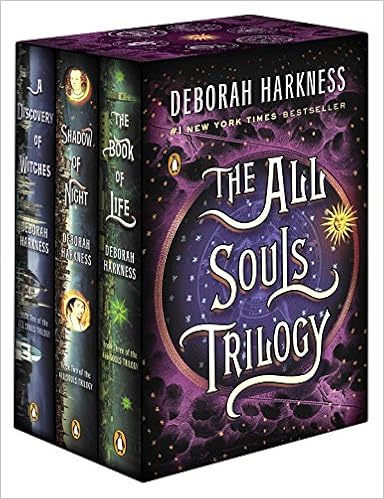
The All Souls Trilogy by Deborah Harkness

"You have to read these books so I would have someone to talk to about them!" a friend gushed in a phone call. "They are so good!"
I hadn't read anything in a while and was eager to get back into the habit, and I'd gotten a few recommendations for this series already, so I decided to give it a go and borrowed A Discovery of Witches from the library.
The story had a slow start, but I liked the promise of the world and the characters so I kept reading. By the time I could tell who was who and where the whole thing was going they'd grown on me, so I dove in deeper, finishing the book in a few days. So much about the story was predictable and formulaic, but because of the close attention the author paid to the characters and the world building I found it extremely satisfying. I loved the intimacy of Diana's routines, her thinking process, her growing fascination with Matthew, the gradual unfolding of and hinting at the mysteries, the lurking danger. The familiarity of the tropes made the story comforting while Harkness' spin on them kept it fresh, so I by the time I turned the last page the sequel was there waiting for me to begin right away.
The first few chapters of Shadow of Night started out as well as one can expect a sequel to do, but soon enough I could tell something was missing. The setting was new and exciting, the challenges our heroes faced were not so familiar any more, there were even a handful of new characters who charmed and amused me, and yet I didn't look forward to reading time as much as I did with the first installment. Soon I realized what it was. The heart wasn't there. I don't know if the story grew and there wasn't enough time or room to develop it properly, or the author was so fascinated with the setting that it overshadowed the story, but I kept thinking to myself "Who are these people and what has she done with Diana and Matthew?!" I could catch glimpses of the characters I'd grown fond of here and there, but those glimpses didn't last long enough. Moreover, as capable as Diana was, I had a lot of trouble believing that she could accomplish that much that well in that short of a time with no practical foundation. I could buy that she was good, but not that she was that good. Had the main mystery been less compelling, I probably would have abandoned the series, but it had me thinking about it and the implications, so I pressed on.
The Book Of Life immediately had the feel of an action-packed blockbuster. There was so much plot that character development seemed barely more than bright flashes in the blur of events, and I had to slow down reading to keep everything straight. It was very exciting though. Extremely. All the connections that tied the story together were coming to light, Matthew turned out to be much more flawed than the prequels revealed (especially the first book), and Diana... Diana went from capable in A Discovery of Witches, to formidable in Shadow of Night, to indomitable in The Book Of Life, a force to be reckoned with in every sense of the phrase. Despite the thrill of the transformation I missed the original Diana sometimes. That one reminded me of a beautiful, soft, pastel-colored rose with sharp thorns. This one was also beautiful, but in a dark, hard way, all sharp angles and razor blades for thorns.
One of my criteria of a great book is whether I would read it again, and this trilogy didn't quite make the cut. I would probably revisit The Book Of Life at some point to get rid of the sensation of whiplash, but I wouldn't buy the trilogy to keep. Had the series been five books, I think it would have been stronger. The story would've had room to breathe, there was definitely enough plot in books 2 and 3 to fill the volumes, and with a concept as rich as this Ms. Harkness could've made it into an amazing series in every respect. As it is, I couldn't quite share in my friend's enthusiasm, despite The All Souls' many positive qualities. I did find my kind of series later though, but that is a review for another time.

Saturday, April 12, 2014

Review: Liars and Saints by Maile Meloy

Set in California, this novel follows four generations of the Catholic Santerre family from World War II to the present. In a family driven as much by jealousy and propriety as by love, an unspoken tradition of deceit is passed from generation to generation. When tragedy shatters their precarious domestic lives, it takes courage and compassion to bring them back together.

Very slowly I'm getting back to reading, and tackling this month's book club read on audiobook seemed like the best way to get it read (my track record this year has been far from stellar). Audiobook proved to be an excellent choice, and Liars and Saints a great book to ease me back into the world of fiction.
It can be difficult to create character voices that are easy to distinguish, and most authors limit themselves to two, maybe three points of view per book for that exact reason. Maile Meloy went all in with her debut novel: she has seven. Moreover, these seven characters grow and change as the story progresses, and their voices change with them, never losing their individuality. That was actually my favorite thing about this book, how well the author wrote her characters and their imperfections, self-doubts, courage and faith. They kept me listening, and that is what ultimately counts as far as characters go.
This book was short-listed for the Orange Prize in 2005, and while I can see why it went as far as to be short-listed I also see why it did not win. The plot is to blame, particularly two aspects of it. One came about half-way through and it required me to suspend my disbelief a bit too much. Had it been omitted I wouldn't have minded, in fact, it would have kept me more grounded in the story. The second time the plot development didn't work for me was toward the end of the book, and this time it seemed like a cop-out that forced the story toward resolution. I haven't read very many novels that tell about several generations of a family, so I can't give examples of ones where similar situations would've been handled better, I just know that the way Meloy wrapped up her book didn't work all that well for me. (You have no idea how hard it is to abide by my own no-spoilers policy right now.)
When cover copy tells you that this is a story of a family with a history of deception you begin reading with the expectation of wowza moments. If there are no such moments then what's the point of telling such a story, right? Well, let me tell you, there is a wowza moment alright. When I first realized where the author was going I was sure she wasn't going to actually go there. But she did. All the way. It's quite a shocker, and I can't tell you want it was, but it made me post on FB and Twitter that I was suitably shocked. (Don't you wish right now I didn't have a no-spoilers policy?)
If you are looking for a novel that's a quick read, has rich characters and a plot that at times approaches the twists and turns of a daytime soap opera this book is for you!

Monday, March 3, 2014

The long hiatus

My friends, I haven't been posting in a very long time. My apologies for that. I don't know when I'll be back. I haven't been reading much lately because for over three months now I've been dealing with health issues in the family, and at the same time watching events unfold in my home country, Ukraine.
In Ukraine a protest became a standoff, which became an armed conflict, which in turn became a revolution. Close to a hundred people died, hundreds were injured, many disappeared, a president was voted out by the parliament, a new government was established, and before the people could celebrate their blood-soaked victory a war broke out. You may have heard about all that on the news. If you haven't, here's a post on the New York Review of Books which will shed some light on the events, and here's a slide-show that will show you what the NYTBR can't show in a blog post. All of my family is still in Ukraine, and although they are not in the middle of the conflict, that may change at any time. You see, Ukraine is not that large of a country, only roughly the size of Texas.
As you can see a lot has been going on for me, a lot to watch and a lot to worry about. I'll be back when I can. Thank you for bearing with me.

Friday, January 31, 2014

Movie Trailer: The Fault In Our Stars

One of the first books I read and reviewed last year was The Fault In Our Stars by John Greene, and now, almost a year later, the first trailer for the upcoming movie has been released. Prepare your tissues, everybody.

Wednesday, January 29, 2014

Review: The Shambling Guide to New York City by Mur Lafferty

A travel writer takes a job with a shady publishing company in New York, only to find that she must write a guide to the city - for the undead!

I've been a fan of Mur Lafferty's podcast, I Should Be Writing, for a while now, I've listened to her Marco and the Red Granny and Playing For Keeps (both available on Podiobooks), and was very excited when she sold her first book to a publisher. Mur loves her fans, so one of the things she did was podcast her book for free. We're on an extremely tight budget right now, so although I wanted to buy the book I had to listen to the podcast and console myself that I would buy the sequel.
The best thing about The Shambling Guide is that it's fun and fast-paced, and the main characters are colorful and engaging. I particularly liked Morgen the water sprite and the baker at the cafe, they stole the show at least half the time for me. There was snappy dialogue, descriptions that set the scene just enough without taking away the readers' ability to fill in some details on their own, and enough humor to make me chuckle on a number of occasions. I had a blast listening to it. Of course having the author read the book is an extra bonus because they put the emphasis where they want it to be, and the whole experience feels more intimate than when there's a professional voice actor in the picture.
Lafferty's world-building skills deserve a special mention. There are zombies, vampires, golums, all of which roughly follow the traditional lore of being dangerous creatures, but the author has made them her own and humanized them along the way. Of course this happens when you are looking at them from inside their world and witness their weaknesses and their struggles to make it in a world where nobody's supposed to know about them.
There's a lot to recommend this book, yet there was enough that didn't work for me to spoil the experience. Some characters came to life and some were pretty flat. Take Arthur the love interest, he was just a generic hot guy with a bunch of preconceived notions. The protagonist, Zoë, is too comfortable too soon in her new job and with her co-workers. Yeah, the pay is good and she needed the job, but she is almost blasé when it comes to the world of monsters where she suddenly finds herself. Would you be totally cool if you found out that your boss is a vampire (not vegetarian either) and that every one of your coworkers can kill you without exerting themselves too much? I know I wouldn't.
There was a sex scene, which, although well-executed, didn't have to be there and didn't really do anything to move the story forward or develop any of the characters. (For fairness' sake I do have to admit that this is my usual complaint about sex scenes, and unless the book is a romance I'd rather authors kept them out of the story. After all, what exactly has to happen between the sheets to serve the story or character development? Off the top of my head, not too many options there.) The mystery at the center of the story was interesting and I was surprised to find out who the villain was, but there was so much going on during the final battle that frankly I lost track of it all and just waited for it to be over. If it was a paper book I would've skimmed the pages and gotten to the end. All in all I thought her shorter works were tighter and therefore more effective, the novel format allowed for too much room for digression.
The Shambling Guide is a fun read and if you've had a stressful stretch it's just the thing to get your mind off the problems. Get the audio book to give you a charge for the work day or to help you unwind during your commute in the evening. It's not great, but for all its faults it is good enough to make me want to pick up the sequel, Ghost Train to New Orleans, and to hope that there will be a third book. After all, I believe writers get better with every new novel. Unless their work becomes formulaic, but that's a topic for another time.

Wednesday, January 15, 2014

Review: A Prayer for Owen Meany by John Irving

This is the story of two boys bonded forever in childhood: the stunted Owen Meany, whose life is touched by God, and the orphaned Johnny Wheelwright, whose life is touched by Owen. From the accident that links them to the mystery that follows them – and the martyrdom that parts them – the events of their lives form a tapestry of fate and faith.

One of my resolutions for this year is to not keep reading a book if it's not working for me. I'll give it a 100 pages, 150 tops, and if there are no fireworks it's off with the book's head, figuratively speaking.
A Prayer for Owen Meany was on my book club's reading list, and it seemed everyone loved it, except for me. I gave it 150 pages, but then it had to go. Why, you ask? Because I simply did not care, neither about Johnny, nor about Owen, or about the events that would take place, to which Johnny continuously alluded. I also stopped because if the book is going to go on and on about not much it better not be 600+ pages. Better yet, something should be happening, and it shouldn't take 100+ pages to cover the events described in the jacket copy.
Don't get me wrong, Irving's prose is beautiful, his observations of the human condition are astute and presented in a subtle way. I'm sure he is a great writer, and I still look forward to reading Cider House Rules. Maybe it wasn't the right time for me to read this book, maybe I was in the wrong frame of mind, or maybe it's just that at the end of the day I prefer books where things happen at a reasonably swift pace, and here they simply weren't.

Sunday, January 5, 2014

Gearing up for 2014

2014 is here and I still feel like I'm in 2013, reading-wise. Of course it doesn't help that I still need to review The Shambling Guide to New York City by Mur Lafferty, or that I've been reading Angela's Ashes for at least two months now. Of course I do have a good reason for this: I'm working on a very time-consuming project I'll tell you about when I can. In the meantime, all I can say is that in light of this massive project I'm cutting back on my fiction-reading plans for this year. Here's the rough list, and yes, there are some titles on here that I didn't get to last year. I'm excited!


Building Stories
City of Lost Souls
Code Name Verity
Dead End in Norvelt
Dear Life: Stories
The Dream Thieves
The Good Lord Bird
The Interestings
Liars and Saints
May We Be Forgiven
Miss Peregrine's Home for Peculiar Children
The Nazi and the Psychiatrist: Hermann Göring, Dr. Douglas M. Kelley, and a Fatal Meeting of Minds at the End of WWII
Night Film
The Ocean at the End of the Lane
The One and Only Ivan
The Orphan Master's Son
The Perks of Being a Wallflower
A Prayer for Owen Meany
The Sandcastle Girls
Say Her Name


Saturday, October 26, 2013

Review: Blood Rites by Jim Butcher

Harry Dresden, Chicago's only professional wizard, takes on a case as a favor to his friend Thomas - a vampire of dubious integrity - only to become the prime suspect in a series of ghastly murders.

The Dresden Files have become the books I pick up when I want a break from serious reading or hectic life, and this time was no exception. Work and things in general got pretty hectic, I've been reading literature and non-fiction, so I knew it was time for some good old-fashioned magic and adventure with a fair dose of humor. And it has been a while since my last foray into the world Jim Butcher created, so I knew the tendency of longer series to be formulaic was not going to bother me (this is book six of the Dresden Files, and it's easy to notice patterns if you read a series through relatively quickly).
For all the familiarity of Chicago's only wizard with an ad in the Yellow Pages there were plenty of things about this book that were new and exciting. It was about time too: the vague hints about Harry's mom's past without anything to sink my teeth into were becoming exasperating. Fortunately in Blood Rites we finally learned quite a bit about her. The author's also given us characters whose motivations were not entirely clear until this book, and learning their back story was extremely satisfying for me. It gave me extra faith in Butcher's abilities, because now I know for a fact that there's depth in his world-building that goes beyond an elaborate and inventive grimoire, and the fact that there's always some homicidal maniac trying to unleash various evils on the world. There's another thing that surprised the heck out of me (spoiler alert, by the way): if you look at my reviews of the other Dresden Files books you'll see that I've mentioned that Harry gets beat up and injured in the most grievous way in every volume right when it's time for the ultimate battle. He's always come out of it with no permanent damage, but not this time. This time the bad guys take a nice chunk out of the semi-rogue wizard and I can't wait to see how that plays out.
I'm not going to say much about the fact that this book is action- and humor-packed, just as the rest of the series, but I will say that a few very emotionally-significant events took away some of the levity. Moreover, in the beginning of the series Harry was more of a damaged orphan wizard version of a cross between Hawkeye and Hunnicutt from M*A*S*H, but now he is a much more sinister, conflicted and in a way vulnerable character. Much has happened since Storm Front, so it's not surprising that Harry should develop into a more multi-faceted protagonist. And he's finally beginning to see romantic possibilities where he should've been looking for them from the very beginning, although he doesn't know it yet. What can you do, he's a guy!
The Dresden Files will probably never be a 5 out of 5 for me, but Blood Rites sure is a high 4. I'm really looking forward to seeing how the story progresses in Dead Beat.

Sunday, October 13, 2013

Review: Dream Lake by Lisa Kleypas

Zoë Hoffman is as gentle and romantic as they come. When she meets the startling gorgeous Alex Nolan, all her instincts tell her to run. Even Alex tells her to run. But something in him calls to Zoë, and she forces him to take a look at his life with a clear eye, and to open his mind to the possibility that love isn’t for the foolish.
Alex Nolan is as bitter and cynical as they come, he battles his demons with the help of a whiskey bottle, and he lives in his own private hell. And then a ghost shows up. Only Alex can see him, has Alex finally crossed over the threshold to insanity?
The ghost has been existing in the half-light of this world for decades. He doesn’t know who he is, or why he is stuck in the Nolans’ Victorian house. All he knows is that he loved a girl once and that Alex and Zoë hold the key to unlocking the mystery that keeps him trapped here.

Romance is usually not my preferred genre, but one of the ladies in my critique group is writing a romantic suspense novel, and I realized that if I wanted to critique her work well I needed to see what was going on in the world of steamed up windows and happily ever after. The fact that there's a bit of paranormal in this book only served to pique my interest: there is paranormal and there is romance, but the book isn't a paranormal romance, which is already different, considering how popular paranormal romance has been for the last 10 years or so.
Dream Lake is the second novel in the Friday Harbor trilogy but it works well as a stand-alone novel. You learn everything you need to know about the quaint town of Friday Harbor and the people who live there, and you get a fun and sometimes spooky story to go with the picturesque setting. And what a setting it is! My favorite part about Friday Harbor and this book is the Artist Point Bed and Breakfast, which Zoe runs with her cousin Justine. A while back I've actually thought about opening a bed and breakfast/bakery, maybe that's why the idea appealed to me so much. And having the different rooms in the B&B designed to commemorate different artist was just awesome, so much better than flowery wallpaper and doilies. When I finished the book I started looking for what Artist Point might look like and I think I found the perfect place:


The story is a variation on the theme of beauty and the beast: a young woman meets a guy who wouldn't wish himself on anybody, and they change each other's lives. Beauty & the Beast has always been my favorite Disney cartoon, and of course the folkloric iterations of the story that came before it have a special place in my heart, so it's no wonder that as soon as I realized that this is the core story type I was able to guess what would happen between Zoe & Alex. Had it not been for the ghost and his story I might've gotten bored with the book, but wanting to know what was keeping him from moving on made me continue turning the pages. In fact, the ghost and his story stole the spotlight more than once over the course of the book!
While Kleypas' writing didn't always work for me I'll admit that she did an excellent job with character building. All the key players and even the characters we meet for only a short while were multi-dimensional, with either obvious or implied shortcomings, quirks and admirable qualities. It was very easy to like Zoe and root for Alex, even when he was being a complete ass, and I knew without a shadow of a doubt that there was more to Zoe's dad than met the eye.
One of the reasons the writing didn't always work for me is that there is quite a bit of 'telling' in the book where it would've been very easy to 'show' what the characters were going through or what was in their past. Another is that there is plenty of spelled-out minute actions and descriptions that I wasn't convinced were necessary to move the story along. The most distracting however were the sudden switches between point of view and male characters acting, talking and thinking as a woman would. For example, Alex is a construction contractor who can't boil water, I really doubt he would be able to describe a dish using vocabulary fitting for a culinary aficionado. I doubt even more that people who work with certain tools all the time would use full formal names for those tools in casual conversation, I know my husband will never say "the phillips head screwdriver" if "the phillips head" will suffice. I understand that this is a romance novel and it's probably safe to say that half the target audience doesn't know their way around a tool box, but this kind of extensive detail and uncharacteristic powers of description didn't work for me.
As much as mundane scenes didn't always work for me I have to admit that when it came to romantic scenes Kleypas did an excellent job. They were tasteful yet detailed enough to convince me that had the action been happening in a car the windows would've been steamed up, and while there wasn't a 'fade to black' effect the vocabulary and descriptions were neither crude nor gratuitous. I can see why Kleypas is so popular with fans of romance.
While I myself will most likely not be specifically looking for any other books by this author should I happen upon Crystal Grove (the sequel) I will most likely pick it up: the teaser at the end of Dream Lake got me wondering about Zoe's cousin Justine, her witch legacy, and her quest to be able to fall in love.

Sunday, September 29, 2013

Review: Small Wonder by Barbara Kingsolver

In her essay collection Barbara Kingsolver brings to us an extended love song to the world we still have. Whether she is contemplating the Grand Canyon, her vegetable garden, motherhood, genetic engineering, or the future of a nation founded on the best of all human impulses, these essays are grounded in the author's belief that our largest problems have grown from the earth's remotest corners as well as our own backyards, and that answers may lie in both those places.
Sometimes grave, occasionally hilarious, and ultimately persuasive, Small Wonder is an examination of the people we seem to be, and what we might yet make of ourselves.

When I first opened this book I had mixed feelings about reading it. On one hand there was a lot of anticipation: I've heard so much about Barbara Kingsolver, I've heard her excellent interview on the BBC World Book Club, I've been meaning to read something by her for the longest time and now was my perfect opportunity. On the other hand I heard that environmental and humanitarian issues are a dominant theme in this collection of essays and I don't tend to make that kind of reading part of my entertainment lineup. When I got to the book club meeting and admitted that I haven't read the book the ladies were unanimous: "Just pick the ones that sound good," they said, "you're not going to miss some deep meaning if you do". And so I did.
I read "Letter to a Daughter at Thirteen" and "Letter to my Mother" first, and the latter almost made me cry. Then I read "Lily's Chickens" and "The One-Eyed Monster" and a handful of others. I skipped over the ones where issues were prominent and stuck to the ones that dealt mostly with people on a personal, intimate, level, and I loved them. Kingsolver made me feel as if I knew her through her writing, as if I could relate to this woman whose life is nothing like mine, but who somehow could understand me, and who I could in turn understand. I suppose it's a sign of a masterful writer if a few essays can make the reader feel close to a stranger, if they can show that no matter the place and the circumstances people really are the same everywhere.
Kingsolver's reputation is deserved and I'm glad that I have the Small Wonder essays a chance. She strikes the perfect balance between fearless frankness and not revealing too much, and her writing brings the reader so close it's almost like you're having a conversation with the author and she's telling you about her life and her beliefs. If you haven't read anything by Kingsolver yet I would recommend that you pick up this collection, it's an excellent example of what this author can do.

Thursday, September 19, 2013

Review: Ficciones by Jorge Luis Borges

First published in 1945, his Ficciones compressed several centuries' worth of philosophy and poetry into 17 tiny, unclassifiable pieces of prose. He offered up diabolical tigers, imaginary encyclopedias, ontological detective stories, and scholarly commentaries on nonexistent books, and in the process exploded all previous notions of genre. For good or for ill, the blind Argentinian paved the way for a generation's worth of postmodern monkey business - and fiction will never be simply "fiction" again. ~ Mary Park

As I was reading Ficciones I was often stumped because I had trouble reconciling the title of the collection with what I was reading. Oh, I did understand that the pieces were fiction, but they read like philosophical treatises so often that by the time I was halfway through a piece I'd forget how it started or what it was supposed to be about. You understand why it took me longer than usual to finish this book, even by story collection standards.
Fortunately there were a handful of stories that kept me going: The Circular Ruins, The Garden of Forking Paths, The Shape of the Sword, Death and the Compass, and The Secret Miracle had just enough philosophy to elevate them to literary status and just enough genre to make them engaging and easy to follow. These six stories had mystery and intrigue to make the very serious questions or morality, fate and wonder seem more down to earth, and I enjoyed them immensely. Yes, my tastes trend toward the bourgeois when it comes to books, and I'm not ashamed to admit it! Seems G.K. Chesterton thought similarly at least part of the time (see banner quote).
Borges' work is definitely inspiring in that it prompts the reader to think about the various "what if"s of the universe, such as what if we're just a figment of a greater being's imagination, what if there is more than one future, what if our potential is so much greater than we know, what if our understanding of history is fundamentally flawed. And he did have a wonderful way with words. The vividness of his writing reminded me of Ray Bradbury, except that Borges' feels more effortless and graceful. I'm guessing the rest of his books aren't particularly light reading either, but given a choice I'll take Borges' collected works any day.

Sunday, September 15, 2013

Agatha Christie's Birthday Google Doodle

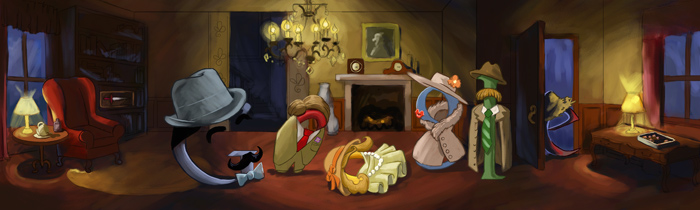
In 2010 Google had a Doodle dedicated to Agatha Christie's 120th Birthday, thought I'd share it with you to commemorate the brilliant lady's day this year. Maybe I should read a Poirot mystery to exercise those little gray cells...

Tuesday, September 10, 2013

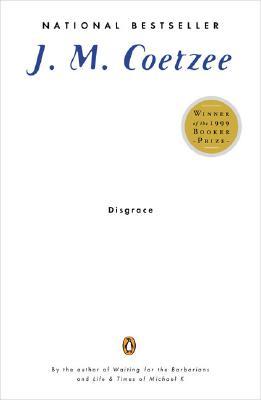
Review: Disgrace by J. M. Coetzee

David Lurie is a twice divorced, 52-year-old professor of communications and Romantic Poetry at Cape Technical University. Lurie believes he has created a comfortable, if somewhat passionless, life for himself. He lives within his financial and emotional means. Though his position at the university has been reduced, he teaches his classes dutifully; and while age has diminished his attractiveness, weekly visits to a prostitute satisfy his sexual needs. He considers himself happy. But when Lurie seduces one of his students, he sets in motion a chain of events that will shatter his complacency and leave him utterly disgraced.

When I think of a book I ask myself "What is this book about?", and I did the same thing with Disgrace. The answer to my own question puzzled me: I'm not exactly sure. It's definitely about a man who undergoes a series of traumatic events and changes as a result, but not too much. It's also about the people of South African rural areas, about family, about attitudes toward the four-legged creatures with whom we share the planet, morality, deceit and about how all these things are thrown into sharp relief when the circumstances are just right. Yet it's not about any of them. Finally I decided that this book is about how all the different parts of life affect a person, mold him, shape him, break him and, well, change him. Make him better? Maybe. Make him different from who he was the day before? Definitely.
The best novels always have strong characters who make you care about them, even if they're not all that likeable. David Lurie is not likeable at all, in fact he is kind of despicable, and yet Coetzee made it easy to sympathize with him. Not approve, mind you, but definitely sympathize. He takes us into Professor Lurie's head and we live through his experiences with him, feeling his indignation and disdain, his self-doubt and finally his affection for his daughter who he cannot help and who continues to reject his advice and his assistance. It's difficult to remain indifferent when one is allowed into a character's life like that.
I hear there is a lot of controversy and strong opinions about this book. I haven't looked into this, but I think that they stem from the situation David Lurie's daughter finds herself in, the part of the story that deals with animals, and the interactions between the white and black South Africans. I don't really understand why there is controversy. Coetzee's position regarding all events of the novel is neutral, it's as if he is simply reporting the facts as he witnesses them. He's not expressing opinions or taking sides, he is just telling a story. It is a fact though that this story makes one think about everything it touches upon. Isn't that what a good novel is supposed to do?
I would highly recommend this novel to any reader who is willing to give the book that isn't at all happy a chance simply because it's a good story very well told.

Sunday, September 1, 2013

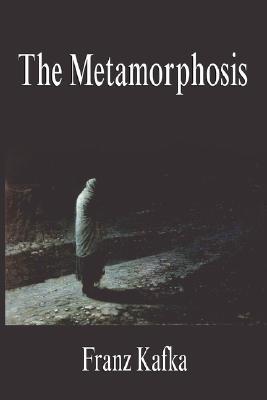
Review: Metamorphosis by Franz Kafka

"As Gregor Samsa awoke one morning from uneasy dreams he found himself transformed in his bed into a gigantic insect. He was laying on his hard, as it were armor-plated, back and when he lifted his head a little he could see his domelike brown belly divided into stiff arched segments on top of which the bed quilt could hardly keep in position and was about to slide off completely. His numerous legs, which were pitifully thin compared to the rest of his bulk, waved helplessly before his eyes."

When I first read this book in high school my impression of it was "What terrible drivel! And this guy is a literary heavyweight!?", which is just more proof that what is considered literature was not written for children and therefore children are not the best audience for these works. They're just not equipped to understand the nuances of the story and to read between the lines. Of course there's always the option that my teacher wasn't all that good or that I was a particularly dense teenager, but I prefer the first theory.
If you read up on Metamorphosis you'll see the opinion that Gregor's transformation into an insect was just a physical manifestation of what he already was. Another commonly-accepted view is that the more important metamorphosis was that of the Samsa family as a result of Gregor's transformation. These interpretations made me think about the significance of Gregor changing into a creature that is revolting, a creature the family tries to accept but at the end cannot, and I wonder, for what is that a metaphor? What kind of person is Kafka writing about, what is it about him that is so unacceptable to his family? There is a passage toward the beginning of the book that indicates that there's something wrong with the lower abdomen of the insect Gregor, that it's diseased in some way. Then toward the end there is a passage about Gregor wanting to kiss his sister's neck. Do these passages reveal something about the nature of this character that overnight makes him a pariah in his own family? I think they do, and maybe I'm over-thinking it, but when viewed through that prism the story makes more sense than when it's not.
I'm pleased to say that this re-reading confirmed for me that Kafka's work deserves every bit of its exalted reputation. He really was a master of weaving stories that feel very close when you read them, despite the fantastical nature. Reading this book you can see the Samsas' apartment, them, and their issues. You even somewhat understand why the family feel about Gregor the way they do, regardless of his present state. After all, you know the man who dreams about kissing his sister's neck was odd even before his transformation into a gigantic insect. In fact, Metamorphosis is full of such implied revelations, but you have to be paying attention to see them. I would definitely recommend reading closely to get the most of out this book, and indeed any other of Kafka's work, because it seems that the boldest ideas are the closest to the truth with this author. Just bear in mind that often his imagery is far from innocent.
I'm curious to read more of Kafka's work now and I'm fully prepared to take my time with every piece, because his writing is just not something you should breeze through. Should you decide to pick up anything he's written I recommend you prepare yourself to take your time as well.

Sunday, August 18, 2013

Review: Beloved by Toni Morrison

Sethe was born a slave and escaped to Ohio, but eighteen years later she is still not free. She has too many memories of Sweet Home, the beautiful farm where so many hideous things happened. And Sethe's new home is haunted by the ghost of her baby, who died a violent death and whose tombstone is engraved with a single word: Beloved.

My first experience with Toni Morrison's writing was in college when the professor assigned The Bluest Eye. I don't remember much about the plot, but I do remember that it made me feel like I was in the presence of a literary great. The quality of writing was superb and even after reading a number of wonderful books that semester The Bluest Eye impressed me most. Fast forward to this year, when I first saw that Beloved was on the Fiction of Relationship reading list. I knew I was in for a treat yet at the same time I was not sure that the book would live up to my inflated expectations. When the time came to actually read it I was relieved to see that Morrison is consistent in her ability to impress me. Her prose is beautiful in its simplicity, her characters full of life. She simply tells the story and you can't help but care about the people in it, can't help but wonder what will happen next. She doesn't try to make you like her characters, they are who they are with their complicated lives and choices, but you care about them nonetheless. The character who made the biggest impression on me was Denver because she not only had a unique way of dealing with the difficulties her life presented, but she also was the one who stepped up to the challenge of Beloved's presence in the most impressive way. She started out a child younger than her 18 years, yet at the close of the novel she was transformed into a young woman mature beyond her years.
The novel is set in the South before and after the Civil War and tells the stories of Sethe and other former Sweet Home slaves as they build lives for themselves on and off the farm. Their experiences, their desires and their despair are highlighted all the more by our present lives and the fact that many of the events Morrison describes are unthinkable to the present-day reader. They seem almost surreal in their realism, and I had to remind myself that things like what Morrison talks about did happen, and not that long ago.
I believe that a sign of a good book is that it makes you think. More often than not such books don't go down smoothly, but they sure stay with you. They make you want to ponder what's said on those pages, revisit ideas and impressions, look back at the beliefs you hold and see if they still hold up. Beloved does that, and no, it's not an easy read. Not only is it not easy, it also doesn't give up all its secrets, not even at the very end. You can turn the last page and believe what you choose about Beloved because her story doesn't really have an ending, which to me is incredibly intriguing. How do you write a story where the same events can be both supernatural and perfectly explainable? How do you create characters who are both flesh and blood and the product of superstition? I don't know if Morrison's is the only way, but it sure is effective.
I've been thinking for a several days now whether I would recommend this book to a friend and I can't come up with a an answer. On one hand it's not a straightforward book and I don't believe that someone who's looking for a straightforward story would appreciate it. On the other hand it is so well-written that I'm tempted to insist that my friends read it. So my answer would be like that flow-chart, Are you looking for a simple escapist story? Then no, you won't enjoy this novel. Are you looking for something to feed your brain and be beautiful at the same time? Then yes, this novel is for you.

Wednesday, August 7, 2013

Review: The Ice Palace by Tarjei Vesaas

Siss and Unn are two friends who have only spent one evening in each other's company. But so profound is this evening between them that when Unn inexplicably disappears, Siss's world is shattered. Siss's struggle with her fidelity to the memory of her friend and Unn's fatal exploration of the strange, terrifyingly beautiful frozen waterfall that is the Ice Palace are at the center of this novel.

Had this elegant short novel not been assigned I most likely wouldn't have finished it, but now that I have read it I'm glad that setting it aside wasn't an option. Vesaas writing style is almost painfully spare, which takes some getting used to, yet once I got into it I kept marveling at the beauty of it. It's as if he set out to write a novel as stark as Norwegian winter itself, all sharp lines and few colors, intense in its subdued grace, frozen in place but ready for the spring thaw. It's as if he knew that if he gave the readers just enough they would create in their minds a world that would meld with the bare bones of the story and they would feel a part of it.
The story itself is rather simple: it follows a girl on the cusp of adolescence grieving the disappearance of a new friend, going through disbelief, acceptance and finally release. It's the elegance of execution and the profound insight into the characters that sets this novel apart. Vessas' children seem innocent and straightforward, and yet their problems are complex and far-reaching. The adults are an interesting combination of contradictions: on one hand they give children plenty of freedom to get through problems on their own and on the other hand it's clear just how concerned they are about the youngsters' welfare. One very special character I didn't expect was nature: Vesaas wove it into the plot so much that eventually the ice gripping the small village feels almost alive, it is certainly just as animated as any of the human characters.
I really want to talk about the details but for the sake of not spoiling the novel I will refrain. Just go get it and read it. It's worth every penny.

Tuesday, August 6, 2013

Inseparable

I'm currently working on my review of The Ice Palace by Tarjei Vesaas and in the meantime would like to share this wonderful short film starring one of my favorite actors, Benedict Cumberbatch. Enjoy!