Showing posts with label Loved it. Show all posts

Tuesday, September 10, 2013

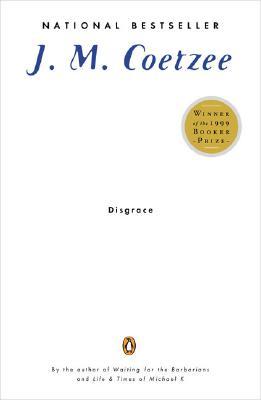
Review: Disgrace by J. M. Coetzee

David Lurie is a twice divorced, 52-year-old professor of communications and Romantic Poetry at Cape Technical University. Lurie believes he has created a comfortable, if somewhat passionless, life for himself. He lives within his financial and emotional means. Though his position at the university has been reduced, he teaches his classes dutifully; and while age has diminished his attractiveness, weekly visits to a prostitute satisfy his sexual needs. He considers himself happy. But when Lurie seduces one of his students, he sets in motion a chain of events that will shatter his complacency and leave him utterly disgraced.

When I think of a book I ask myself "What is this book about?", and I did the same thing with Disgrace. The answer to my own question puzzled me: I'm not exactly sure. It's definitely about a man who undergoes a series of traumatic events and changes as a result, but not too much. It's also about the people of South African rural areas, about family, about attitudes toward the four-legged creatures with whom we share the planet, morality, deceit and about how all these things are thrown into sharp relief when the circumstances are just right. Yet it's not about any of them. Finally I decided that this book is about how all the different parts of life affect a person, mold him, shape him, break him and, well, change him. Make him better? Maybe. Make him different from who he was the day before? Definitely.
The best novels always have strong characters who make you care about them, even if they're not all that likeable. David Lurie is not likeable at all, in fact he is kind of despicable, and yet Coetzee made it easy to sympathize with him. Not approve, mind you, but definitely sympathize. He takes us into Professor Lurie's head and we live through his experiences with him, feeling his indignation and disdain, his self-doubt and finally his affection for his daughter who he cannot help and who continues to reject his advice and his assistance. It's difficult to remain indifferent when one is allowed into a character's life like that.
I hear there is a lot of controversy and strong opinions about this book. I haven't looked into this, but I think that they stem from the situation David Lurie's daughter finds herself in, the part of the story that deals with animals, and the interactions between the white and black South Africans. I don't really understand why there is controversy. Coetzee's position regarding all events of the novel is neutral, it's as if he is simply reporting the facts as he witnesses them. He's not expressing opinions or taking sides, he is just telling a story. It is a fact though that this story makes one think about everything it touches upon. Isn't that what a good novel is supposed to do?
I would highly recommend this novel to any reader who is willing to give the book that isn't at all happy a chance simply because it's a good story very well told.

Wednesday, August 7, 2013

Review: The Ice Palace by Tarjei Vesaas

Siss and Unn are two friends who have only spent one evening in each other's company. But so profound is this evening between them that when Unn inexplicably disappears, Siss's world is shattered. Siss's struggle with her fidelity to the memory of her friend and Unn's fatal exploration of the strange, terrifyingly beautiful frozen waterfall that is the Ice Palace are at the center of this novel.

Had this elegant short novel not been assigned I most likely wouldn't have finished it, but now that I have read it I'm glad that setting it aside wasn't an option. Vesaas writing style is almost painfully spare, which takes some getting used to, yet once I got into it I kept marveling at the beauty of it. It's as if he set out to write a novel as stark as Norwegian winter itself, all sharp lines and few colors, intense in its subdued grace, frozen in place but ready for the spring thaw. It's as if he knew that if he gave the readers just enough they would create in their minds a world that would meld with the bare bones of the story and they would feel a part of it.
The story itself is rather simple: it follows a girl on the cusp of adolescence grieving the disappearance of a new friend, going through disbelief, acceptance and finally release. It's the elegance of execution and the profound insight into the characters that sets this novel apart. Vessas' children seem innocent and straightforward, and yet their problems are complex and far-reaching. The adults are an interesting combination of contradictions: on one hand they give children plenty of freedom to get through problems on their own and on the other hand it's clear just how concerned they are about the youngsters' welfare. One very special character I didn't expect was nature: Vesaas wove it into the plot so much that eventually the ice gripping the small village feels almost alive, it is certainly just as animated as any of the human characters.
I really want to talk about the details but for the sake of not spoiling the novel I will refrain. Just go get it and read it. It's worth every penny.

Sunday, June 30, 2013

Review: The Raven Boys by Maggie Stiefvater

“There are only two reasons a non-seer would see a spirit on St. Mark’s Eve,” Neeve said. “Either you’re his true love . . . or you killed him.”
For as long as she can remember, Blue has been warned that she will cause her true love to die. She never thought this would be a problem. But now, as her life becomes caught up in the strange and sinister world of the Raven Boys, she’s not so sure anymore.

I'm always excited when a new book by Maggie Stiefvater comes out, and The Raven Boys was no exception. I held off on reading it though because I knew it's the first book in a trilogy, and I really prefer to read trilogies in one go. My plans to wait for all three books to be available to hold the Raven Boys Readathon were foiled however when Maggie posted on her blog that SYNC was giving away the audiobook as part of their summer program. I got the book and couldn't resist any longer.
As I listened to it I congratulated myself again and again on getting it and Maggie on writing it. She continues to grow as a writer and watching her progress makes me happy, not just because she keeps giving me great books to read, but also because every book is a little bit more than the last one. More mature, more masterful, more complex, more quirky, more "Maggie" somehow.
My favorite thing about The Raven Boys is how multi-faceted it is. There are family relationships, friendships, socio-economical differences, abuse and love, and of course magic to make everything real-life seem surreal yet even more heartbreaking, because that's what fairy tales do. I kept remembering the old adage "Don't judge a book by its cover" throughout the novel and marveled at how nothing really is at it seems in it.
Maggie's books are different from a lot of other YA novels in that her characters' families are always very present in them. There's not the absentee parent syndrome that makes it seem as though the teenagers have somehow woken up one day and all the parents were gone (and yes, I know there are books built around that premise too), and in The Raven Boys that's even more noticeable than in her previous novels. Blue's colorful family is particularly central to the story, and it's interesting to see their dynamics, the struggles over Blue's independence being a new territory for both her and her mother. The boys all have their own family issues to contend with, some more serious than others, but all with painful past, present and, I assume, future. I loved seeing their interactions and hearing characters talk and learn about things that are subtle, yet not less true or important just because they don't stare you in the face.
The only thing I wished for is more mystery when it came to the main plot of this novel. From the very beginning it was obvious that the boys' and Blue's lives would be interwoven and in what context, the villain was apparent almost from the very beginning and he didn't seem evil or clever enough to last past the end of this book, and a few other things that I won't describe here, with two exceptions, were not particularly surprising. This dampened my enjoyment of the novel but not enough to make a real difference because for me this book was more about the characters and the setting than Gansey's quest for Glendower. I could also tell that it was setting up the sequels by establishing all the relationships, building the world, giving us clues of secrets and ideas for what will be coming next in The Dream Thieves. How could it not with that kind of last line!
If you are a fan of urban fantasy, magic, engaging characters and excellent writing, and you haven't read The Raven Boys yet, I recommend that you do. I listened to the audiobook and I'm planning on getting the actual book to read, because I want to see the words on the page and soak them in in a way an audiobook won't allow, no matter how good the narrator.

Sunday, June 9, 2013

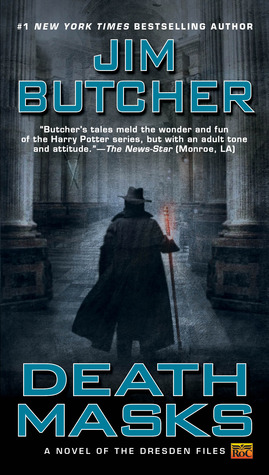
Review: Death Masks by Jim Butcher

Harry Dresden, Chicago’s only practicing professional wizard, should be happy that business is pretty good for a change. But now he’s getting more than he bargained for. A duel with the Red Court of Vampires’ champion, who must kill Harry to end the war between vampires and wizards… Professional hit men using Harry for target practice… The missing Shroud of Turin… A handless and headless corpse the Chicago police need identified… Not to mention the return of Harry’s ex-girlfriend Susan, who’s still struggling with her semivampiric nature. And who seems to have a new man in her life. Some days, it just doesn’t pay to get out of bed. No matter how much you’re charging.

I first picked up this series because I watched the TV show which is based on the books and wanted more of Harry Dresden and his supernatural adventures. Sadly the show only lasted for one season, which is not that surprising if you consider that cool shows get canceled sooner than they should be and we end up with naked people covered in bodily fluids prancing around on the screen. But I digress. I read the first three books and could tell that they were a promise of better things to come. I was right. Book 4, Summer Knight, finished setting up the world and established the over-arching conflicts for the future installments (the wizard-vampire war and Harry's troubled personal life) as well as the mystery of Harry's parents' lives and deaths. At that point I felt that Butcher was done flexing his writerly muscles and was finally getting to the meat of things, while at the same time the day-to-day wizardly detective work was not going anywhere. I really like this about these books, by the way, there's always a more short-term problem to solve while the big-deal problem demands attention at the same time. Back to the book at hand though.
I was right about the meat of things. Death Masks builds on the conflicts, with some steamy and deadly consequences, and feeds us a pellet of information about Harry's mom. He is either too busy or too reluctant to pursue this tidbit, conceivably because he is afraid of what he might discover. Yes, I'm talking about feelings while discussing a high-action urban fantasy with death waiting at almost every page. There's quite a bit of that in this book, actually. Soul-searching, self-analysis, reflection, Harry does all that, and it balances the near-constant action. It provides for some down time while still allowing for things to happen, as it does perfectly when Harry has a heart-to-heart with Michael's wife. This is one of my favorite scenes in the book, by the way. Another means of tension relief is the humor which permeates this book and the rest of the series. Harry is a really self-deprecatingly witty guy! I chuckled on so many occasions that my husband started raising his eyebrows in my direction. I ignored the eyebrows and kept reading.
We've already met all the key players of the series so Butcher's main task here is to develop their character arcs. I really liked that Susan didn't just move to the beach to suppress her vampiric tendencies, she is no damsel in distress and in this book we really get to see her in action. It doesn't hurt that she has an ace up her sleeve either. Gentleman Johnny Marcone (I love how Harry always refers to him in this way, no exceptions) is a very interesting guy and I look forward to seeing where Butcher takes his character.
I didn't expect any surprises in this book but there was one: by now I'm used to Harry getting pummeled into hamburger in the course of the novel and then having to go fight The Fight severely sleep-deprived and broken. Not in this novel. I won't go into details but the way things worked out was very refreshing and satisfying. I wonder what Butcher will do in the next novel. Maybe if I can stop taking on commitments like I have something against sleep I'll even find out, soonish.

Sunday, May 19, 2013

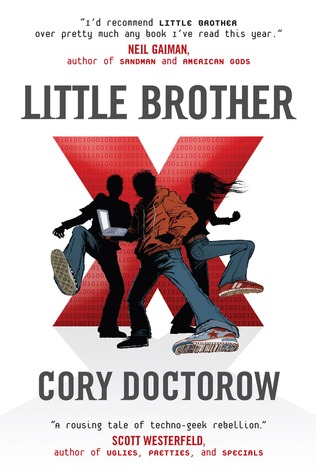
Review: Little Brother by Cory Doctorow

Marcus aka “w1n5t0n,” is only seventeen years old, but he already knows how the system works – and how to work the system. Smart, fast, and wise to the ways of the networked world, he has no trouble outwitting his high school’s intrusive but clumsy surveillance systems.
But his whole world changes when he and his friends find themselves caught in the aftermath of a major terrorist attack on San Francisco. In the wrong place at the wrong time, Marcus and his crew are apprehended by the Department of Homeland Security and whisked away to a secret prison where they’re mercilessly interrogated for days.
When the DHS finally releases them, his injured best friend Darryl does not come out. The city has become a police state where every citizen is treated like a potential terrorist. He knows that no one will believe his story, which leaves him only one option: "M1k3y" will expose the DHS himself.

We all know someone who insists on paying for everything in cash, or who won't bank online, or who is absolutely convinced that big brother is out to get them and everybody else, or at least that big brother is watching. We listen to them and think to ourselves "That's just crazy talk. Can you say Paranoia?". But what if they're right? What if those security cameras are more than just ordinary anti-theft precautions? What if our spending histories are tracked by some entity other than our banks? What if all the electronic devices we've come to rely on so much can be and are monitored to establish our movement patterns and what not? It's not really paranoia if what you're concerned about is really going on. Cory Doctorow examines a world like that, a world where everything is bugged. School books have chips in them, gait recognition cameras are everywhere, credit cards and public transit passes are used to track movement of their holders, and all this feeds into whatever agency is in charge, be that the school board or the Department of Homeland Security. After a terrorist attack the system is thrown into overdrive and Marcus is one of the first victims of the indiscriminate checks performed by the overzealous officials, who seem to be looking for someone, anyone to pin the crime on. At only 17 he's scared but he's not backing down, instead he's fighting the system with its own weapons.
My favorite thing about Marcus is that he is a realistic character in that he is not some superhero devoid of fear, and when he is afraid he is not too proud to admit it. At the end of the day he is just a kid against adults who have all the power, he fights when he can and with the tools he has but he isn't reckless about it because he knows that more than just his freedom is on the line. And when things go as far as they can with the status quo unchanged he recognizes that it's time to take the fight to the next level, time to hand it off to those with more resources and more influence. He is also a 17 year old with a life outside of the fight. He has a girlfriend, he is at odds with his dad, he reads books and does school work, he plays video games and mouths off to his teacher.
Marcus' father is a character who represents the "I'm not doing anything wrong so I don't see what the big deal is, let them check and monitor and catch the bad guys" side of the argument, and I'm glad that Doctorow wrote him this way. I'm also glad that this wasn't his position from the very beginning of the book, it showed that people can and will change their minds under certain circumstances. It also showed that such changes of heart are not seamless or painless.
Marcus' friends and acquaintances cover the remainder of the spectrum, from spirited support of his actions to adamant disapproval. There are also those who are spies out of necessity, recruited by the DHS to infiltrate the underground network. The tensions resulting from these interactions provided the difficulties that made the story more believable, after all life's not all black and white, the gray often dominates the playing field and that's just how it is.
Overall I loved this novel, but what made it a little less enjoyable for me is all the technical talk. Marcus often walks the reader through what the different bugs and gadgets are, how they work, how they can be deactivated or circumvented, and since I'm the kind of person who loves her gadgets but doesn't particularly itch to find out how the software and hardware work it went over my head on occasion. Besides, I figured it was all author's imagination steeped in today's technological reality. But then at the end of the book one of the afterwords is by a security technologist, whose job is basically to figure out how electronic systems can be broken and how to make them more secure, and the other is by a professional hacker. Imagine my surprise and general feeling of unease when these real-life guys started talking about how Doctorow's "inventions" either do exist or aren't that far-fetched. There is also a bibliography with an extensive list of eye-opening titles. I admit, after reading these sections I started to wonder whether I should move my family to a cash-only basis for daily transactions to protect us from the possibility of both big and little brother infiltration (let's face it, if the government has no interest in us there's probably a marcus hacking away within a 2-mile radius from our house). In the end laziness won over that sentiment, but the seed has been sown.
This is a very well-rounded novel that is fast-paced and written in a voice that is casual without being too adult or too adolescent. It poses interesting questions and explores a variety of standpoints that are just as relevant today as they were when the book was published, if not more so. I recommend it without reservation, especially if you are the kind of reader who loves their gadgets, wants to know how they work inside, and wants their privacy to remain their own, regardless of whether there's anything to hide besides grandma's secret pie recipe.

P.S. Those with ereaders, heads up: Doctorow makes the novel available on his website free of charge in a variety of formats under the Creative Common License. Yes, he is that cool.
Sunday, April 28, 2013

Review: The Left Hand of Darkness by Ursula Le Guin

Genli Ai is a lone human emissary to Winter, an alien world whose inhabitants can choose - and change - their gender. His goal is to facilitate Winter's inclusion in a growing intergalactic civilization, but to do so he must bridge the gulf between his own views and those of the completely dissimilar culture that he encounters.

I first read this book in 2011 and already then I knew that I would read it again. The timing of me re-reading it wasn't entirely my choice but in the end that didn't matter at all. Because I knew what was going to happen it was as if my brain was free to notice things I didn't notice 2 years ago - the poetry of the language, the beautifully crafted story, the meaning of the folklore and excerpts of historical records inserted between chapters, the echoes of the philosophy of ying and yang throughout the book, the notion of true gender equality and its consequences. I noticed how perfectly the ending of the novel mirrored its beginning, recognizing the similarities between a keystone being placed in an arch to connect the separate sides and Therem Estraven being a similar kind of keystone that would link two separate branches of humanity. I finally fully understood the title of the book, which made me feel that I understood nothing the first time around. I realized that this novel isn't really about Genli Ai, even though he is the narrator most of the time. It is about Estraven, his vision for Gethen, and about following a path which others can't even see.
Like many other science fiction novels this book isn't about the planet or the technology, but rather about people, human nature and everything that comes with it, such as patriotism, love, deceit, faith and Truth. Yes, it's a lot to talk about in a book that is not at all hefty, but that is where Le Guin's brilliance lies. She doesn't need 600 or more pages to ask questions, ponder answers, observe and make the reader think. Half of that does very well.
I'll keep this review short because what I really want to tell you is that this is an amazing book, that I'm buying it for my collection and that if you haven't read it yet you should, even if you're not a fan of science fiction.

Friday, April 12, 2013

Blitz-review: The Nine Rooms of Happiness by Lucy Danziger & Catherine Birndorf, M.D.

With self-help books you've got to always remember that it's not going to be a perfect prescription for your individual problems, more like a general guide for where to start digging for the cure. This book is no different, although I really enjoyed that every point was illustrated with examples from real women. It was actually done in the format of "here's my problem" - "here's the solution" so it made the reading experience feel like a group of women sitting around a table sharing stories. I didn't realize it until today but one of the chapters (the one that focuses on the Office, the room where professional growth issues live) gave me the much-needed kick in the derriere and the "Go (with the status quo) or grow" pearl is directly responsible for my decision to take a literature course through Coursera and to join a writing club. My life is much fuller as a result, so as far as I'm concerned it's a great book and definitely worth the read.

Monday, April 1, 2013

Review: The Scorpio Races by Maggie Stiefvater

It happens at the start of every November: the Scorpio Races. Riders attempt to keep hold of their water horses long enough to make it to the finish line. Some riders live. Others die.
At age nineteen, Sean Kendrick is the returning champion. He is a young man of few words, and if he has any fears, he keeps them buried deep, where no one else can see them.
Puck Connolly is different. She never meant to ride in the Scorpio Races. But fate hasn’t given her much of a chance. So she enters the competition — the first girl ever to do so. She is in no way prepared for what is going to happen.

I'm going to begin with a disclaimer: I'm a huge fan of Maggie Stiefvater. I love her books, I love her blog and I love the persona she presents to the world of a race car-driving, approachable and not particularly mysterious best-selling author. I love that she posts images of her manuscripts dripping with her critique partners' notes. I love that she talks about writing as a craft and hard work, not the product of divine inspiration. I love reading her books because they are fun and quirky and very well-written, because with every new one they get better, and because her fantastical is so thoroughly embedded in the mundane that suspending disbelief is not at all a problem for me. You get the picture, huge fan. So it's not that much of a surprise then that I loved The Scorpio Races. I actually listened to the audiobook, which I almost never do, because obligations are pulling at me from all directions but I really wanted to read this book right now. So I did.
My favorite thing about this novel were the relationships between humans and animals, the fondness that animal-lovers will recognize, where the human will learn to read their four-legged friend, know when to push them and when to soothe them, and when to remember that they are not human and taking a step back is the wise course of action. This partnership and mutual affection came through so clearly in the book that I could almost feel it as I listened to the story.
Another favorite were Puck's and Sean's internal conflicts: for her it was which horse to ride in the race, for him it was a matter of who would win. Puck's dilemma was apparent very soon, while Sean's took time to build, but when they clashed it was the moment when The Conflict became obvious and you just knew that there was no turning back.
I have a soft spot for stories where not everything is spelled out, and here Stiefvater obliged with a few characters whose pasts and futures were more than a little murky when the book ended. The not knowing upped the ante in the tension department and the fact that the reader was left guessing took the novel to a different level in YA. After all, there is always something in life that remains unresolved and undiscovered.
What left me vaguely displeased was the character of Mutt Malvern. I suppose I've been analyzing literature too much lately to be completely satisfied with a purely evil villain, but here it works, especially when combined with the way the book ends. I'm not going to give too much away but the last sentence gave me chills and made me want to get the printed copy and immediately read it (audio is great and all but it's a completely different experience from reading the words on the page).
Once the book was finished I thought back on it and decided that it has a very fairy-tale kind of feel to it, both when it comes to the characters and the story itself. Listening to it was similar to listening to a legend and the fact that it's not only set on an island in Ireland but also crafted in such a way that the location becomes almost a character itself helps support that mythic quality. It all works and I'm looking forward to not only revisiting The Scorpio Races but also reading Maggie Stiefvater's next series, The Raven Boys.

Sunday, March 24, 2013

Review: The Night Circus by Erin Morgenstern

The circus arrives without warning. No announcements precede it. It is simply there, when yesterday it was not. Within the black-and-white striped canvas tents is an utterly unique experience full of breathtaking amazements. It is called Le Cirque des Rêves, and it is only open at night. But behind the scenes, a fierce competition is underway — a duel between two young magicians, Celia and Marco, who have been trained since childhood expressly for this purpose by their mercurial instructors. Unbeknownst to them, this is a game in which only one can be left standing, and the circus is but the stage for a remarkable battle of imagination and will.

This is a story about a circus, and a man and a woman, and immortality, and consequences, and sense and sensibility, and being a pawn in someone else's games, and magic (of course there is magic), and love, which is a kind of magic. But more than anything it is a story about life, where everything is connected and where everything we do today is a part of where we will end up tomorrow, and where there is only one ending to the game.
This book didn't captivate me immediately but rather grew on me. At first I thought that first and second person narration was getting on my nerves, and that the jumping around in place and time was too hard to follow. Then the former made me feel as if I were part of the story and the latter became almost a game of figuring out when the "you" parts were set. And then it was all clear and when for the very first time I saw the different narrator's stories coming together like branches on a tree all connecting to the trunk a delicious shiver ran through me and I knew that this was going to be just the right kind of book to keep me up at night. Which it most marvelously did.
For some reason before I picked it up I thought that this was a YA novel, which probably has something to do with the cover blurb about young magicians. Yet from the very first pages it was obvious that a YA novel it is not. For starters the main characters aren't all that young, the story is more elaborate than it is in your average YA novel, there are too many variables for the book to be straightforward, and nobody has any doubts as to their own identity (although I questioned the identities of a few characters, and still do), so there is no point in journeys of self-discovery. Finally the very style of writing and the language put it firmly in the adult category, or at least new adult, which has recently emerged.
There aren't any spells and the mechanics of magic aren't revealed enough for people to start putting magical formulas on t-shirts, because after all the spells aren't that important here, there are matters much more pressing than knowing how exactly the heroine makes her dress change color. I did love though that those who are capable of doing magic in this novel are the quiet, bookish types, who will get lost in a library on purpose. I also loved how great a role books played in the story, I think all bibliophiles will get a thrill out of that. And those who belong to any kind of fandom will be delighted to see themselves and their peers in this story. Fandoms are not to be underestimated and Morgenstern takes a close and intimate look at this phenomenon. Something tells me she herself belongs to one.
There are so many things I want to add but they would be so terribly spoilerish that I think I will stop here and will only tell you one last thing: I borrowed this novel from the library because I tend to not re-read books, but as I turned the last page I knew that I had to get a copy for my collection because for me this one is a keeper.

Sunday, January 27, 2013

Review: The Fault In Our Stars by John Green

Diagnosed with Stage IV thyroid cancer at 13, Hazel was prepared to die until, at 14, a medical miracle shrunk the tumours in her lungs... for now. Two years post-miracle, sixteen-year-old Hazel is post-everything else, too; post-high school, post-friends and post-normalcy. And even though she could live for a long time (whatever that means), Hazel lives tethered to an oxygen tank, the tumours tenuously kept at bay with a constant chemical assault. Enter Augustus Waters. A match made at cancer kid support group, Augustus is gorgeous, in remission, and shockingly to her, interested in Hazel. Being with Augustus is both an unexpected destination and a long-needed journey, pushing Hazel to re-examine how sickness and health, life and death, will define her and the legacy that everyone leaves behind.

The first thing you need to know about my experience with this book is that shortly after the two-thirds mark I stayed up till 2 AM reading, tears streaming down my cheeks and the box of tissues getting emptier by the minute. The words blurred but I would just wipe my eyes clear and keep reading. And then the other day I stayed up late again re-reading the last third of the book because I just couldn't return it to the library without doing so. It was that good. You have been warned.
My favorite part about Hazel and Gus's story is their voices and personalities. They are unmistakably teenagers with occasional temper tantrums and frequent additions of "like" and "that" to their sentences, but there is a certain mature gravity to them too that I believe stems from all they've had to experience in their short lives. They understand the world in a way that I don't think is typical for teenagers, with their conversations and thoughts going from simple truths to complex concepts and back, but the way Green wrote them felt natural and appropriate. I also enjoyed the fact that parents are very present in this novel. There are so many YA books out there nowadays where the characters might as well be orphans, but not here. It has been said that parents in this book are permissive but I didn't get that sense at all. The kids have rules, they have curfews, and when they push back and get away with it there's not a sense that it's a common-place occurrence. Maybe this heightened presence of family is due to the children being more dependent on their loved ones than your average teenager but the fact remains.
I'm going to break my No Spoilers rule here, so if you don't want to know what happens just skip to the next paragraph. Here goes. I had no trouble suspending disbelief in the first half of the book although Gus being particularly handsome did make me roll my eyes a little (it seems that all love interests with very few exceptions are incredibly attractive), and despite the fact that Hazel and Gus might seem pretentious at times (who in this day and age speaks like that!) I really did like them, but then the trip to Holland happened and the book took on a fantastical dream quality to me. I'm not denying that the Wish Foundation could make it happen, but leading up to Holland everything about this novel is so grounded in reality that Gus getting in touch with Van Houten on the first try and the trip coming together all of a sudden seemed too over the top and even magical, which in this case wasn't exactly a good thing for me. And then they were back home and reality reared its ugly head, and yet I never could get rid of the fairy tale sensation through the rest of the book.
In an interview Green gave to Goodreads he talks about making a particular effort to not write a sentimental novel and I believe he succeeded. Hazel and Gus are very unsentimental characters, they accept their circumstances at face value and make the most of them. They might be angry, they might be bitter, they might be tired, but they don't allow self-pity to rule their lives. Hazel sees reality clearly and speaks her mind, Gus always puts a positive spin on any situation, and they don't treat each other like cancer kids, which gives their relationship a certain levity. This combination of practicality and optimism allows them to have a life that's as close to normal as possible, and because of it their families can keep it together through the hard times. And when those hard times come Green remains unsentimental. He talks about the physical frailty and the hits a person's spirit takes with every defeat of the body, he talks about life continuing even when it ends for some, he shows us what can happen to families when the fight is finally over. Hazel is the perfect narrator for this novel, her no-nonsense voice and straightforward account of events that is not overloaded with adjectives or descriptions put me in the middle of every scene and allowed my imagination to build on the simplicity. There is no need for many words when the imagery is already there.
Oblivion and awareness are a big theme in this novel, with the characters having almost metaphysical discussions about the universe and influencing each other's opinions as the story progresses. Green takes on the common desire to be known and remembered by the world and examines it from the flip side - what if we are loved not widely, but deeply, does that make our lives less valuable than the lives of those with worldwide renown? I don't believe it does, and for all his fame I think Green is of the same opinion.

P.S. Here is that excellent interview I mentioned.

P.P.S. [Jan. 2014] If you enjoyed the book and are ready to shed some more tears for Hazel and Gus you'll get your chance when the movie comes out!

Sunday, January 20, 2013

Review: Gone Girl by Gillian Flynn

On Nick and Amy's 5th wedding anniversary the beautiful and intelligent Amy goes missing. There are signs of struggle and Nick is the prime suspect in his wife's disappearance. Before long one thing is perfectly clear: marriage can be a real killer.

Dystopias has been popular lately and by the time I was about two thirds in I decided that Gillian Flynn gave us one too. So what if it's not set in a post-apocalyptic future of an alternate universe and the people aren't genetically modified or lorded over by a small group of despots. This is a dystopia of a modern-day family set in a dying Midwestern town succumbing to the economical depression, and the characters are just like you and me, shopping at big box stores and plotting their spouses' death. Alright, almost like you and me.
This is a deliciously twisted story about two of the most dysfunctional people I've ever heard of, and it made me think about my marriage on a few occasions. "Do we do that?" Or worse "We do do that!" That's how this book is, it's so well-written, so grounded in the reality we know from the cream-of-something casseroles to the energetic true-crime show host who is the spitting image of Nancy Grace, so full of the little details that make the story come alive, that it's easy to believe that what happens to the Dunnes isn't just the stuff of novels, that it's based on me, you, all of us, really.
As I read the book I marveled at Flynn's skill in bringing together two thoroughly unreliable narrators, a mystery, a character study, a look at our society, secrets piled on top of one another, and an ending that left me sitting there with only one thought in my head: "Bloody hell". She pulled this off with voices that rang true despite all the falseness, a world that I know exists, and a pace that never slowed down enough for me to forget to wonder what would happen next, because even when the original mystery was solved I knew that the story was far from over. (I would've known it even if I didn't see how many pages were left in the book.) All this convinced me that at any given moment in the novel I was exactly where Flynn wanted me to be, and that kind of sensation of intention all the way made for a very reassuring experience when on the whole this book was anything but.
It's easy to sing this novel praises (I really do see what all the hype is about) but what really stayed with me was the look at family that's so unflattering and uncomfortable that most don't think about it that way. How much do we really pretend to be better than our true selves when we court? How "sustainable" is the pretense, to use Amy's word? What happens when the illusion's gone and two people end up staring at each other, horrified? And how often are we horrified as opposed to thrilled? So many questions to think about, and I applaud Gillian Flynn for asking them and for packaging them in a novel that's very difficult to put down. If you haven't read it yet, what are you waiting for?

P.S. If you don't feel like thinking about serious questions or have already read Gone Girl, or don't have the time to get sucked into it right now here's a great interview with Gillian Flynn. Enjoy!


Sunday, December 9, 2012

Review: Quiet by Susan Cain

This book is a look at introversion and extraversion from a cultural point of view, an examination of what it means to be one in today's world, how we got here, and how to make our natural temperaments work for us as opposed to against us. It has the power to permanently change how we see introverts and, equally important, how introverts see themselves.

Whenever conversation lands on the subject of what kind of child I was my dad likes to tell the story of friends coming to ask me to go play with them and me declining in favor of reading a book. My grandmother says she could leave me to play with a cup of mixed beans and I would be happily occupied for an hour grouping them by color, shape, size or number of spots (this usually preceding or following accounts of my cousin turning the whole house upside down within minutes). I was a quiet child, as you can see, with clear signs of introversion from a young age. I never really grew out of it either, still hesitating to accept party invitations and perfectly content to spend my time in the company of one or two friends, or in quiet pursuits. When I first saw Big Bang Theory on TV I was so delighted, because although I'm not a Trekkie or a scientist in a lot of ways the guys on that show are my people. So it's no wonder that I would be compelled to seek out a book on introversion.
I am usually not a fan of nonfiction. These books tend to lose my interest relatively quickly and no matter how curious I am about the subject if the book isn't done in a style more populistic than academic I have to force myself to concentrate. So when I opened Quiet for the first time I braced myself for a laborious experience. Imagine my surprise and pleasure when Susan Cain started the book with an anecdote, signaling that it was going to be about people, not abstract concepts. Anecdotes like the one in the first chapter kept the book going for me, alternating stories about historical figures such as Rosa Parks, Dale Carnegie and Eleanor Roosevelt with stories about people Ms. Cain met in the course of her research. These stories provided the reprieve needed to keep the academic sections about studies and the science of it all from taking over, as well as an insight into the making of our high-energy environment.
One of the beauties of this book is the fact that it examines introversion and extraversion from a variety of angles, taking into account the significance of nature and nurture, societal norms and situational pressures, ability and desire to adapt and mimic traits necessary to succeed. It talks about introversion and extraversion at all stages of development, from childhood to old age, describing second-grader Isabel and the author's own grandfather as examples. It takes a look at how cultures affect temperaments of the majority, discussing differences between Asia and Europe and challenges people of both descents face. Best of all, it does all this in a language that is easy to understand.
It still took me a week to read Quiet because of the sheer amount and quality of the information. I would turn off my e-reader with thoughts and ideas clamoring for my attention, my mind trying to process everything I've just read at the same time. It's not a particularly exciting book, in the usual sense, but I was extremely excited to read it, sometimes for the validation it provided and sometimes for ideas on how to make it in a world where it literally pays to speak up, and loudly, without wearing myself out trying to be a polar opposite of who I am. I'm still excited about it and I think that everyone should read this book, regardless of temperament. After all, at least a third of us are introverts, and it's time we started really paying attention to and harnessing the power of quiet.

Sunday, November 25, 2012

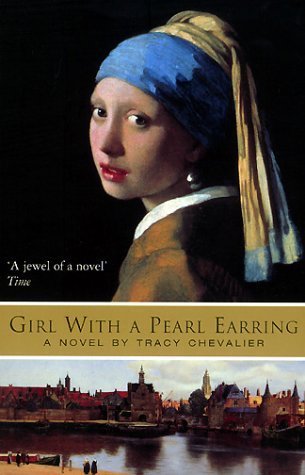
Review: Girl With A Pearl Earring by Tracy Chevalier

Griet, the young daughter of a tilemaker in seventeeth century Holland, obtains her first job, as a servant in Vermeer's household. Tracy Chevalier shows us, through Griet's eyes, the complicated family, the society of the small town of Delft, and life with an obsessive genius. Griet loves being drawn into his artistic life, and leaving her former drudgery, but the cost to her own survival may be high.

When Tracy Chevalier was a guest on BBC World Book Club she said that the longer she looked at the eponymous painting the more she wondered about the relationship between the subject and the artist, and what made the girl look so yearning and fearful at the same time. This book is an exploration of these questions and answers, and it packs a surprisingly hefty punch for such a slim novel. The surprise is of course a result of the 600+ page tomes we are so used to nowadays, and is a reminder that a book doesn't have to be heavy enough to pass for a weapon or a small boat anchor to hold a world vivid enough to make a reader want to explore it further and characters so complex and full of personality that they stay with you long after the book is finished.
In a lot of ways this novel is like a painting, with symmetry between various characters' relationships, juxtapositions of actions and traits, and repeating details that tie the story together. Just like in the painting Griet is at the center of the novel, with her small world reflected in the pearl earring she must wear to complete the work of art. She is an unusual teenager, by current standards, with her sober appraisal of people and situations, clever navigation of the Vermeer household and her being almost completely distanced from her own emotions and relying on reason more than feelings in her decision-making. Had it not been for their respective circumstances I think she would have made a good partner for Vermeer, despite their age difference, for while devoted to his art she does see the world outside of it. She would balance him out in a way that nobody in his family does.
There is quite a bit of allegory and symbolism in this novel, which also reminded me of works of art. While in New York last week I visited The Cloisters museum and the guide there explained every detail of a statue as a symbol of something relating to the patron to whom the statue belonged. I got a similar impression reading this book that a lot of what happened or existed in the story had a special meaning. Sometimes the allegory is subtle, sometimes it's obvious, but it works nonetheless.
There are as many conflicts in this novel as there are symbols and the main one, the one that drives the story, is rooted in Griet's internal struggle between a good protestant girl who takes pride in clean floors and starched caps and a passionate girl in love with colors and beauty. I think this is the discord Vermeer captured so well in his painting and I commend Chevalier for writing it so believably.
The language of the book and Griet's voice work very well with the subject and plot of the novel. There is restraint and spare prose which are easy to associate with protestant sensibilities, and there are also glimmers of the more liberal aesthetic that runs as an undercurrent in Griet's personality, hidden from everyone, just like her hair, but showing through in her eyes and actions.
I never really understood why Griet's role as assistant to and later model for Vermeer was to be kept secret from his wife. It is true that there was animosity, and the situation could be seen as different despite the fact that this was not the first time Catharina lent her clothes or her jewels for her husband's paintings, but had everybody not acted in an unusual fashion and had they been upfront with Catharina the drama could have been avoided. This novel wouldn't be what it is though either, so I suppose the drama was necessary.
I've been thinking about this book since I finished it, mulling over Griet's decisions throughout the novel, Vermeer's single-minded focus on his work at the expense of everything else, Maria Thin's place in it all and Griet's parents' contribution to the story. I wonder how close Chevalier's interpretation is to what really happened between the Vermeers and the girl with a pearl earring and whether had even one character been different the novel would have been as engaging as it is. The paperback copy of the book I read was on loan from a friend, so I will be purchasing a copy for my home library, because for me this one is a keeper.

Sunday, November 4, 2012

Review: Inheritance by Christopher Paolini

Not so very long ago, Eragon—Shadeslayer, Dragon Rider—was nothing more than a poor farm boy, and his dragon, Saphira, only a blue stone in the forest. Now the fate of an entire civilization rests on their shoulders. Long months of training and battle have brought victories and hope, but they have also brought heartbreaking loss. And still, the real battle lies ahead: they must confront Galbatorix. When they do, they will have to be strong enough to defeat him. And if they cannot, no one can. There will be no second chances. The Rider and his dragon have come further than anyone dared to hope. But can they topple the evil king and restore justice to Alagaësia? And if so, at what cost?

Christopher Paolini and I go way back: Eragon was one of the books that in a way led me to starting this blog. When I finished it I wanted to talk about it, share my thoughts in a place that was mine and where my comments wouldn't get lost in the shuffle of thousands. So I posted my thoughts on my then-personal blog. Several months later I realized that what I really wanted to talk about was books, so after testing several platforms Bibliophile's Corner as we know it was born. Now, over two years later, I read the last installment in the story of Eragon and Saphira and their fight against the evil Galbratorix and I'm very impressed with Paolini who at such a young age created such an elaborate and sprawling story with excellent adventure, insightful commentary on the human condition, and characters who grew and evolved in the most satisfying way.
If there is a book or a series the Inheritance Cycle reminds me of it is Tolkien's Lord of the Rings. It is a bit simpler and scaled down but it has the same concept of a quest, an unlikely hero, lots of races and languages (can you even imagine creating a whole new language, let alone five?), armies marching through lands and a seemingly omnipotent villain. I'm not much of a fan of bloody battles and longish conversations about affairs of the state so there Paolini lost me just as successfully as Tolkien did. Fortunately there was enough to keep my interest in between and I particularly enjoyed the sections where Roran was the protagonist because it gave a different perspective of events as well as a view from a position of no magical powers and the struggle to keep up and hold one's own through sheer will, courage, determination, creativity and intellect.
Throughout the book Paolini revealed secrets and brought plot lines to conclusion, many of which began as early as the first volume, and I couldn't help but admire his plotting prowess. With Inheritance it becomes that much more obvious how much planning went into this series, and anybody who can do this as well as Paolini did is undeniably talented. Not all mysteries were revealed but there are plenty of hints to allow the reader to connect the dots and draw their own conclusions. I do wish however that we learned the true names of Eragon, Saphira and Arya - in the course of the book they discover and reveal them to each other but not to the reader. Then again, maybe it was intentional to avoid possibly disappointing the readers, it happens so often that the hype surrounding the affair is greater and more exciting than the affair itself.
When I think about what is my favorite part of this book I inevitably come back to the battle with Galbratorix. That chapter was so full of bare humanity despite all the magic, of intentions true and misguided, and alliances that seemed unlikely but nonetheless made perfect sense that it made for an excellent culmination of the struggle that's lasted through most of the series. It was very satisfying to see how things turned out despite the fact that it wasn't exactly a 'happily ever after' for everyone, and, fittingly, it was the strongest chapter of the book.
Now that the last book in the series is finished I have been thinking about the kind of person Paolini must be to have written a book and a series such as this. He is very young, not even 30 years old, and yet his books are full of the kind of thoughtful perceptiveness I would expect from an older person. His examinations of right and wrong and how one gets there as well as his insights into human nature are often startling in their simplicity and truthfulness, and I still have one of the quotes I copied from Eragon or Eldest hanging on my cork board. I'm glad to have given Eragon a chance way back when and I look forward to what Paolini will reveal next, and judging by the hints he's dropped in an interview for the Pacific Northwest Writers Association there's much more to come.

Sunday, October 14, 2012

Review: The Tiger's Wife by Tea Obreht

In a Balkan country mending from years of conflict, Natalia, a young doctor, arrives on a mission of mercy at an orphanage by the sea. By the time she and her lifelong friend Zóra begin to inoculate the children there, she feels age-old superstitions and secrets gathering everywhere around her. Secrets her outwardly cheerful hosts have chosen not to tell her. Secrets involving the strange family digging for something in the surrounding vineyards. Secrets hidden in the landscape itself. But Natalia is also confronting a private, hurtful mystery of her own: the inexplicable circumstances surrounding her beloved grandfather’s recent death. After telling her grandmother that he was on his way to meet Natalia, he instead set off for a ramshackle settlement none of their family had ever heard of and died there alone. A famed physician, her grandfather must have known that he was too ill to travel. Why he left home becomes a riddle Natalia is compelled to unravel.

The Tiger's Wife has been on my radar for a while now due to its notoriety and near-constant presence on the New York Times Best Seller list for months on end. When it eventually came up on the reading list of the book club I joined earlier this year I was glad to finally read it.
One of my favorite things about this book is how realism and fantasy are intertwined almost inseparably, how every plot line is tied inextricably to another and how much it reminded me of the story traditions I grew up with. Obreht is from the Balkans, I am from Ukraine, and while there are obviously differences there are also similarities that ring true, a result of our Slavic roots with a patina of the Ottoman invasion centuries ago, thicker for some, more transparent for others. I could also really see and relate to how she described it in an interview for RFERL:
...there's a concept of "a Balkan story." Even small stories are somehow big, huge. There's a moment in a Balkan story when the line between mythology, legend, and the story become irrelevant. Somehow, that mythology becomes a truth in itself and it becomes a very personal truth. The way in which you receive a story becomes your truth, and then it becomes the truth for the person you're telling the story to. That is very much our way...
I read the novel very quickly and only when it was finished did a thought form in my mind that the book is ultimately about death. This alone didn't faze me, after all I read The Book Thief earlier this year, and it was narrated by Death. What did surprise me though was finding out how young the author is. I could hardly imagine how a woman in her early 20s could have this kind of darkness in her enough to write a book like this. Don't get me wrong, The Tiger's Wife is not depressing by any means (there are a couple novels I read this year alone that were much more depressing), it is rather a matter-of-fact approach that regards death as part of life, sometimes difficult to reconcile oneself with but always present. The subject however is dark nonetheless.
I also very much enjoyed Obreht's writing style. It was proper without being stuffy and easy without being overly conversational. This is a literary novel that avoids boring the reader to tears and instead pulls one along with it through the many subplots until legends unwind into life and people with secrets, fears and hardships. The historical backdrop and very realistic details of family life, which I now know are autobiographical, give richness to these legends, provide a fertile environment for them, ground them and even help develop them better. I didn't know much about the history or culture of the Balkans before reading this book but now I am curious and will most likely look for more books and folklore of the region.
I thoroughly enjoyed this book and if you are intimidated by its fame and international acclaim I urge you to disregard those reservations and give it a chance. It is well worth your time. Just don't expect everything to be presented to you neatly tied with a bow on top, you will be expected to make the leaps necessary to gather all the threads together from time to time, and you may even arrive at conclusions that won't match your fellow readers'. This exact thing happened in our book club and made for an interesting discussion.

Sunday, September 23, 2012

Review: Mockingjay by Suzanne Collins

Katniss Everdeen, girl on fire, has survived, even though her home has been destroyed. Gale has escaped. Katniss's family is safe. Peeta has been captured by the Capitol. District 13 really does exist. There are rebels. There are new leaders. A revolution is unfolding. The success of the rebellion hinges on Katniss's willingness to be a pawn, to accept responsibility for countless lives, and to change the course of the future of Panem. To do this, she must put aside her feelings of anger and distrust. She must become the rebels' Mockingjay--no matter what the personal cost.

From that heck of an ending in Catching Fire I knew that the last installment in the series was going to be very different and it didn't disappoint. More than ever I could see the behind-the-scenes network of rebels, the grownup world where Katniss was a kid who was not treated like one and where, as valuable an asset as she was, she was simply a pawn in the games of people easily twice her age. In Mockingjay she finally saw her life for what it has become and desperately tried to find a way out all the while having no choice but to continue playing her part.
To me Mockingjay is the book where Katniss truly becomes a strong heroine. Some might argue that in this book she is rescued, supported and kept safe more than ever before, and while that is true I have said it before and will say it again, to me not needing anyone to have your back isn't necessarily a sign of strength. Knowing your weaknesses and taking them into account while moving forward is. Questioning what people tell you and making up your own mind is. Seeing the true nature of things that aren't as straightforward as a knife or an arrow and acting according to this knowledge is.
I've always seen Katniss as been capable of the same kind of cruelty and manipulativeness as President Snow for example, but her goals have never been selfish or cruel. She may have only ever loved two people, her father and her sister, but everybody else has never been just collateral for her and this always made her capable of doing what needed to be done without losing her humanity or her sense of self. I don't think that Katniss is a particularly sympathetic character, what with her tendency to fall back on the old faithful adage of "offense is the best defense" unfairly hurting people in the process, and her curiosity about how her displays of affection affect the two rivals for her heart, but I do like her for the good in her.
Fandoms tend to compare books and series, and trash some while showering others with praise. I tried really hard to enjoy this series on its own merit but there were scenes that awakened a very strong sense of deja vu in me. I couldn't help noticing similarities in character dynamics and entire scenes and wondered on more than one occasion whether haters trash that other series just because, without even bothering to read the books, or they truly don't notice these things. If there was anything that spoiled the Mockingjay experience for me this was it.
I keep trying to decide what was my favorite thing, section, element about this book and inevitably I come back to how well it shows that life isn't black or white, bad things can have goodness in them and good things can have darkness hiding deep inside. Another thing I liked, although not in the straightforward sense, was that at the end of the day the choice everybody's been waiting for Katniss to make was ultimately made for her, whether she or we the readers like it or not. Oh the irony.
Mockingjay was the most complex, nuanced and mature book of this series. Because of that, and despite the deja vu moments, it will always be my favorite Hunger Games book.

Sunday, August 19, 2012

Review: Still Alice by Lisa Genova

Still AliceAlice Howland - Harvard professor, gifted researcher and lecturer, wife, and mother of three grown children - sets out for a run and soon realizes she has no idea how to find her way home. She has taken the route for years, but nothing looks familiar. She is utterly lost. Medical consults reveal early-onset Alzheimer's. Alice slowly but inevitably loses memory and connection with reality, told from her perspective. She gradually loses the ability to follow a conversational thread, the story line of a book, or to recall information she heard just moments before. Genova's debut shows the disease progression through the reactions of others, as Alice does, so readers feel what she feels - a slowly building terror.

As highly recommended as this book is and as much as I wanted to read it, it took me a good while to muster the courage to actually do it. I was intimidated by the subject because I lived for a year with a family where the elderly grandmother had Alzheimer's, and even though there was much I didn't understand I witnessed first-hand how traumatic her condition was for the entire family. Finally I decided to just go for it, and when the novel was over I sat there for a while, heartbroken, not knowing where to begin thinking back on it like I usually do after finishing a book. There was so much there. There was Alice's love for her family, her bitter-sweet feelings for her husband, her fear of losing herself, of losing all the time she thought she had. There was her husband's pain and the decisions he had to make, her children's fear and strength, the relationships between them all, and the impact of Alice's diagnosis. All this tore at me and demanded attention, all the questions that stemmed from the story being told by a person with Alzheimer's begged to be answered, and I couldn't begin anything else for several days because I was still living in Alice's world, trying to come to terms with a question that resonated with me because reading, books and words are an enormously important part of my life, just like they were for Alice - how does one cope with the knowledge that meaningful reading is no longer possible?
How does the author do this in a volume of less than 300 pages? It's simple, really. Lisa Genova has a gift. She does it with writing like this:
"She sat in the passenger seat and waited for John to say something. But he didn't. He cried the whole way home."
What else does the reader need to understand the depth of feelings, the gravity of the situation? Nothing at all, it's all there in three short sentences.
Another aspect that made the book work is the authenticity of everyday feelings and surroundings. I don't know this for a fact but I think that Ms. Genova is a runner, and I think she has a house somewhere at the beach in New England. I think that she has a passion for the world of academia and a complicated parent-child relationship in her life in one way or another. I think she drew on all those parts of her own life and experiences in crafting Alice's story and through her own familiarity she made the story even more personal than it already is.
I cried while I read this novel. I cried for Alice, for her husband and for their children. I cried for the losses of memories, dignity, conversations and truly meaningful time together. I also laughed through tears because of Alice's irrepressible spirit, intellect and sense of humor that shone through till the very end. This book may not affect you as it did me, there is a lot to be said about timing after all. I thought it was excellent, heartbreaking but truly excellent, and I highly recommend it.

P.S. I have not been able to use the word "thingie" without immediately looking for a more articulate alternative for weeks now. Thought you should know.

Sunday, August 12, 2012

Review: Summer Knight by Jim Butcher

Summer Knight (The Dresden Files, #4)Private detective/wizard-for-hire Harry Dresden is tasked with solving a mystery that leaves the fate of the entire world, and his soul, handing in the balance.

Over the course of the last three books of the Dresden Files series I've come to expect Jim Butcher to give me something different every time, not just in terms of Dresden's adversaries and allies but also in terms of the difficulty of his task and the character arc. I've come to look forward to finding out what supernatural species was going to come up on the stage next. I've come to relish the smart-alec and often beat up but never beatdown Harry. I thought I had the general system all worked out. And then Butcher surprised me.
What surprised me most was the emotional journey on which the author took Harry. The last time I saw this level of character development in a fantasy series was in the Abhorsen Chronicles and I was glad to discover a similar depth in the Dresden Files. One of my favorite things about Butcher's writing in this novel is how well he showed the extent of Harry's depression and downright desperation. Grave Peril didn't end very well for the wizard and from the very first pages the fallout was obvious in everything from dark sarcasm to the state of Harry's life. Things started to turn around so gradually that I almost missed it, but I sure was glad to see it happen. After all, who wants the protagonist to be semi-suicidal for the nearest foreseable future, right?
The story has grown too. All the familiar elements were there but this time every aspect was taken to the next level - the villain is the most powerful being Harry has battled so far, the life of the entire planet is at stake, and the guys who should be helping are leaving Dresden out in the cold. Fortunately it wasn't just about the circumstances. This time around experience and the willingness to take a risk weren't going to be enough, and fire and wind magic was useless against beings with unlimited power. This time it was as much about keeping at it despite a seemingly no-win situation, not falling apart because of guilt and pain over the past, and being able to tell who is a friend and who is a foe waiting to put a deadly spell on you.
If you're wondering what supernatural species is front and center in this novel you're in for a treat: this story is all about the fey. You know, Summer and Winter courts, Queens, bargains one's better off not making. It was dangerous and a little disturbing but, true to the Dresden Files ways, a lot of fun.
Reading this book was like starting to see what the puzzle will look like after having only the simpler pieces to work with. I look forward to seeing more of the big picture.

Sunday, June 10, 2012

Review: The Reader by Bernhard Schlink

The ReaderAs a 15-year-old boy in postwar Germany, Michael Berg had a passionate affair with a mysterious, guarded woman twice his age that ended suddenly when she disappeared. Years later, Michael sees her again -- when she is on trial for a terrible crime.

The original plan for this week was to read and review Wolf Totem by Jiang Rong but after a week of struggling through the first 30 pages I had to face the fact that for all the acclaim the book garnered Mongolian sheep herders were not going to hold my interest. The morning I decided it was time to move on a friend left a copy of The Reader on my desk at work and I dove in on my lunch break.
At first glance The Reader tells the story of a 15-year-old boy who has an affair with a woman in her thirties and how it affects him for the rest of his life. That is only the outer layer of the story though: as soon as you look deeper you see that more than anything it is about Germany after WW2, about shame and guilt, right and wrong, struggling with finding an identity for a generation that is coming to terms with the past and picking up the pieces. And it's not just my or some critic's opinion, Mr. Schlink tells us as much himself when Michael ponders his generation and its heritage, and tries to understand the past. Another reason that leads me to believe that this book is less about the relationship of Michael and Hanna and more about the German society after the war is that at no time does Michael ask in the book how could Hanna do what she did to him but there's plenty of times when he talks about how could the Germans allow the atrocities to happen, how could they not stand up to it all, how could they accept the former fascists back into society. It is as if he is more scarred by that than by having his whole life ruined by and eventually, in a way, devoted to a woman who didn't seem to care about the consequences of her actions.
One of the strongest features of this book is its elegantly spare, declarative prose. There are few explanations, just simple statements of facts that are offered to us without reservation. There are reflections on morality, humanity, right and wrong, and they too are so simple that they give the novel depth without rendering it unreadable. Yet as positively unflowery as the writing is the author manages to tell us exactly who his characters are, allows us to discover them gradually and without inflicting his own conclusions upon us, creates perfectly complete portraits with a few well-chosen words and well-placed sencentes.
There is a lot of story in a book that is barely two hundred pages long and since we only get Michael's side of it by no means does Mr. Schlink tell us all there is to tell. There is plenty to think about and I hope that if you haven't read this book that you will add it to your to-read list. It is most definitely worth a day or a weekend of your time.

Sunday, June 3, 2012

Review: Steve Jobs by Walter Isaacson

Steve JobsAt a time when America is seeking ways to sustain its innovative edge, and when societies around the world are trying to build digital-age economies, Jobs stands as the ultimate icon of inventiveness and applied imagination. He knew that the best way to create value in the twenty-first century was to connect creativity with technology. He built a company where leaps of the imagination were combined with remarkable feats of engineering. His tale is instructive and cautionary, filled with lessons about innovation, character, leadership, and values.

I finished the book today and while dinner was cooking flipped through a copy of Rolling Stone magazine that somehow ended up in the house. There was an ad there for the iPad showcasing the Beatles section of the iTunes Store and unexpectedly I could see the principles Jobs emphasised right there on the page. The product that speaks for itself, the clean lines, the no-frills boldness of design, they were all there. Then suddenly I could see it in the biography cover that Jobs himself helped design, the simple black and white photo of Jobs on a clean white background, the genius staring intently at the camera, his mouth slightly curved in an impish grin. Then I remembered the iPod Nano in my purse, the iPod Shuffle in my gym bag, the thrill of every new Pixar movie, the feverish excitement in the eyes of my Apple-faithful friends and colleagues whenever a new iPhone is scheduled to be released and the unbridled delight of a friend when she was showing off her new iPad. It takes something special to turn a garage startup company into the most valuable company in the world with products that people will literally sell their kidneys for and Steve Jobs had that "something".
I don't want to review the man when I should be reviewing his biography but it is such an honest portrayal of a very difficult person that I was often infuriated for the first third of the book because of Jobs' personality. He was undeniably a visionary and it was clear even when he was very young, but the man was a spoiled brat who did drugs and did not shower, and accounts of how he treated people during his first stint at Apple were more than I could read through calmly. Even so, it was fascinating to follow the formative years of the man who would later become the head of both Apple and Pixar as we know them.
The narrative became a lot more palatable to my puritan sensibilities when the focus shifted from young Steve's temper tantrums to the evolution of the technological landscape, the years at NeXT, the beginning of the company that would become Pixar, the antagonistic relationship with Bill Gates and Microsoft, and Jobs' return to Apple. The book is really as much a biography of the Silicon Valley as it is a biography of Steve Jobs because the two are so interwoven they are literally inseparable and the non-techie in me sometimes lost interest when the circuit boards and microchips took over. Fortunately the account is filled with quotes from the people Isaacson interviewed when he prepared to write this book, including Jobs himself, and that provided a welcome balance that kept things moving.
When Apple bought NeXT and Jobs was able to come back to his beloved company the tone of the book changed as the era of unimpeded revolutionary productivity began. It seemed much more "business" from then on, more focused. I felt it was a faithful reflection of Jobs' life at that stage, after all he was a man in his 40s, had a family and two companies to run, and he really couldn't afford any more false starts. He also repeatedly said that he knew he would die young, so intuitive as he was he may have understood on some level that he had to get to work. Or may be he had simply matured sufficiently to focus on being productive more than petulant.
I'm not sure how this happened, but until I read about Jobs being the CEO of Pixar in this book I had no idea that Apple wasn't the only company over which he presided. In retrospect this is not at all surprising because Pixar is another embodiment of technology and art working together to create an excellent product, which is what Jobs has always stood for. I am a huge fan of Pixar movies and I look forward to what Lasseter will do without Jobs.
One thing that struck me as I began reading was how simple the language is. A child could read the book and understand what Isaacson was talking about. If it wasn't for the often mature subject matter I would question who the audience is supposed to be, and then I wonder whether the exceedingly easy to understand writing is meant to make it possible for non-native speakers to read the book without having to wait for the translation.
Research for this biography was a huge undertaking and having all the major players still around to interview was an undeniable advantage. It was really interesting to see how people never really completely disappeared from the picture. They would appear, have their time in the spotlight, then they'd get replaced by a brighter star, but they often reappeared in one capacity or another and towards the end I could clearly see that for all his abrasiveness Jobs managed to maintain relationships with people that lasted decades. And what more, even those who were replaced spoke about him with respect and even admiration. Now that takes talent.
In the first third of the book for all his genius I had little appreciation for Jobs, but by the time I read the last pages I grew to respect him and what he achieved in a relatively short time in his role as CEO, despite the fact that he remained a very difficult person. I feel that it is a testament to the work Isaacson did in presenting to us readers a portrat of Jobs as complete and unbiased as possible and at the end of the day that's what I believe a good biography should do. There's only one last thing I wonder about: can you imagine how much more Jobs would have been able to achieve had he not gotten himself ousted from Apple in the first place?